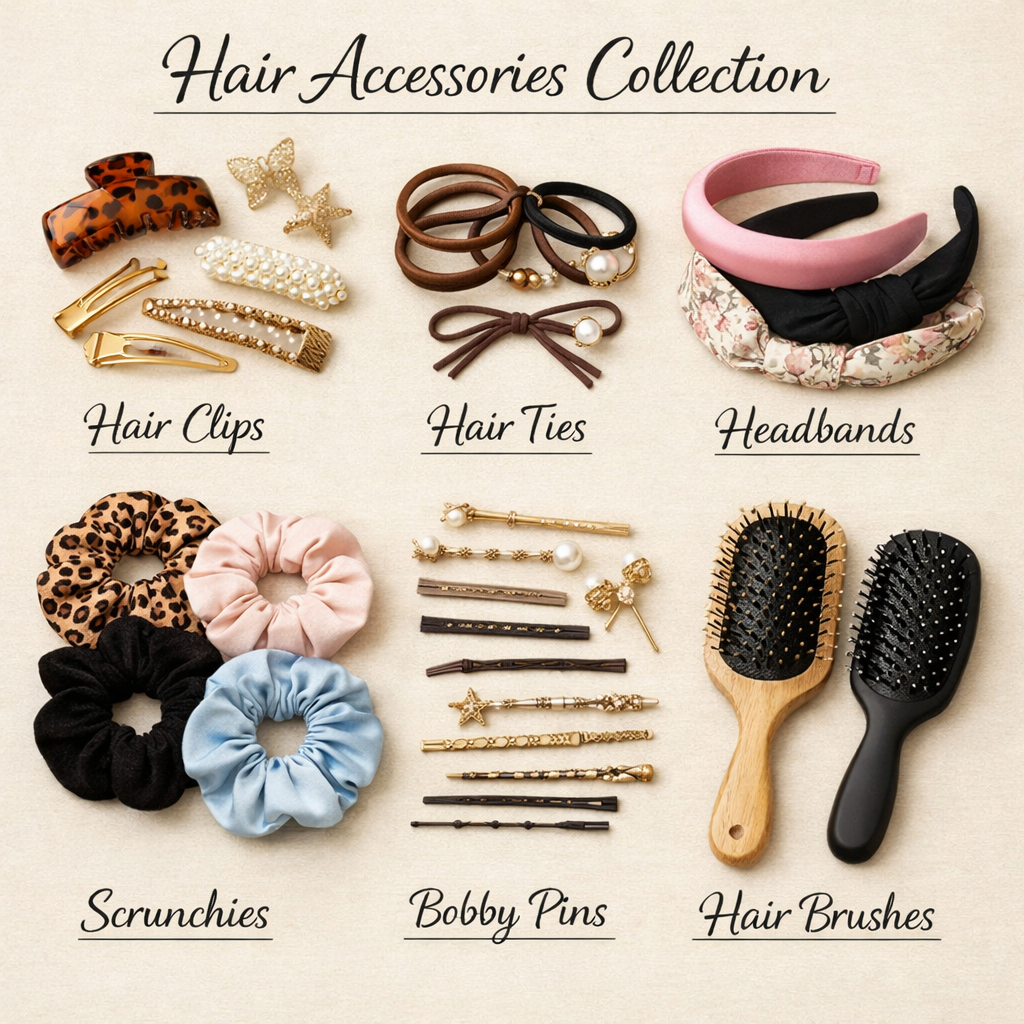
If you are building a hair accessories collection for a brand, retailer, boutique, or wholesale program, the biggest mistake is not starting too small. It is starting without structure. Many collections look attractive at first glance, but they mix random styles, unclear price points, and inconsistent materials. That makes it harder to sell, harder to merchandise, and harder for customers to understand what your brand actually stands for.
In this guide, you will learn what belongs in a complete hair accessories collection, why those basics matter for modern buyers, how to plan your product mix, and how to build a line that is easier to market, easier to scale, and more attractive to both retail customers and wholesale buyers.
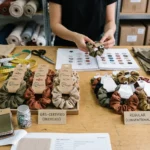
Suggested image alt text: Flat lay of a complete hair accessories collection with scrunchies, claw clips, headbands, bows, and hair ties in coordinated colors.
What Is a Hair Accessories Collection?
A hair accessories collection is not just a group of pretty pieces. It is a planned assortment of products designed to work together across daily use, styling needs, price points, and seasonal stories. The best collections balance function and fashion. They give customers something practical to use every week and something distinctive enough to feel worth buying.
The Definition of a Collection
In merchandising terms, a collection should have internal logic. That means the products should share a point of view through color, material, finish, packaging, or lifestyle positioning. A customer should be able to look at the assortment and immediately understand who it is for. Is it minimal and everyday? Soft and feminine? Youthful and playful? Premium and giftable? A clear answer improves both brand identity and conversion.
What a Basic Collection Usually Includes
Most foundational assortments begin with six core categories:
- Scrunchies for soft hold and fabric variety
- Hair clips such as snap clips, duckbill clips, and BB clips
- Claw clips for quick styling and strong hold
- Headbands for face-framing, sporty, or fashion looks
- Hair bows and ribbons for decorative styling and gifting
- Hair ties and elastics for repeat-use essentials
These categories appear again and again in strong retail assortments because they match how customers actually shop: by use case, by outfit, by occasion, and by price. They also give brands enough room to build a collection that feels broad without becoming chaotic.
How to Think About Collection Layers
A practical way to build a line is to divide it into three layers. First come the core basics: hair ties, elastics, simple clips, and classic scrunchies. These are replenishment products. Second come the style builders: claw clips, statement headbands, bows, and special finishes. These create visual interest and seasonal freshness. Third come the margin builders: gift sets, coordinated packs, custom prints, and premium materials that raise average order value.
| Layer | Typical Products | Main Role | Best For |
|---|---|---|---|
| Core Basics | Elastics, simple ties, snap clips | Repeat purchase | Mass appeal and steady sell-through |
| Style Builders | Claw clips, padded headbands, bows | Visual identity | Trend relevance and content creation |
| Margin Builders | Gift sets, premium satin, curated packs | Higher basket value | Holiday, boutique, and premium retail |
Internal link placement: Link the phrase custom hair accessories to https://qnbeauty.com/custom-service/.
Suggested image alt text: Merchandising board showing basic, fashion, and premium layers in a hair accessories collection.
Why Are These Basics Important?
The basics matter because they are what turn a random assortment into a commercially useful one. Industry reports continue to show that hair accessories are not a tiny impulse niche anymore. Grand View Research estimates the global hair accessories market reached USD 23.41 billion in 2024 and could grow to USD 46.64 billion by 2033, at a projected 8.0% CAGR. In the same research set, elastics and ties accounted for about 32.61% of category revenue in 2024, which is a strong signal that basics still anchor the market even as trend-led products grow.
They Match Real Consumer Use Cases
Customers do not buy hair accessories for one single reason. They buy them for workdays, gym routines, makeup sessions, travel, weddings, school mornings, gifting, and quick styling on busy days. That is why basics matter. They meet real situations. A claw clip is not replacing a satin scrunchie. A headband is not replacing a no-damage elastic. Each product solves a different job.
That functional range is one reason the category keeps expanding. Broad market research has shown continued growth in hair accessories overall, while product segmentation data also indicates that elastics and ties remain the largest revenue-driving segment. For collection planning, that is a strong signal: the most stylish assortment in the world still needs dependable basics at the center.
They Improve Collection Completeness and Cross-Selling
Basics are also what make add-on selling possible. A shopper who comes in for claw clips may add a matching scrunchie set. A boutique buyer who likes the aesthetic of your headbands may also want gift-ready elastic packs in the same print story. Collections sell better when products help each other. This is especially important for starter brands, because a cohesive assortment lets smaller catalog sizes feel more complete.
They Help Brands Build a Consistent Style Identity
When brands repeat materials, colors, prints, and packaging across categories, the assortment starts to look intentional. That matters for brand memory. A customer may not remember one random velvet bow, but she will remember a coordinated set of bows, clips, and scrunchies in the same seasonal palette. Consistency also makes wholesale presentations stronger because buyers can immediately see the collection logic.
They Support Multiple Price Points
One of the most useful things about basics is price flexibility. Hair ties and elastics can serve as entry products. Scrunchie sets and claw clips can sit in the mid-range. Embellished headbands, premium acetate clips, and boxed gift sets can anchor the upper tier. That price ladder gives a collection commercial depth without requiring hundreds of SKUs.
| Use Case | Best Category | Why It Works |
|---|---|---|
| Daily commuting | Elastics, clips, claw clips | Fast styling and reliable hold |
| Skincare and makeup | Headbands, soft clips | Keeps hair away from the face |
| Travel | Mini packs and multipacks | Compact, practical, easy to repurchase |
| Gifting | Bow sets, satin sets, boxed collections | Higher perceived value |
| Seasonal styling | Statement headbands, bows, specialty clips | Refreshes the assortment without rebuilding basics |
Suggested image alt text: Everyday hair accessories arranged by use case, including commuting, skincare, travel, and gifting.
How to Build a Strong Hair Accessories Collection
A strong hair accessories collection is built from the customer backward. Not from the factory floor forward. Not from what is easiest to source. Not from what one competitor posted on social media last month. Start with the person who will buy it, then shape the assortment around how she lives, shops, and styles.
Start by Defining Your Target User
Your product mix should look different depending on who you serve. A collection for young women may lean into claw clips, satin scrunchies, and trend colors. A children’s line may focus more on bows, snap clips, and playful multipacks. A boutique assortment may need elevated materials, polished packaging, and gift sets. An e-commerce-first brand may do better with visually strong hero products and easy-to-understand bundles.
If your audience is unclear, your SKU list usually becomes messy. If your audience is clear, your collection decisions get easier: size, color, finish, price, and packaging all start to align.
Build a Product Structure, Not Just a Product List
A good collection needs roles. One simple framework is this:
- Traffic builders: basic elastics, classic claw clips, starter packs
- Image builders: printed headbands, fashion bows, metallic or acetate clips
- Profit builders: premium sets, coordinated gift boxes, private-label capsule packs
This structure helps brands avoid a common mistake: buying too many mid-level products with no clear purpose. Every SKU should either bring people in, strengthen the visual story, or improve margin.
Choose Materials and Colors With Purpose
Material should reflect both use and positioning. Satin or silk-look fabrics work well for softer, more premium styling stories. Cotton and linen feel natural and casual. Velvet adds seasonal richness. Plastic, metal, and acetate can move the assortment toward clean utility or polished fashion depending on finish. In many successful lines, the material story is just as important as the product type itself.
Color should be planned like a mini fashion system. A practical collection usually includes neutrals, seasonal accents, and one or two signature tones. This makes it easier to coordinate across categories and easier for retail buyers to visualize displays, sets, and replenishment.
Keep the First Launch Focused
Many new brands believe a larger line looks more professional. In practice, a tighter line often performs better. A focused assortment is easier to photograph, easier to explain, easier to sample, and easier to reorder. It also reduces packaging complexity and prevents inventory from spreading across too many weak sellers.
| Planning Step | Key Question | Output |
|---|---|---|
| Audience | Who is the buyer? | Age, channel, style preference, use case |
| Role Mix | What should each SKU do? | Traffic, image, or margin product |
| Material Story | What texture matches the brand? | Satin, cotton, velvet, acetate, metal |
| Launch Scope | How many SKUs can you support well? | Lean starter assortment with room to expand |
Internal link placement: Link the phrase wholesale hair accessories manufacturer to https://qnbeauty.com/.
Suggested image alt text: Product planning sheet for a hair accessories collection showing target user, materials, and core categories.
Materials, Colors, and Packaging That Create a Strong Collection
Product category is only half of the story. The other half is presentation. In crowded markets, materials, finishes, and packaging often determine whether a collection looks low-effort or elevated. They also shape where the line can sell: mass retail, boutique, gift, or premium direct-to-consumer.
Material Choices Communicate Positioning
Different materials send different signals. Satin and silk-look fabrics suggest softness, femininity, sleep-friendly styling, and giftability. Cotton and linen communicate a relaxed, natural mood. Velvet signals holiday, evening, or richer texture. Acetate and polished plastic feel clean, versatile, and easy for everyday wear. Metal details can make a simple product look immediately more refined.
This matters because customers often decide with their eyes first. A claw clip in matte neutral plastic says something very different from a claw clip in glossy tortoiseshell acetate or embellished metal.
Recent beauty and fashion coverage also points in the same direction: consumers still want practical products, but they increasingly expect them to feel styled, elevated, and content-friendly. That is why rich browns, tortoiseshell effects, metallic accents, padded bands, scarf details, and soft nostalgic palettes keep appearing in trend coverage. The commercial lesson is simple: your material story should make basics feel more curated, not more complicated.
Color Stories Create Collection Identity
One of the easiest ways to make a hair accessories line feel intentional is to work in color stories instead of isolated shades. A reliable formula is to choose:
- 3 to 4 core neutrals for continuity
- 2 seasonal fashion colors for freshness
- 1 hero print or signature pattern for memorability
Trend reporting and fashion coverage over the last year continue to point toward rich browns, tortoiseshell-inspired finishes, metallic elements, soft pastels, and nostalgic scarf or ribbon details as commercially useful directions. That does not mean every brand should follow every trend. It means trend-aware accents work best when layered on top of dependable basics.
Packaging Turns Small Products Into Better Sellers
Hair accessories are naturally suited to packaging upgrades. A basic elastic pack can become a giftable item with the right carding and print story. A pair of clips can feel more premium in a clean box or reusable pouch. Sets are especially powerful because they raise perceived value while simplifying styling decisions for the customer.
Merchandising Works Better When the Story Is Repeated
The strongest collections repeat the same story across multiple forms. For example, a satin floral print can appear in a scrunchie, a bow, a headband, and a travel pouch. A tortoiseshell story can run through claw clips, headbands, and barrettes. Repetition is not boring when it is done with variation. It is what helps shoppers recognize the collection and what helps buyers imagine a full display.
| Material / Finish | Best Product Types | Brand Signal |
|---|---|---|
| Satin / silk look | Scrunchies, bows, sleep accessories | Soft, premium, giftable |
| Cotton / linen | Headbands, bows, summer sets | Natural, relaxed, everyday |
| Velvet | Headbands, bows, seasonal capsules | Rich, festive, elevated |
| Acetate / polished plastic | Claw clips, barrettes, headbands | Modern, versatile, retail-friendly |
| Metal accents | Clips, cuffs, statement pins | Refined, premium, fashion-led |
Internal link placement: Link the phrase butterfly hair clips compared with other styles to https://qnbeauty.com/butterfly-hair-clips-2/.
Suggested image alt text: Coordinated color story for a hair accessories collection featuring satin scrunchies, tortoiseshell clips, and padded headbands.
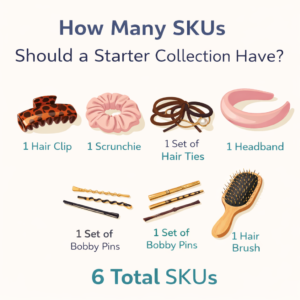
How Many SKUs Should a Starter Collection Have?
There is no universal number, but there is a practical rule: launch with enough variety to show a real point of view, but not so much that your hero products disappear. For most new collections, fewer strong SKUs outperform many average ones. This matters even more in Western retail and e-commerce, where customers make quick decisions from thumbnails, shelf sets, and landing-page visuals. A concentrated assortment gives each hero product more room to sell.
A Smart Starter Range for Most Brands
For many brands, a starter line of 18 to 36 SKUs is enough to feel complete. That range usually gives room for basics, one or two statement directions, a coordinated pack story, and at least one giftable option. If the launch is smaller than that, the assortment can feel shallow. If it is much larger without a clear reason, it often becomes harder to buy, harder to produce, and harder to merchandise.
Recommended Mix by Role
A balanced first launch often looks like this:
- 40% basics: elastics, simple clips, classic claw clips
- 35% fashion: bows, printed headbands, color capsules
- 25% value-add: coordinated sets, gift boxes, premium finishes
This kind of split protects commercial stability while still giving the collection a visual hook.
Adjust SKU Depth by Channel
Channel matters. Boutique buyers usually prefer stronger curation and more distinctive finishing. E-commerce brands often need products that photograph well and stand out quickly in thumbnails. Mass retail leans harder on repeatable basics and price clarity. Gift channels need coordinated presentation. The same product categories can work across all four channels, but SKU depth and styling emphasis should change.
Expand After You Learn What Repeats
The best way to grow a collection is not to guess. It is to watch what customers reorder, what buyers ask for again, what colors keep selling, and which shapes attract the highest interest. Expansion works best when it grows from proven winners. That is how brands build healthier collections over time.
| Business Type | Starter SKU Range | Priority Categories |
|---|---|---|
| Young women’s brand | 24–36 | Claw clips, scrunchies, padded headbands, bows |
| Children’s line | 18–28 | Snap clips, bows, mini elastics, carded multipacks |
| Boutique / gift | 20–30 | Premium clips, satin sets, boxed assortments |
| E-commerce first | 18–32 | Photogenic hero pieces, bundles, color stories |
Suggested image alt text: Starter SKU map for a hair accessories collection with basics, fashion pieces, and gift sets.
Case Study: What Strong Collections Look Like in the Real World
One of the easiest ways to understand a strong assortment is to look at how successful retail brands structure theirs. Public retail examples show a consistent pattern: they do not rely on one single hero category. They build around repeat-use basics, then add trend-forward products and bundles.
KITSCH: Breadth Built Around Everyday Utility
KITSCH publicly organizes its hair accessories offering around categories such as hair clips and bobby pins, hair ties and scrunchies, headbands, brushes, and rollers. That is a useful lesson for any brand. The assortment is broad, but still easy to understand because it is built around real routines. Public product listings also show that simple basics can attract serious attention: one satin scrunchie set has over 2,200 reviews, while a flat cloud clip listing shows hundreds more. That is a strong reminder that basic categories can still become hero products when design, naming, and merchandising are executed well.
The Hair Edit: Category Clarity Plus Bundles
The Hair Edit publicly highlights categories such as claw clips, French pins, ponytail holders, headbands, and barrettes, while also pushing bundle offers. This is smart collection architecture. The categories cover different styling needs, and the bundles create a second layer of value. Instead of forcing customers to choose one piece at a time, the brand also offers coordinated combinations that make shopping easier.
Goody: Entry-Price Basics That Build Volume
Goody remains a good example of how much commercial strength sits in basics. The brand publicly emphasizes elastics, clips, and hold-focused functional products. That kind of range is not glamorous on its own, but it matters because it serves repeat purchase behavior. A collection does not need to be entirely trend-led to win. It needs a core of products people actually use.
The Key Takeaway for Brands and Buyers
Across these examples, the same lesson appears again: the strongest collections combine everyday utility, clear category architecture, and easy bundling. If your assortment has only fashion products, it may look good but lack repeatability. If it has only basics, it may be useful but not memorable. Strong collections do both.
| Brand Example | Visible Strength | Lesson for Your Collection |
|---|---|---|
| KITSCH | Wide category coverage with routine-based shopping logic | Build breadth around daily-use categories first |
| The Hair Edit | Strong category segmentation and bundle offers | Use bundles to increase basket value |
| Goody | Reliable basics with clear function | Never skip repeat-use essentials |
Suggested image alt text: Retail-inspired merchandising example showing how a strong hair accessories collection balances basics, fashion pieces, and bundles.
What Results Can a Well-Planned Hair Accessories Collection Bring?
When the assortment is planned well, the benefits show up across product development, merchandising, sales conversations, and repeat purchase patterns. The collection becomes easier to explain and easier to sell.
It Makes the Product Line Feel More Complete
Completeness matters. Buyers are more likely to take a brand seriously when they can see a real assortment instead of isolated items. Even a relatively small range can look more established when it covers core categories with a clear visual language.
It Creates More Wholesale and Retail Opportunities
A well-built line is easier to present to retailers because it already answers key merchandising questions. What is the entry price? What is the hero product? What works for gifting? What can be grouped by color story? What replenishes? The better your collection answers those questions, the easier it is for a buyer to imagine it in a store, on a marketplace page, or in a seasonal campaign.
It Increases Cross-Sell and Set Potential
Coordinated accessories naturally support multi-item purchases. That makes them well-suited to starter sets, travel packs, limited-edition capsules, and gift boxes. A customer who may not pay attention to a single elastic often responds differently to a coordinated satin trio or a claw clip plus scrunchie gift pack.
It Creates a Foundation for Seasonal and Collaborative Drops
Once the basics are in place, seasonal updates become easier. You do not need to reinvent the full range each time. You can layer in new prints, holiday materials, trend colors, or collaboration packaging over a stable product base. That lowers development friction and helps the line evolve without losing recognition.
| Pros | Cons if Ignored |
|---|---|
| Stronger category story | Assortment looks random and forgettable |
| Better cross-selling | Single-item selling limits basket value |
| Easier wholesale pitching | Buyers struggle to see display potential |
| Cleaner future expansion | Seasonal launches feel disconnected |
Internal link placement: Link the phrase how to organize hair accessories to https://qnbeauty.com/organize-hair-accessories-easy-storage-ideas-for-a-neat-space/.
Suggested image alt text: Coordinated retail display of a hair accessories collection with matching sets and seasonal packaging.
FAQ
What are the must-have products in a hair accessories collection?
The most common must-haves are hair ties, elastics, scrunchies, clips, claw clips, headbands, and bows. Together, these categories cover daily styling, occasion dressing, gifting, and travel needs.
What is the difference between a random assortment and a real collection?
A random assortment is simply a group of products. A real collection has structure. It is built around a target user, clear category roles, consistent materials or colors, and a logical price ladder.
How many SKUs should a new hair accessories brand launch with?
For many brands, 18 to 36 SKUs is a practical starter range. It is usually enough to show variety while staying focused on hero products and manageable inventory.
Which hair accessories are best for gift sets?
Satin scrunchies, coordinated claw clips, headbands, bows, and mixed accessory packs work especially well in gift sets. They are visually appealing and easier for customers to buy as ready-made combinations.
How should a brand choose colors for a collection?
Start with neutrals, then add a few seasonal accent colors and one signature print or finish. This creates a collection that feels coordinated without becoming repetitive.
Are basic products still important if a brand wants to look trend-forward?
Yes. Trend products bring attention, but basics create repeat purchase behavior. The strongest collections balance both.
Can wholesale buyers benefit from a tightly edited collection?
Absolutely. Buyers often prefer edited collections because they are easier to merchandise, easier to reorder, and easier to fit into existing store layouts and price structures.
Suggested image alt text: FAQ graphic about starter hair accessories collections for brands and retailers.
Conclusion
The Key Takeaway
A successful hair accessories collection should do more than look attractive in a product photo. It should cover real styling needs, include dependable basics, offer visual variety, and create natural opportunities for sets, seasonal drops, and repeat orders. That is what turns accessories from small add-ons into a serious category.
What Brands, Retailers, and Buyers Should Do Next
If you are planning your first collection, begin with the customer, define your six core categories, choose a focused material and color story, and keep the first SKU count disciplined. Then build upward with premium details, coordinated packaging, and trend-led updates. A tighter, smarter launch almost always performs better than an oversized but unfocused one.
CTA: If you are developing a private-label or wholesale-ready collection, start by mapping your core categories, target channel, and packaging direction before sampling. That will save time, reduce weak SKUs, and help you build a line with clearer commercial value.
Future Trends to Watch
Looking ahead, the most promising collections will likely continue blending practicality with fashion. Expect stronger demand for coordinated sets, elevated basics, gift-ready packaging, premium-feel materials, and trend accents that feel wearable rather than extreme. In other words, the future belongs to brands that can make everyday accessories feel curated.
Suggested image alt text: Future-ready hair accessories collection featuring coordinated basics, premium textures, and trend-led seasonal accents.