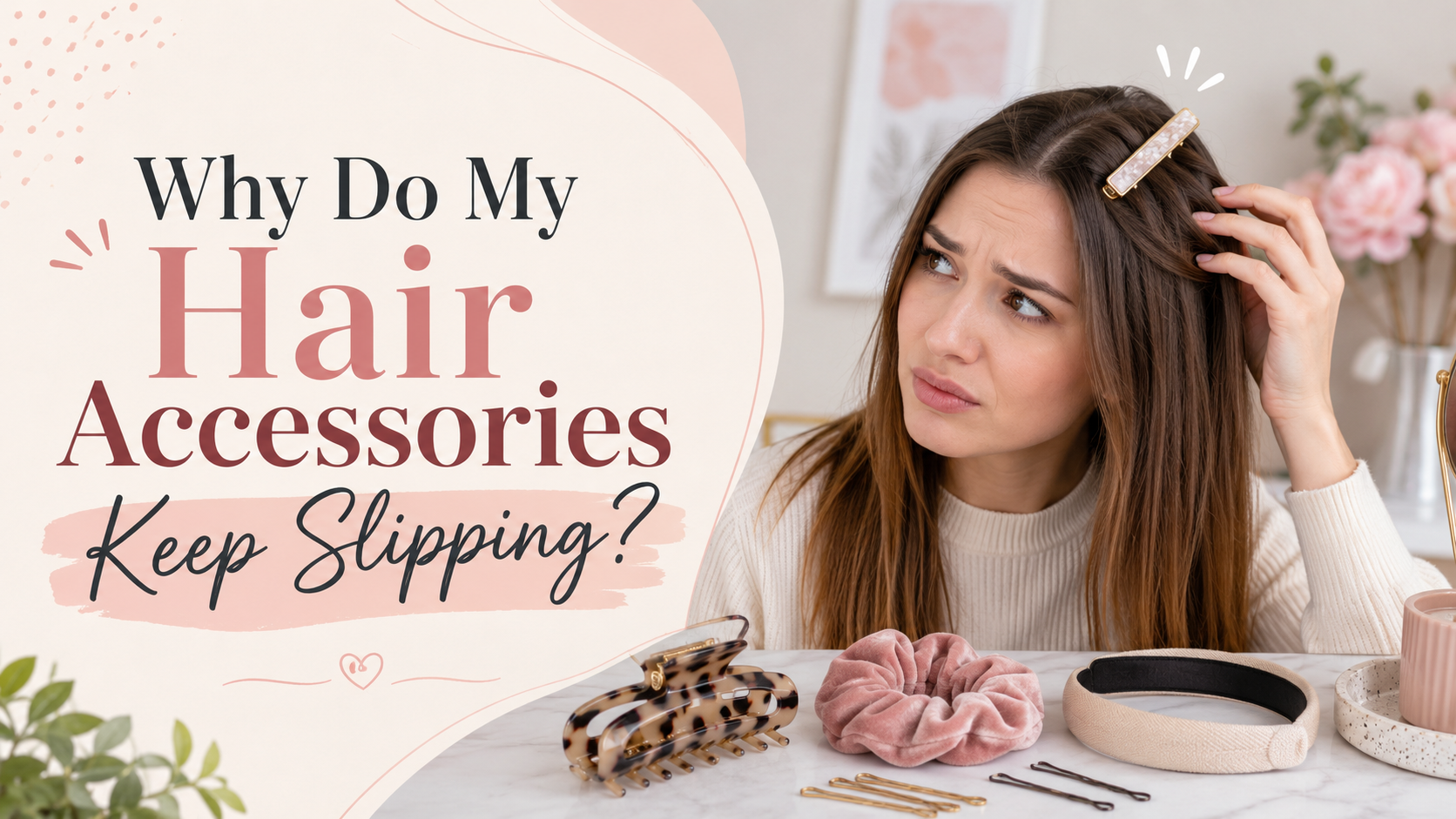
For consumers, a slipping claw clip or headband is annoying. For B2B buyers, it can become a product quality issue. If a customer says, “This clip does not hold my hair,” the problem may not be the overall quality of the product. It may be a mismatch between design structure and the target hair type. That is why non-slip performance should be considered during product development, not only after customer complaints appear.
This guide explains why hair accessories keep slipping, which product types are most likely to have grip issues, what design features improve hold, and how B2B buyers can source better non-slip hair accessories for wholesale or private label collections.
Market Context: Why Non-Slip Hair Accessories Matter
The global hair accessories market continues to grow as consumers use clips, scrunchies, headbands, barrettes, and hair ties for both practical styling and fashion expression. According to Grand View Research, the global hair accessories market was estimated at USD 23.41 billion in 2024 and is projected to reach USD 46.64 billion by 2033, growing at a CAGR of 8.0% from 2025 to 2033.
Fortune Business Insights estimates the global hair accessories market at USD 21.01 billion in 2025 and projects growth from USD 22.52 billion in 2026 to USD 39.80 billion by 2034, with a CAGR of 7.38%. For buyers, this means the category is not only trend-driven but also highly competitive. Product function, comfort, and reliable hold can become important points of differentiation.
External link placement: Link “Grand View Research” to its hair accessories market report. Link “Fortune Business Insights” to its hair accessories market report. Add a Statista citation here if your team has access to a relevant paid report.
Common Reasons Hair Accessories Slip
Most slipping problems come from a mismatch between the accessory and the user’s hair condition. A claw clip that works perfectly on thick hair may fall out of fine hair. A satin scrunchie that looks premium may slide down silky hair if the elastic is weak. A heavy barrette may look beautiful on a product page but fail during real wear because the clip base cannot support the decoration weight.
From a B2B product development perspective, slipping is not only a user problem. It is also a design, material, and sourcing problem. Buyers should evaluate whether the product has enough friction, enough tension, correct sizing, and suitable weight distribution for the intended customer group.
Hair type and texture differences
Fine, silky, straight, freshly washed, or low-density hair tends to give accessories less natural grip. Thick, textured, curly, or high-density hair usually provides more volume and friction, but it may require stronger springs, larger clips, or wider elastics. This means one universal accessory design cannot perform equally well for every hair type.
For wholesalers, the safest strategy is to divide products by use case and target hair type. For example, small claw clips with tighter teeth can be positioned for fine hair, while larger octopus claw clips with stronger springs can be positioned for thick hair.
Wrong accessory size or weight
Size is one of the most common reasons hair accessories slip. If a clip is too large for the amount of hair it needs to hold, there is not enough internal pressure to keep the hair in place. If a barrette is too heavy, gravity pulls it downward. If a headband is too loose, it moves backward during wear.
Many trend-led accessories are visually oversized, but oversized does not always mean functional. For private label buyers, this is especially important when developing social-media-friendly styles. A product may photograph well but still receive poor reviews if it slips in daily use.
Weak spring tension or poor grip design
Spring tension affects claw clips, jaw clips, barrettes, and some snap clips. If the spring is too weak, the product cannot hold the hair. If the spring is too strong, the product may pull, create discomfort, or feel difficult to open. The best design creates a secure hold without excessive pressure.
Grip design also includes teeth spacing, clip curve, contact surface, inner lining, and hinge stability. Small structural differences can change performance significantly.
Smooth materials without anti-slip support
Smooth materials such as glossy plastic, satin, polished metal, or very smooth acetate can look attractive, but they may not provide enough friction. This does not mean these materials are unsuitable. It means they may need structural support, such as tighter teeth, anti-slip coating, velvet lining, rubberized grip, or stronger elastic recovery.
| Cause | What Happens | B2B Product Solution |
|---|---|---|
| Fine or silky hair | Accessory slides because the hair has less friction. | Use tighter teeth, anti-slip lining, smaller size, or matte finish. |
| Accessory too large | Clip cannot compress enough hair to hold securely. | Offer mini, small, medium, and large size options. |
| Accessory too heavy | Barrette or clip moves downward during wear. | Reduce decoration weight or use a stronger clip base. |
| Weak spring or elastic | Hold becomes loose after repeated use. | Confirm spring tension and elastic recovery before bulk order. |
| Very smooth surface | Hair slides against the accessory surface. | Add silicone, rubber, velvet, matte texture, or inner grip structure. |
Expert Viewpoint
For non-slip hair accessories, the key is not simply making the product tighter. A good product balances friction, tension, weight, comfort, and removal experience. If the product holds well but pulls hair during removal, it may still create negative customer feedback.
Internal link placement: Add a link from “custom hair accessories manufacturer” to Q&N Beauty.
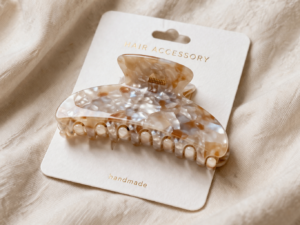
How Hair Type Affects Accessory Performance
Hair type is one of the strongest predictors of accessory performance. A product that stays in place on textured or thick hair may slip immediately on fine hair. A clip that works for fine hair may be too small or too weak for thick hair. This is why B2B buyers should not approve accessories based on one test model only.
A practical sourcing process should include sample testing across different hair profiles. For brands selling to Europe, North America, Australia, and multi-ethnic retail markets, this becomes even more important because customer hair types may vary widely.
Fine or thin hair
Fine hair has a smaller strand diameter, while thin hair usually refers to lower hair density. Both can make accessories slip. Fine or thin hair often works better with small claw clips, mini barrettes, slim headbands, snap clips, small claw sets, and lightweight scrunchies with controlled elastic strength.
Thick or heavy hair
Thick hair needs stronger support. Large claw clips, octopus clips, stronger springs, wider elastics, and larger headbands may be more suitable. However, the product must still be comfortable. Strong hold should not mean harsh pressure.
Straight, silky, or freshly washed hair
Straight and silky hair can be very smooth. Freshly washed hair may also have less styling product or oil, making it more slippery. For this user group, matte finishes, velvet lining, rubber grip, silicone strips, or textured inner teeth can improve performance.
Curly or textured hair
Curly or textured hair often provides more natural grip, but it may also be more prone to snagging if the accessory has rough edges, exposed metal, or sharp teeth. Buyers should check smoothness and removal experience carefully.
| Hair Type | Common Problem | Recommended Accessory Features | Products to Test |
|---|---|---|---|
| Fine hair | Slipping due to low volume | Small size, tighter teeth, lightweight body | Mini claw clips, snap clips, slim barrettes |
| Thin hair | Not enough hair for large clips | Low-profile designs, anti-slip lining | Small claw clips, velvet headbands |
| Thick hair | Clip cannot hold enough hair | Strong spring, deeper teeth, larger body | Large claw clips, octopus clips |
| Straight or silky hair | Smooth surface causes sliding | Matte texture, rubberized grip, silicone lining | No-slip barrettes, grip headbands |
| Curly or textured hair | Snagging during removal | Smooth edges, flexible structure, no sharp seams | Wide elastics, smooth claw clips, soft scrunchies |
Research and Health Note
Secure hold should not depend on excessive pulling. Cleveland Clinic notes that traction alopecia can happen when hair is worn in tight hairstyles repeatedly and for long periods of time, damaging hair follicles. For product developers, this supports a key principle: non-slip accessories should improve grip through better structure, not through uncomfortable tension.
External link placement: Link “traction alopecia” or “tight hairstyles” to Cleveland Clinic’s hair loss reference page.
Accessory Types Most Likely to Slip
Any hair accessory can slip if it is poorly matched to hair type, but some categories create more frequent grip complaints. These include oversized claw clips on fine hair, loose headbands without inner grip, heavy barrettes with weak clips, and smooth satin scrunchies with weak elastic.
For B2B buyers, identifying high-risk designs before production can reduce returns, negative reviews, and retailer complaints. It also helps the brand write more accurate product descriptions, such as “best for fine hair,” “ideal for thick hair,” or “designed with anti-slip inner grip.”
Oversized claw clips on fine hair
Oversized claw clips are popular because they are visually strong and easy to style in photos. However, on fine hair, they may not create enough internal compression. The clip may also feel heavy and slide down during movement.
For fine-hair collections, smaller claw clips with tighter teeth often perform better. If the buyer still wants an oversized visual effect, the product should be made as lightweight as possible and tested carefully.
Loose headbands without inner grip
Headbands can slip backward if the base is too wide, too smooth, too flexible, or too loose. This is especially common on straight or silky hair. Anti-slip features may include velvet inner lining, silicone strips, small inner teeth, or a more stable curved base.
Heavy barrettes with weak clips
Decorative barrettes often use pearls, rhinestones, bows, metal plates, or large resin shapes. If the decorative top is heavier than the clip base can support, the barrette will slide. In this category, weight balance is just as important as visual design.
Smooth satin scrunchies without enough elasticity
Satin scrunchies are popular because they feel soft and look elegant. But satin is also smooth. If the inner elastic is too weak, the scrunchie may slip down the ponytail. For fine hair, mini satin scrunchies or satin scrunchies with stronger elastic recovery are often better than oversized soft styles.
| Accessory Type | Why It Slips | Better Design Direction | B2B Risk Level |
|---|---|---|---|
| Oversized claw clip | Too large or heavy for fine hair | Offer smaller sizes and tighter teeth | High for fine-hair markets |
| Loose headband | No inner friction or poor base curve | Add velvet, silicone, or inner comb teeth | Medium to high |
| Heavy barrette | Decoration weight exceeds clip strength | Use lighter decoration or stronger clip base | High for occasion styles |
| Satin scrunchie | Smooth fabric plus weak elastic | Use better elastic recovery and smaller size | Medium |
Mini Case Example
A buyer developing a fashion barrette collection selected a pearl-covered design because it looked premium. During sample testing, the barrette slipped on fine hair within minutes. The solution was not to remove the pearl design completely, but to reduce the decoration weight, use a stronger clip base, and create a smaller version for fine hair. This kept the fashion look while improving practical hold.
Non-Slip Design Features Buyers Should Look For
Non-slip performance is built into the structure of the accessory. It should not be treated as a simple marketing claim. For B2B sourcing, buyers should ask how the product holds hair, where the contact points are, and whether the anti-slip features remain stable after repeated use.
Inner teeth spacing and clip curve
For claw clips, inner teeth spacing and clip curve are critical. Fine hair usually needs tighter teeth spacing, while thick hair may need deeper and stronger teeth. A curved clip body can help the accessory follow the head shape and improve contact.
Silicone, rubber, or velvet grip lining
Anti-slip lining increases friction between the accessory and the hair. Silicone strips, rubberized grip, soft-touch coating, and velvet lining can all improve hold. However, these materials must be attached securely and should not feel sticky, rough, or painful.
Stronger elastic and spring quality
Elastic and spring quality determine whether the product keeps working after repeated use. A scrunchie may feel good at first but loosen quickly if the elastic has poor recovery. A claw clip may lose hold if the spring weakens after repeated opening.
Lightweight construction for better balance
Weight affects stability. For fine hair, lightweight construction often improves hold because the accessory does not pull itself downward. For decorative products, the supplier should balance the weight of pearls, charms, bows, rhinestones, or metal details with the strength of the base.
- Step 1: Test the accessory on fine, medium, and thick hair instead of only one hair type.
- Step 2: Check whether it slips after 30 minutes of normal movement.
- Step 3: Open and close claw clips repeatedly to check spring recovery.
- Step 4: Stretch scrunchies and hair ties repeatedly to test elastic recovery.
- Step 5: Remove the accessory slowly to check snagging, pulling, or hair breakage risk.
- Step 6: Review packaging claims and make sure they match actual product performance.
| Feature | Best For | Buyer Checkpoint |
|---|---|---|
| Tighter inner teeth | Fine hair, small claw clips | Check spacing and edge smoothness. |
| Silicone lining | Headbands, barrettes, clips | Check bonding quality and comfort. |
| Rubberized grip | Claw clips and jaw clips | Check friction without hair pulling. |
| Velvet inner surface | Headbands and soft accessories | Check lint, colorfastness, and durability. |
| Strong elastic recovery | Scrunchies and hair ties | Test after repeated stretching. |
| Lightweight body | Fine hair and daily wear | Compare product weight before approval. |
Expert Viewpoint
A reliable non-slip product should pass three tests: it should stay in place, feel comfortable during wear, and come out without pulling hair. If it only passes the first test, the product may still fail in customer reviews.
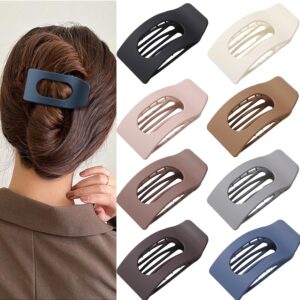
Material Choices That Improve Hold
Material selection affects grip, appearance, cost, durability, and brand positioning. In many cases, slipping is not caused by the main material alone, but by the combination of material, surface finish, accessory structure, and hair type.
Matte acetate versus glossy plastic
Acetate is often used for premium claw clips, barrettes, and hair pins because it offers rich color depth and a higher-end look. Matte acetate or textured acetate may provide slightly better perceived grip than very glossy plastic, although structural design still matters more than surface finish alone.
Glossy plastic can be cost-effective and visually clean, but it may need extra grip support for fine or silky hair. For example, tighter teeth or rubberized details can help improve performance.
Velvet-covered accessories for better friction
Velvet is useful because it adds surface friction. Velvet headbands, velvet scrunchies, and velvet bows often stay more securely than very smooth satin styles. The tradeoff is that velvet may feel more seasonal and may attract lint more easily.
Metal clip bases with stronger tension
Metal clip bases can provide a slim profile and stronger structure for barrettes, snap clips, bobby pins, and alligator clips. For fine hair, the tension should be strong enough to hold but not so strong that it pulls hair or feels uncomfortable.
Elastic quality for scrunchies and hair ties
For scrunchies and hair ties, the visible fabric is only part of the product. The inner elastic determines how well the accessory holds. Buyers should test elastic width, stretch ratio, recovery, and comfort before confirming bulk production.
| Material / Finish | Grip Advantage | Possible Limitation | Recommended Products |
|---|---|---|---|
| Matte acetate | Premium look with less slippery feel than glossy surfaces | Higher cost than standard plastic | Claw clips, barrettes, hair pins |
| Glossy plastic | Cost-effective and colorful | May slip without good structure | Claw clips, snap clips, kids’ clips |
| Velvet | Higher friction and soft touch | Seasonal look, possible lint issue | Headbands, scrunchies, bows |
| Satin | Smooth, elegant, gentle appearance | Can slip if elastic is weak | Scrunchies, bows, soft headbands |
| Metal | Strong structure and slim profile | Needs smooth finishing to avoid snagging | Snap clips, barrettes, bobby pins |
| Silicone / rubber | Strong anti-slip support | Requires good bonding and comfort testing | Headbands, claw clips, grip barrettes |
Pros and Cons: Soft Grip vs. Strong Grip
| Grip Direction | Pros | Cons | Best Use Case |
|---|---|---|---|
| Soft grip | Comfortable, gentle, good for daily wear | May not hold very thick or heavy hair | Fine hair, kids’ accessories, beauty routines |
| Strong grip | Better hold for active use or thick hair | May pull if poorly designed | Thick hair, sports styling, large claw clips |
Internal link placement: Add a link from “custom scrunchies” to your scrunchie category page.
B2B Sourcing Tips for Better Grip Quality
For wholesalers and private label buyers, non-slip quality should be confirmed before production. It is not enough to approve a product by photo. Grip quality depends on physical performance, and physical performance depends on details that are difficult to judge from images alone.
Request grip testing before production
Ask the supplier to test samples on different hair types. A basic test should include fine hair, medium hair, and thick hair. If your brand targets a specific customer group, such as fine hair or curly hair, make sure the sample is tested on that group.
Compare samples on different hair types
A product that works on one hair type may fail on another. Buyers should compare hold, comfort, slipping, and removal experience. This is especially important for retailers that sell across multiple countries and customer groups.
Avoid choosing designs based on appearance only
Hair accessories are fashion products, but function still matters. A beautiful accessory that does not stay in place may generate poor reviews. The strongest products combine visual appeal with practical use.
Confirm spring, elastic, and lining specifications
Before bulk production, buyers should confirm spring strength, elastic recovery, lining material, bonding method, product weight, and surface finishing. These details directly affect non-slip performance.
| Checkpoint | Question to Ask | Why It Matters |
|---|---|---|
| Target hair type | Is this product designed for fine, medium, thick, straight, or textured hair? | Prevents mismatch between product and customer use. |
| Grip structure | Does the product use teeth, spring, elastic, lining, or surface friction? | Identifies how the product actually holds hair. |
| Sample testing | Has the sample been tested on real hair? | Reduces risk before bulk order. |
| Durability | Does the spring or elastic remain stable after repeated use? | Affects long-term customer satisfaction. |
| Comfort | Does it pull, pinch, or snag? | Good hold should not create discomfort. |
| Packaging claim | Can the product honestly claim “non-slip” or “strong hold”? | Avoids misleading retail claims. |
Expert Sourcing Advice
When sourcing non-slip hair accessories, always ask for a physical sample and test it in the target use scenario. If the product is for fine hair, test it on fine hair. If it is for thick hair, test it on thick hair. This sounds simple, but it prevents many avoidable product complaints.
Internal link placement: Add a link from “private label hair accessories” to your custom service page.
Case Study: How Grip Became a Retail Selling Point
Non-slip performance is not only a technical detail. It can also become a clear consumer-facing selling point. A good public example is Scunci’s No-Slip Grip product line. On its official product page for No-Slip Grip claw clips, the brand highlights features such as “all day hold,” “inner teeth for a tighter grip,” and No-Slip Grip technology. This shows that grip can be positioned directly in product naming, packaging, and online descriptions.
For B2B buyers, the lesson is practical: if slipping is a common customer pain point, grip should be part of product development and marketing language. Instead of describing a clip only by color or shape, the product page can explain the function: “designed with inner teeth for a more secure hold,” “lightweight body for daily wear,” or “velvet-lined base to reduce slipping.”
The same approach can apply to private label collections. A wholesale buyer may develop a “Fine Hair Grip Collection,” a “No-Slip Daily Clip Set,” or a “Soft Hold Scrunchie Range.” The key is that the product claim must match actual sample performance.
| Observed Market Practice | Why It Works | Private Label Application |
|---|---|---|
| Use “No-Slip” in product naming | Clearly addresses a common customer problem | Create product names based on function, not only style. |
| Highlight inner teeth or grip structure | Explains why the product holds better | Add grip details to packaging and product pages. |
| Combine fashion and function | Customers want both appearance and performance | Use trend colors with tested grip structures. |
| Offer multi-packs | Improves value perception | Develop 2-pack, 4-pack, or 6-pack retail card sets. |
External link placement: Link “Scunci No-Slip Grip product line” to the official Scunci page. This is useful as a market reference, not as a competitor endorsement.
Pros and Cons of Non-Slip Hair Accessory Designs
Non-slip designs can improve product performance, but they also require careful development. A stronger grip may increase hold, but if the material is rough or the tension is excessive, it may create discomfort. A silicone lining may improve friction, but if bonding quality is poor, the lining may peel. B2B buyers should evaluate both advantages and possible tradeoffs.
| Feature | Pros | Cons | Best Buyer Use |
|---|---|---|---|
| Rubberized grip | Strong hold, clear functional selling point | May feel sticky if poorly finished | Claw clips and jaw clips |
| Silicone lining | Good friction, useful for headbands | Bonding quality must be tested | Headbands and barrettes |
| Velvet lining | Soft, comfortable, better grip than smooth fabric | May collect lint | Headbands, bows, soft accessories |
| Stronger spring | Better hold for thick hair | May feel tight on fine hair | Large claw clips, thick hair products |
| Tighter teeth | Better hold for fine hair | Needs smooth edges to avoid snagging | Mini claw clips and fine-hair clips |
| Stronger elastic | Better ponytail hold | May pull if too tight | Scrunchies and hair ties |
Expert Summary
The best non-slip design is not the strongest possible grip. It is the most balanced grip for the target hair type. For fine hair, that may mean smaller size and anti-slip lining. For thick hair, it may mean stronger spring and larger capacity. For kids’ accessories, it may mean softer tension and smooth edges.
Future Trends in Non-Slip Hair Accessories
As the hair accessories market grows, buyers are moving beyond simple color and shape updates. Function is becoming a stronger selling point. Non-slip performance, comfort, damage-free claims, sustainable materials, and private label customization are likely to shape product development in 2026 and beyond.
Trend 1: Hair-type-specific collections
More brands are likely to divide accessories by hair type, such as fine hair, thick hair, curly hair, or kids’ hair. This helps customers choose more confidently and reduces product mismatch.
Trend 2: Better anti-slip technology
Silicone lining, rubberized teeth, soft-touch coating, velvet grip, and improved spring structures will continue to appear in product development. Buyers should expect grip claims to become more specific.
Trend 3: Lightweight premium designs
Consumers want products that look premium but feel comfortable. Lightweight acetate, slim metal bases, small claw clips, and soft fabric accessories can support this trend.
Trend 4: Sustainable and recycled materials
Market reports show growing interest in eco-friendly materials. For hair accessories, this may include recycled plastic, organic cotton, biodegradable packaging, and more responsible material sourcing.
Trend 5: Retail-ready functional packaging
Packaging will not only show brand identity. It will also explain function. Claims such as “non-slip grip,” “for fine hair,” “soft hold,” “lightweight daily clip,” or “no-pull elastic” can help consumers understand the product faster.
| Trend | Product Opportunity | B2B Action |
|---|---|---|
| Hair-type-specific products | Fine hair clips, thick hair claw clips, curly hair accessories | Create clearer product segmentation. |
| Functional grip claims | No-slip, soft hold, strong hold, lightweight hold | Test samples before making claims. |
| Premium lightweight materials | Acetate, slim metal, soft fabric, lightweight resin | Balance appearance with comfort. |
| Sustainable development | Recycled plastic, organic fabric, paper packaging | Confirm material availability and cost. |
| Giftable retail sets | Mixed clip sets, scrunchie sets, headband and clip sets | Develop coordinated color stories and packaging. |
FAQs About Slipping Hair Accessories
Why do my claw clips keep falling out?
Claw clips usually fall out because the size, spring tension, or teeth spacing does not match the hair type. Fine hair may need smaller clips with tighter teeth, while thick hair may need larger clips with stronger springs and deeper teeth.
What hair accessories stay in place best?
Hair accessories with anti-slip features usually stay in place better. These may include claw clips with inner teeth, barrettes with rubber grip, headbands with silicone or velvet lining, and scrunchies with strong elastic recovery.
Are non-slip hair clips suitable for fine hair?
Yes, non-slip hair clips can be suitable for fine hair when they are lightweight and properly sized. Small claw clips, slim barrettes, snap clips, and clips with rubberized or silicone grip are often good options for fine hair.
How can brands improve hair accessory grip?
Brands can improve grip by adjusting teeth spacing, clip curve, spring strength, elastic quality, product weight, and inner lining. Silicone, rubber, velvet, matte texture, and better elastic recovery can all help reduce slipping.
What should wholesalers test before ordering hair accessories?
Wholesalers should test grip performance, comfort, removal experience, spring recovery, elastic recovery, surface smoothness, color consistency, and packaging claims before confirming bulk orders.
Do satin scrunchies slip more easily?
Satin scrunchies can slip more easily if the fabric is very smooth and the inner elastic is weak. For better hold, buyers can choose smaller satin scrunchies, stronger elastic, or mixed-material designs with improved tension.
Can non-slip hair accessories be customized for private label brands?
Yes. Non-slip hair accessories can be customized by material, color, size, grip structure, logo method, packaging, and set combination. Private label buyers can develop clip sets, scrunchie sets, headbands, barrettes, and mixed accessory collections based on target hair type.
Conclusion: Better Grip Starts with Better Product Development
Hair accessories keep slipping when the design does not match the user’s hair type, texture, volume, or styling needs. The most common causes include wrong size, excessive weight, weak spring tension, poor elastic recovery, smooth materials, and lack of anti-slip structure.
For B2B buyers, the solution is not simply to choose “stronger” accessories. The better approach is to develop products with the right balance of hold, comfort, weight, material, and removal experience. Fine hair may need smaller and lighter clips. Thick hair may need stronger springs and larger capacity. Straight or silky hair may need rubber, silicone, velvet, or matte surface support. Scrunchies may need better elastic recovery instead of only softer fabric.
As the hair accessories market continues to grow, function-led design will become more important. Non-slip features, hair-type-specific collections, comfort claims, sustainable materials, and retail-ready private label packaging can help brands create stronger product lines and better customer satisfaction.
Need Custom Non-Slip Hair Accessories for Your Brand?
If you are developing a wholesale or private label hair accessory collection, start by confirming your target customer’s hair type, product use scenario, material preference, logo method, packaging style, and target price range. Then test physical samples for grip, comfort, and durability before bulk production.
- Grand View Research Hair Accessories Market Report: Use near the market size and growth paragraph.
- Fortune Business Insights Hair Accessories Market Report: Use near the 2026–2034 forecast paragraph.
- Google Search Central Helpful Content Guidelines: Use for internal editorial review, not necessarily visible in the article.
- Cleveland Clinic Hair Loss Reference: Use near the section discussing excessive tension and traction alopecia.
- Scunci No-Slip Grip Product Page: Use in the case study section as a public market example.
- Statista: Add your paid report link if available. Do not cite specific Statista numbers unless verified.