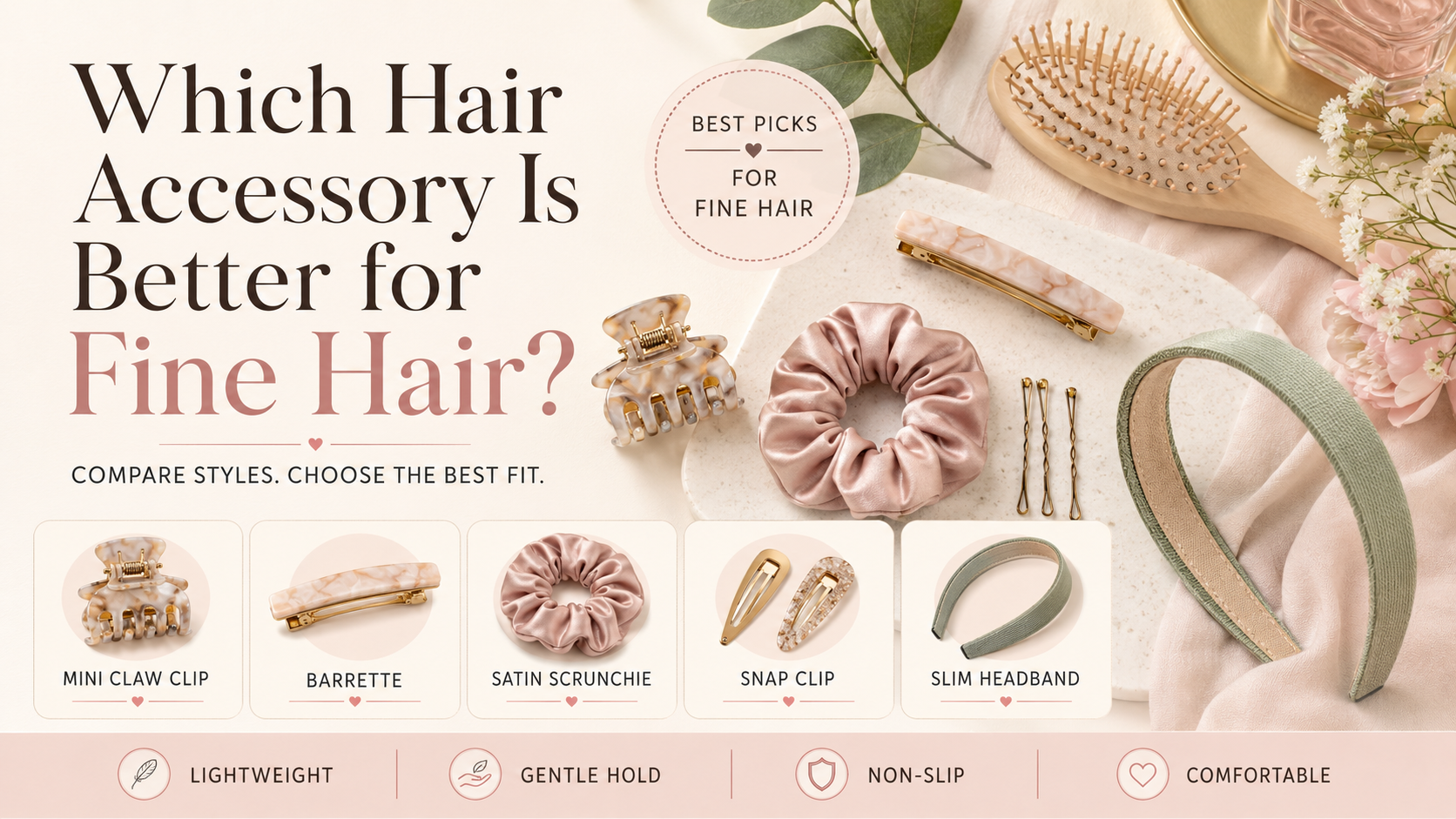
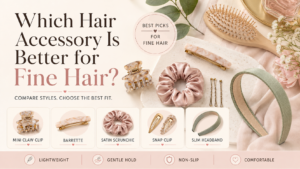
The short answer is that small claw clips with tighter teeth, lightweight barrettes, soft mini scrunchies, slim anti-slip headbands, and rubber-coated or silicone-lined grip accessories usually work better for fine hair than oversized, heavy, or overly smooth styles. However, the best choice depends on the customer’s hair density, hairstyle, usage scenario, and target retail price point.
This guide explains how B2B buyers can evaluate hair accessories for fine hair from a product development, sourcing, and private label perspective. It covers accessory types, materials, grip design, customization options, sample testing, packaging, and buyer FAQs.
External link suggestion: Link “Grand View Research” to its hair accessories market report. Link “Fortune Business Insights” to its hair accessories market report. Add Statista citation here if your team has access to a relevant paid report.
Understanding Fine Hair and Accessory Fit
Fine hair refers to the diameter of individual hair strands, not necessarily the total amount of hair on the head. A person may have fine hair but high density, meaning many small-diameter strands. Another customer may have fine hair with low density, which usually makes slipping more noticeable. This distinction matters because a product that works for fine but dense hair may still feel too heavy or loose for fine and low-density hair.
From a product development perspective, fine hair creates three main challenges: lower friction, lower volume, and higher sensitivity to weight. Smooth hair surfaces can make clips slide down. Lower volume means large claw clips may not have enough hair to hold. Lightweight strands can also be more vulnerable to pulling when the spring tension, teeth spacing, or elastic pressure is poorly balanced.
Why standard hair clips may feel loose on fine hair
Standard hair clips are often designed for the average user, not for fine-hair customers specifically. Many mass-market claw clips are built with wide teeth, strong visual volume, and medium-to-large body size. These features can look attractive on shelf displays, but they may not provide the right hold on fine hair. If the clip body is too large, the hair inside the clip is not compressed enough. If the teeth are too far apart, the strands escape easily. If the surface is too glossy, friction becomes even lower.
In retail reviews, fine-hair customers often describe the same problems: “too heavy,” “slides out,” “doesn’t hold my hair,” or “pulls when I remove it.” For wholesalers, these complaints are important because they can affect repeat orders, star ratings, and retailer confidence.
Key buyer concerns for fine-hair accessory collections
B2B buyers should evaluate fine-hair accessories through both functional and commercial lenses. The product should hold well, feel comfortable, look fashionable, and fit the brand’s target price. At the same time, it should be easy to produce consistently, package attractively, and reorder without major material or color variation.
| Buyer Concern | Why It Matters | Product Development Response |
|---|---|---|
| Slipping | Fine hair has less volume and often less grip. | Use smaller sizes, tighter teeth, anti-slip lining, or rubber-coated details. |
| Pulling or breakage | Fine strands may feel more delicate during removal. | Avoid sharp edges, rough seams, and overly tight springs. |
| Heavy appearance | Large accessories can overpower fine hair visually. | Offer slim, mini, lightweight, or low-profile designs. |
| Low repeat purchase | Poor fit leads to negative reviews and fewer reorders. | Test samples on fine hair before confirming bulk production. |
Internal link suggestion: Add a link from “custom hair accessories” to https://qnbeauty.com/ or your main hair accessories landing page.
Best Hair Accessory Types for Fine Hair
Fine-hair customers usually need accessories that create secure hold without relying on large hair volume. This makes small, lightweight, and friction-enhanced products more suitable than oversized pieces. For B2B buyers, the strongest collection is often not a single product, but a balanced range across claw clips, barrettes, scrunchies, hair ties, and headbands.
Small claw clips with tighter teeth
Small claw clips are one of the most practical choices for fine hair. Compared with oversized claw clips, mini and small clips require less hair volume to hold properly. Tighter teeth spacing helps capture smaller strands, while a slightly curved body can follow the shape of the head more naturally.
For private label buyers, small claw clips can be developed in acetate, recycled plastic, matte resin, or classic plastic. The key is not only the material, but also the structure: spring strength, tooth alignment, body weight, and finishing smoothness all affect user experience.
Lightweight barrettes and snap clips
Barrettes and snap clips work well for side sections, half-up styling, bangs, and decorative looks. For fine hair, lightweight bases are usually better than heavy metal or oversized decorative plates. If the barrette is too heavy, it may slide down even if the clip mechanism is strong.
From a merchandising perspective, barrettes are useful because they can be sold in sets. A two-piece or three-piece set allows brands to offer multiple colors, finishes, or shapes without making the unit price too high.
Soft scrunchies and mini hair ties
For ponytails, soft scrunchies and mini hair ties can be better than thick, oversized scrunchies. Satin, velvet, and soft polyester fabrics are popular because they feel gentle and look premium. However, the inner elastic matters more than many buyers realize. If the elastic is too loose, fine hair will slip. If it is too tight, users may feel pulling or discomfort.
A good fine-hair scrunchie should have controlled elasticity, a moderate fabric volume, and a smooth seam. For B2B buyers, it is worth asking the supplier to test different elastic widths and stretch recovery levels before confirming production.
Slim headbands with anti-slip lining
Slim headbands are suitable for fine hair because they do not require large hair volume to function. The best options often include inner comb teeth, velvet lining, silicone strips, or flexible bases that sit comfortably without creating pressure behind the ears.
For wholesale collections, slim headbands are also easy to customize by fabric, print, padding thickness, bow detail, knot shape, and packaging. They work well for daily wear, skincare routines, school accessories, bridal gift sets, and holiday collections.
| Accessory Type | Best Use Scenario | Fine Hair Advantage | B2B Collection Tip |
|---|---|---|---|
| Small claw clips | Half-up styles, quick updos, daily styling | Better hold with less hair volume | Offer mini, small, and medium sizes in one collection. |
| Lightweight barrettes | Side styling, decorative looks, event wear | Secure without adding too much weight | Develop 2-piece or 3-piece retail card sets. |
| Mini scrunchies | Ponytails, kids, daily casual looks | Gentler hold and better proportion | Test elastic strength and recovery before bulk orders. |
| Slim headbands | Face-framing, skincare, office, fashion styling | Does not depend on hair thickness | Add anti-slip lining for better user reviews. |
Case Study: Why “Mini” Can Outperform “Oversized” for Fine Hair
A small beauty retailer planning a spring hair accessory launch initially selected oversized claw clips because they looked more eye-catching in campaign photos. During sample testing, however, fine-hair testers reported that the large clips felt heavy and slipped after movement. The buyer adjusted the range to include smaller claw clips with tighter teeth, matte finishing, and lighter body weight. The final assortment still included one statement clip for visual appeal, but the core selling set became mini and small clips for daily use.
The lesson for B2B buyers is clear: social media visuals may create interest, but everyday fit drives repeat purchase. For fine hair, smaller and more functional designs often create stronger customer satisfaction than oversized trend pieces.
Materials That Work Well for Fine Hair
Material choice affects appearance, weight, friction, durability, and perceived value. For fine hair, the best materials are usually lightweight, smooth enough to avoid snagging, but not so slippery that the accessory cannot stay in place. This balance is especially important for private label buyers who want the product to look premium while still performing well.
Acetate for lightweight premium clips
Acetate is popular for premium hair clips because it offers rich color depth, pattern variation, and a polished finish. It is often used for claw clips, barrettes, hair pins, and combs. For fine hair, acetate can work well when the clip is not too large or heavy. Smaller acetate claw clips and slim acetate barrettes are usually more suitable than oversized heavy versions.
The main B2B advantage of acetate is visual value. Tortoise patterns, marble effects, translucent colors, and seasonal palettes can help brands create a more elevated collection. The limitation is that acetate may cost more than standard plastic, so buyers should match the material to the target retail segment.
Satin and velvet for soft hold
Satin and velvet are commonly used for scrunchies, headbands, bows, and soft hair ties. Satin gives a smooth, polished look and is often positioned as gentle and beauty-friendly. Velvet provides more surface friction, which can help fine hair stay in place better than very slippery fabrics.
For fine hair, velvet mini scrunchies and slim velvet headbands can be especially useful. They provide soft contact and better grip without relying on aggressive teeth or strong pressure.
Metal clips with controlled tension
Metal bases are often used in snap clips, alligator clips, French barrettes, and bobby pins. For fine hair, the key is controlled tension. Too little tension causes slipping; too much tension can pull or leave discomfort. Buyers should check the smoothness of the metal edge, the opening angle, and how easily the clip releases from fine strands.
Metal can also support pearl, rhinestone, enamel, and charm decorations. For private label brands, metal clip bases are useful for occasion collections, bridal sets, party accessories, and holiday assortments.
Rubber-coated or silicone-lined grip options
Rubber coating and silicone lining are two of the most practical ways to improve grip for fine hair. These details increase friction and help reduce slipping, especially for claw clips, headbands, and some barrettes. Public examples in the market include no-slip grip claw clips and fine-hair jaw clips that highlight rubber teeth or inner grip technology as key selling points.
| Material | Pros | Cons | Best Product Types |
|---|---|---|---|
| Acetate | Premium look, rich colors, strong retail value | Can be heavier and higher cost | Small claw clips, barrettes, hair pins |
| Satin | Soft touch, elegant appearance, good for beauty positioning | May be slippery if elastic is weak | Scrunchies, bows, headbands |
| Velvet | Better friction, soft seasonal look, good grip | More seasonal and may collect lint | Mini scrunchies, headbands, bows |
| Metal | Strong structure, slim profile, good for decorative styles | Needs smooth finishing to avoid snagging | Snap clips, barrettes, bobby pins |
| Rubber or silicone grip | Improves anti-slip performance | May add cost and require careful bonding quality | Claw clips, headbands, barrettes |
Internal link suggestion: Link “custom hair scrunchies” to https://qnbeauty.com/product-category/hair-scrunchie/.
Grip Design: What Actually Keeps Accessories in Place?
Many buyers focus first on color, shape, and surface decoration. Those are important for retail appeal, but grip design is what determines whether customers actually keep using the product. For fine hair, grip performance depends on the relationship between size, weight, teeth spacing, surface friction, spring strength, and contact area.
Smaller clip size and shorter tooth spacing
Fine hair usually needs a smaller holding area. When the clip is too large, there may not be enough hair volume to create pressure inside the clip. Shorter tooth spacing helps collect smaller strands and prevents the hair from sliding out too easily.
For claw clips, buyers should compare tooth depth, tooth spacing, spring strength, and clip curve. A product may look similar in photos but perform very differently in real use because of small structural differences.
Anti-slip inner lining
Anti-slip lining can be added through silicone strips, rubber teeth, soft-touch coating, velvet lining, or textured inner surfaces. These details are especially useful for headbands and clips designed for straight, silky, or fine hair.
However, anti-slip features should be tested carefully. If the grip material is too rough, it may pull the hair. If the bonding is weak, the lining may peel after repeated use. For B2B buyers, the best anti-slip design is secure but still comfortable.
Strong but comfortable spring tension
Spring tension is one of the most important technical details for claw clips and some barrettes. Fine hair needs enough tension to hold, but excessive pressure can make the product uncomfortable. The best fine-hair clips usually feel secure without requiring forceful opening or causing scalp pressure.
Lightweight structure for daily wear
Fine-hair customers often prefer accessories that feel almost weightless. Lightweight construction improves comfort and reduces the chance of the accessory sliding down over time. This is why mini clips, slim barrettes, and low-profile headbands often perform better than oversized, heavily decorated designs.
- Step 1: Test the accessory on fine, straight hair for slipping after 30 minutes of movement.
- Step 2: Test removal to check whether strands catch, pull, or tangle.
- Step 3: Compare the same style in small, medium, and large sizes.
- Step 4: Check spring recovery or elastic recovery after repeated opening and stretching.
- Step 5: Record user feedback on comfort, hold, and appearance.
| Test Item | What to Check | Pass Standard |
|---|---|---|
| Slip test | Does the clip move after walking, turning, or light activity? | No obvious sliding within normal daily movement. |
| Comfort test | Does the product create pressure or pulling? | Comfortable for daily wear. |
| Removal test | Does hair catch in teeth, hinges, seams, or decoration? | No obvious snagging during removal. |
| Durability test | Does spring, elastic, or lining remain stable after repeated use? | No major deformation, peeling, or loss of function. |
Case Study: Anti-Slip Details as a Retail Selling Point
Several mass-market hair accessory brands use “no-slip,” “grip,” “rubber teeth,” or “all-day hold” as front-facing product claims. This shows that grip is not only a technical feature, but also a consumer-facing selling point. For private label buyers, adding anti-slip structure can support both better product performance and clearer retail messaging.
A strong product page or packaging card can explain the feature in simple language, such as “designed with inner grip support for fine or smooth hair.” This helps customers understand why the product is different before they purchase.
B2B Product Selection Tips for Wholesalers
For wholesalers, the best fine-hair collection should balance trend, function, price, and repeatability. A product that only looks attractive may sell once but fail to generate reorders. A product that performs well but looks too basic may not stand out in retail. The goal is to build an assortment that solves real hair problems while fitting seasonal fashion demand.
Build a fine-hair-friendly product range
Instead of offering only one type of clip, buyers can create a fine-hair-friendly range with several complementary SKUs. For example, a practical assortment could include mini claw clips, slim barrettes, soft mini scrunchies, anti-slip headbands, and small decorative clips.
This approach helps retailers serve different use scenarios: workday styling, casual home use, skincare routines, travel, party looks, and gifting.
Offer assorted sizes instead of one universal size
Fine hair is not the same for every customer. Some people have fine but dense hair, while others have fine and low-density hair. Offering assorted sizes reduces the risk of poor fit. A claw clip collection, for example, may include mini clips for side sections, small clips for half-up styles, and medium clips for light updos.
Balance fashion design with practical hold
Current hair accessory trends include clean acetate clips, neutral colors, soft satin textures, bows, pearls, metallic accents, and coquette-inspired details. For fine hair, these trends should be adapted in lighter, smaller, and more wearable formats.
A bow barrette may look beautiful, but if the bow is too heavy, it may slip. A pearl clip may look premium, but if the base has weak grip, customers may not use it repeatedly. Good product development means translating trends into structures that actually work.
Test grip performance before bulk orders
Sample testing is especially important for fine-hair products. Buyers should not approve bulk orders based only on photos or one sample on thick hair. Ideally, samples should be tested on at least three hair profiles: fine and low-density hair, fine and high-density hair, and medium hair. This gives a more realistic view of how the product will perform in the market.
| Collection Role | Product Example | Commercial Purpose |
|---|---|---|
| Core daily SKU | Small matte claw clip | High repeat potential and broad daily use. |
| Soft accessory SKU | Mini satin or velvet scrunchie set | Good for gift sets, beauty bundles, and low-risk entry price. |
| Fashion SKU | Pearl or bow barrette | Adds visual appeal and seasonal trend value. |
| Functional SKU | Anti-slip slim headband | Solves practical use cases such as skincare, work, and daily styling. |
| Retail set SKU | Mixed clip card set | Improves perceived value and supports merchandising. |
Private Label Customization Suggestions
Private label buyers can customize fine-hair accessories through color, material, size, logo method, packaging, and set combination. The key is to customize in a way that supports both the target customer and the retail channel. A premium boutique brand may need acetate clips in soft neutral tones with elegant card packaging. A mass-market retailer may prefer practical multi-packs with strong grip claims and simple display packaging.
Custom colors for seasonal collections
Fine-hair accessories can be refreshed through seasonal colors without changing the core structure. This is useful because once a buyer finds a well-performing clip or scrunchie base, color updates can create newness while reducing development risk.
Popular color directions include soft neutrals, cream, champagne, dusty rose, tortoise, translucent brown, matte black, pearl white, sage green, and seasonal pastels. For younger brands, brighter colors or playful prints may also work well.
Logo placement on clips, cards, and packaging
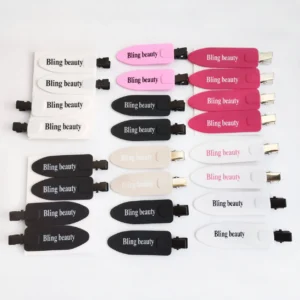
For fine-hair accessories, logo placement should be subtle and appropriate to the product size. Small claw clips may not have enough space for a large logo, so packaging may be the better branding area. Barrettes and headbands may allow small metal plates, woven labels, embossed details, or printed logos depending on the material.
For B2B buyers, the most practical branding options are often custom hang cards, printed backing cards, barcode labels, OPP bags, boxes, fabric labels, and small logo plates. These methods help create brand recognition without affecting product comfort.
Matching hair clips with scrunchies or headbands
Matching sets can increase retail value. A fine-hair set might include two mini claw clips, one satin mini scrunchie, and one slim headband in the same color story. This gives customers multiple styling options and creates a stronger giftable product.
From a wholesale perspective, sets also help improve average order value. They are suitable for holiday launches, back-to-school collections, bridesmaid gifts, spa kits, and beauty subscription boxes.
Retail-ready packaging for fine-hair collections
Packaging should explain the product benefit clearly. Instead of only listing the material, buyers can highlight the use case: “for fine hair,” “lightweight hold,” “anti-slip grip,” “soft daily wear,” or “mini size for half-up styling.” Clear packaging language helps consumers choose the right product quickly.
| Customization Area | Options | Best For |
|---|---|---|
| Color | Pantone matching, seasonal palettes, translucent effects, tortoise patterns | Trend collections and brand identity |
| Material | Acetate, plastic, satin, velvet, metal, silicone grip | Price positioning and product function |
| Logo | Printing, metal plate, embossing, woven label, packaging logo | Private label branding |
| Packaging | OPP bag, card packaging, box, hang tag, barcode label | Retail display and wholesale distribution |
| Set combination | Clip sets, scrunchie sets, mixed accessory sets | Giftable SKUs and higher perceived value |
Internal link suggestion: Link “private label hair accessories” to https://qnbeauty.com/custom-service/.
Procurement Checklist Before Bulk Orders
Fine-hair accessories require careful sample evaluation because small differences in tension, weight, lining, and size can change the user experience. Before placing a bulk order, buyers should confirm not only the design, but also the functional details that affect customer satisfaction.
Confirm product size and weight
Ask for exact dimensions and sample weight. A product may look small in photos but still feel heavy in use. For fine hair, lower weight often improves comfort and stability.
Confirm grip structure
Check teeth spacing, anti-slip lining, spring tension, elastic strength, or headband inner grip depending on the product type. If the accessory is promoted as suitable for fine hair, the grip structure should support that claim.
Confirm material and color consistency
For acetate, resin, plastic, satin, velvet, or metal finishes, buyers should confirm color standards before mass production. If the product is part of a set, all pieces should match the same color story.
Confirm packaging and labeling
Packaging is especially important for retail buyers. Confirm hang hole position, card size, barcode label, warning label if needed, logo placement, and product claim wording before production.
| Checklist Item | Questions to Ask Supplier | Why It Matters |
|---|---|---|
| Sample testing | Has the product been tested on fine hair? | Reduces slipping complaints after launch. |
| Spring or elastic quality | Does it keep tension after repeated use? | Affects durability and repeat purchase. |
| Surface finishing | Are edges smooth and free from rough points? | Prevents snagging and discomfort. |
| Weight | Is the accessory light enough for fine hair? | Heavy pieces may slide or feel uncomfortable. |
| Packaging | Does the packaging clearly explain the product benefit? | Improves shopper understanding and retail conversion. |
| Compliance | Are material, labeling, and packaging requirements aligned with the destination market? | Supports smoother wholesale and retail distribution. |
Future Trends: Fine-Hair Accessories in 2026 and Beyond
The hair accessories category is being shaped by three strong directions: personalization, comfort, and function-led design. Market reports continue to highlight customization, social media influence, online retail, and sustainable materials as important growth drivers in the broader hair accessories industry. For fine-hair products, these trends translate into smaller sizes, lighter structures, softer materials, better grip, and clearer product claims.
Trend 1: Lightweight premium materials
Customers want accessories that look elevated but do not feel heavy. This creates demand for slim acetate clips, lightweight resin styles, soft satin scrunchies, and delicate metal barrettes.
Trend 2: Functional beauty claims
Product claims such as “anti-slip,” “gentle hold,” “for fine hair,” and “lightweight daily wear” are likely to become more important. These claims help shoppers quickly understand why a product fits their needs.
Trend 3: Giftable private label sets
Fine-hair accessories are well suited for small gift sets because they are lightweight, colorful, and easy to combine. Brands can build seasonal sets around color stories, materials, or use scenarios.
Trend 4: More thoughtful size ranges
Instead of selling one standard size, more brands may offer mini, small, medium, and large variations. This helps serve different hair types and reduces fit-related complaints.
| Trend | Product Opportunity | B2B Action |
|---|---|---|
| Personalization | Custom colors, initials, charms, logo packaging | Develop flexible private label options. |
| Comfort | Soft scrunchies, smooth clips, lightweight headbands | Test comfort and removal experience. |
| Anti-slip function | Rubber teeth, silicone lining, velvet inner grip | Add clear product claims on packaging. |
| Gift sets | Mixed accessory packs and seasonal collections | Plan color stories and retail-ready packaging. |
FAQs About Hair Accessories for Fine Hair
What hair clip is best for fine hair?
Small claw clips, lightweight barrettes, snap clips, and mini clips with tighter teeth usually work best for fine hair. The best choice should be lightweight, smooth, and secure without pulling. Anti-slip details such as rubber teeth or silicone lining can also help.
Are claw clips suitable for fine hair?
Yes, claw clips can be suitable for fine hair if the size and grip design are appropriate. Mini and small claw clips usually work better than oversized clips. Buyers should look for tighter teeth, lighter body weight, and comfortable spring tension.
Do satin scrunchies work for fine hair?
Satin scrunchies can work well for fine hair when the inner elastic has enough recovery and the scrunchie is not too large. Mini satin scrunchies are often better for fine hair than oversized versions because they provide a more secure and balanced hold.
How can buyers avoid hair accessories slipping?
Buyers can reduce slipping by choosing smaller sizes, lighter structures, tighter teeth spacing, better spring tension, anti-slip lining, velvet surfaces, or rubber-coated grip details. Sample testing on fine hair before bulk production is strongly recommended.
What should wholesalers consider when sourcing fine-hair accessories?
Wholesalers should check size, weight, grip design, material, comfort, packaging claims, and target customer use scenarios. A strong collection should include both functional daily pieces and trend-led styles.
Can fine-hair accessories be customized for private label brands?
Yes. Fine-hair accessories can be customized by color, material, logo, size, packaging, and set combination. Common private label options include custom cards, logo printing, metal logo plates, woven labels, barcode labels, and retail-ready packaging.
Which materials are best for fine-hair accessories?
Acetate, satin, velvet, metal, rubber-coated details, and silicone-lined structures can all work well depending on the product type. For fine hair, the material should be lightweight, smooth, and supported by a good grip structure.
Conclusion: The Best Hair Accessory for Fine Hair Is Lightweight, Secure, and Well-Tested
For fine hair, the best accessory is not always the most decorative or oversized option. It is the product that balances secure hold, lightweight comfort, smooth removal, and attractive design. Small claw clips with tighter teeth, lightweight barrettes, soft mini scrunchies, slim anti-slip headbands, and rubber-coated grip accessories are usually strong choices for this customer group.
For wholesalers and private label brands, fine-hair accessories offer a valuable product development opportunity. The market is large, trend-driven, and supported by frequent consumer use. But success depends on more than appearance. Buyers should test samples, confirm grip details, evaluate material quality, and use packaging that clearly communicates the product’s benefit.
A thoughtful fine-hair accessory collection can serve daily styling, gifting, beauty routines, travel, and seasonal fashion. As consumers continue to look for accessories that are both stylish and functional, brands that develop better fit-specific products will have a stronger chance of earning repeat purchases and positive reviews.
Need Custom Hair Accessories for Your Brand?
If you are developing a private label hair accessory collection for fine hair, you can start with proven product types such as mini claw clips, satin scrunchies, slim headbands, and lightweight barrettes. Confirm the target customer, material, color palette, logo method, packaging style, and expected order quantity before sample development.
Request Custom Hair Accessory Samples
Internal link suggestion: Link this CTA to your inquiry or custom service page. You may also add a secondary CTA such as “View Wholesale Hair Accessories Catalog.”
- Grand View Research – Hair Accessories Market Report. Use this source near the market size paragraph in the introduction.
- Fortune Business Insights – Hair Accessories Market Report. Use this source near the growth forecast and regional market discussion.
- Google Search Central – Creating Helpful, Reliable, People-First Content. Use this source in your editorial or SEO review process.
- Statista – Add your paid-source link here if available. Suggested placement: market data note in the introduction.
- Q&N Beauty internal links – Add links to your homepage, wholesale hair accessories category, scrunchie category, and custom service page.