By QN Beauty Editorial Team | For beauty accessory shoppers, product developers, and sourcing teams
What Is a Pinch Clip? Complete Buyer’s Guide
If you have ever looked at a small spring-loaded hair accessory and wondered whether it was a Pinch Clip, a claw clip, or a barrette, you are not alone. The term appears often in product listings, but many articles still do not explain it clearly. That creates a real problem for shoppers and brands: people want a clip that feels secure, looks polished, and does not tug at the hair, but they do not always know which structure will actually work.
This guide explains exactly what a Pinch Clip is, how it works, when to use it, which sizes and materials make sense, and how it compares with other hair clips. It is built for a Western audience and designed to meet modern people-first SEO expectations with practical advice, market data, expert-backed hair care guidance, and clear product selection logic.
What Is a Pinch Clip
1. The basic definition of a pinch clip
A Pinch Clip is a spring-loaded hair clip that opens when you press or “pinch” its sides and closes automatically when released. In fashion retail, the term usually refers to a compact clip that grips hair with a hinged or sprung mechanism rather than a long salon sectioning clip. That is why pinch clips are frequently used for flyaways, half-up styles, light updos, and decorative side placement.[4]
2. What a pinch clip usually looks like
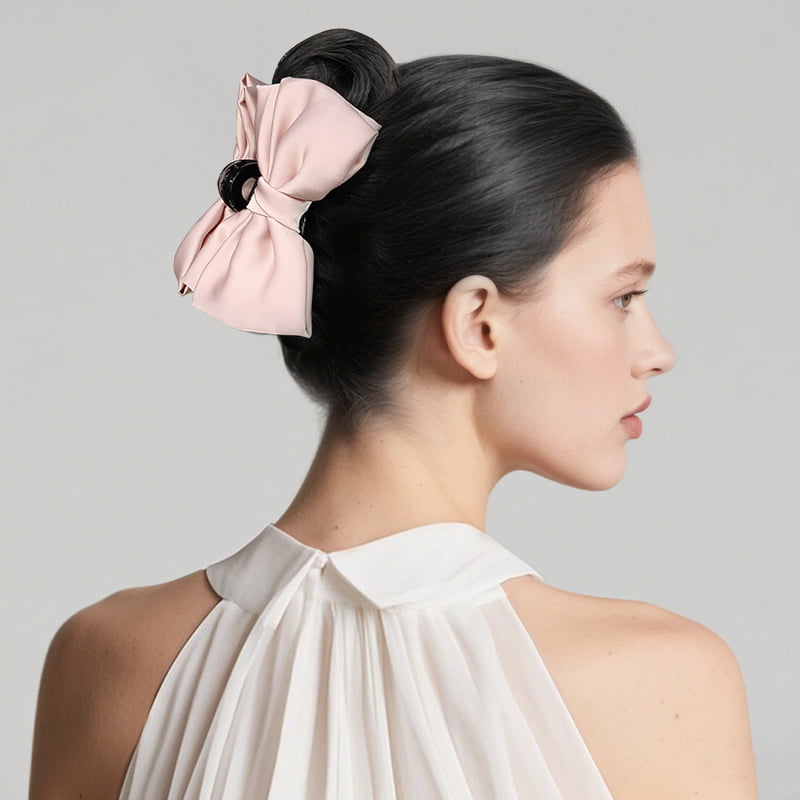
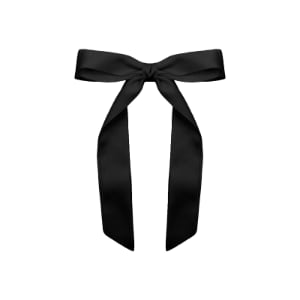
Visually, a pinch clip is usually smaller and more compact than a classic large claw clip. It may have short teeth, curved jaws, or smooth inner grips, depending on the brand. Some styles are minimalist and nearly invisible in the hair. Others are decorative, with bows, rhinestones, pearls, metallic finishes, or tortoise-shell acetate effects.
3. Why shoppers often confuse it with other clips
The category is broader than many people expect. France Luxe describes pinch clips as clips held together in a pinching fashion using a spring and sold in multiple sizes and styles. That is useful because it captures the feature that separates a pinch clip from a fixed barrette: pressure plus spring tension.[4]
Data point: real-world product listings show that pinch clips can range from extra-small styles around 4 cm wide for fine hair to jumbo formats engineered for much larger sections.[9][10]
Real-world example: Balmain markets extra-small and jumbo pinch clips for different hair densities, while France Luxe offers pinch clip assortments as both styling helpers and polished fashion accessories.[4][9][10]
Expert note: for SEO and ecommerce, it helps to define the mechanism first and then clarify related shopper language such as mini claw clip, small hair clip, and spring hair clip.
| Accessory Type | Mechanism | Best Use | Typical Profile |
|---|---|---|---|
| Pinch clip | Spring-loaded | Small to medium sections, quick styling | Compact |
| Claw clip | Spring-loaded with larger interlocking teeth | Medium to large sections, twists, buns | Bulkier |
| Barrette | Fixed clasp | Sleek placement and decorative wear | Flatter |
Suggested image alt: “Close-up of a small cellulose acetate pinch clip with spring hinge and curved teeth.”
Internal link prompt: Link the phrase hair accessories collection to your most relevant page on qnbeauty.com.
How a Pinch Clip Works
1. How the pinch mechanism grips hair
A pinch clip relies on spring tension. When the sides are pressed, the jaws open. When released, the spring pulls the jaws closed around the hair. The hold comes from jaw shape, interior teeth or grip surfaces, spring strength, and how much hair is placed inside.
2. Which hair volumes and hairstyles it suits best
This is why size matching matters. A clip that is too small for the section may pop open or create too much pressure in one spot. A clip that is too large for fine hair may feel loose and slide. Byrdie’s hairstylist guidance on clip selection makes the same principle clear: thicker hair needs larger, stronger clips, while finer hair benefits from smaller, lighter options.[5]
3. How it feels different from ordinary clips
A pinch clip distributes hold around a section of hair rather than clamping down flat from one side. For many people, that makes it faster to use and more forgiving for casual, undone styles. It is one reason this mechanism remains popular for modern everyday wear.
Data point: premium product descriptions for small pinch clips repeatedly position them for fine hair, while jumbo versions are promoted for significantly larger sections.[9][10]
Real-world example: a small acetate pinch clip can keep face-framing strands off the face without leaving the deep dent a tight elastic may create, while a jumbo style is better for a French twist or quick bun.
Research note: when hair accessories create repetitive tension in the same area, they can contribute to breakage and traction-related stress over time.[7][8]
- Gather a section of hair.
- Twist, lift, or sweep it into place.
- Pinch the clip open.
- Release it so the jaws close around the section.
Suggested image alt: “Diagram showing how a spring-loaded pinch clip opens and closes around a section of hair.”
External link prompt: Link the phrase hairstylist guidance to the Byrdie styling article in the sources list.[5]
Common Uses for Pinch Clips
1. Are pinch clips good for daily flyaways?
Yes. Pinch clips solve small daily styling problems quickly. They are ideal for tidying face-framing strands, pinning back one side, or controlling a grown-out fringe without the commitment of a tight tie or multiple bobby pins.
2. Why pinch clips work well for half-up styles and quick updos
They are also useful in half-up and simple updo styling. Small clips create shape without the bulk of a full claw clip. Larger pinch clips can support low buns, French twists, or partial pony styles, especially when the goal is elegant hold rather than gym-level compression.
3. Why they are common in commuting and travel routines
Pinch clips are low-effort, packable, and multifunctional. A well-made clip can move from desk to dinner, from airport line to hotel check-in, and from clean minimal styling to dressier looks with one accessory. That combination of convenience and polish explains why small clips continue to perform well in editor roundups and premium retail collections.[5][11]
Data point: beauty editors and stylists continue to recommend different clip sizes for different styling jobs rather than treating one clip as universal.[5][11]
Real-world example: editor-approved premium clips keep winning because shoppers do not want utility alone; they want utility plus style.[11]
Expert note: if your main goal is quick section control, choose a clip slightly smaller than you think. If your goal is full-hair hold, go larger and prioritize spring strength and jaw depth.
| Use Case | Recommended Size | Why It Works |
|---|---|---|
| Flyaways and fringe | Extra-small or small | Light hold with low visual bulk |
| Half-up hairstyle | Small to medium | Balanced hold and shape |
| Quick twist or low updo | Medium to large | More capacity and structure |
| Decorative accent | Any size | Depends on placement and hair density |
Suggested image alt: “Four common ways to use a pinch clip: flyaway control, half-up style, twist, and low bun.”
Internal link prompt: Link half-up hairstyle ideas to a relevant QN Beauty blog post or style guide on qnbeauty.com.
Different Types of Pinch Clips
1. Small vs. large pinch clips
Small and extra-small clips are better for fine hair, short hair, detail styling, and side placement. Medium clips are the most versatile. Large and jumbo clips are built for long, thick, curly, or dense hair, or for styles that need to hold a full section.[9][10]
2. Metal, plastic, and acetate materials
Metal clips can look sleek and polished, but they are not ideal for everyone. They may feel heavier, and rough edges can be less forgiving on the scalp. They can also be a problem for people sensitive to certain metals. A toxicology review in ACS notes that nickel allergy is common, affecting up to 17% of women and 3% of men.[12]
Basic plastic clips are affordable and lightweight, but low-quality versions can become brittle. Cellulose acetate is usually the premium step up. Brands consistently market acetate clips as strong, flexible, polished, and visually elevated.[9][11]
3. Minimalist, decorative, and functional styles
Minimalist clips focus on shape, color, and polish. Decorative clips add bows, stones, pearls, prints, or statement silhouettes. Functional clips prioritize grip, larger teeth, reinforced springs, or travel-friendly simplicity. The best assortment usually combines all three.
Data point: premium beauty and accessory brands consistently position acetate clips above commodity plastic clips, especially in giftable or fashion-led collections.[9][11]
Real-world example: small premium acetate clips are marketed to fine hair, while jumbo premium clips are marketed to thick hair, proving that segmentation is functional, not just visual.[9][10]
Expert note: for everyday lines, acetate and high-quality plastic usually give the best balance of style, comfort, and durability.
| Material | Pros | Cons | Best For |
|---|---|---|---|
| Metal | Sleek look, premium feel, rigid structure | Possible sensitivity, rough edges can snag | Fashion styling |
| Basic plastic | Affordable, lightweight, colorful | Low-end versions may crack | Entry-level collections |
| Cellulose acetate | Strong, flexible, polished, fashion-friendly | Usually higher cost | Premium everyday clips |
Suggested image alt: “Side-by-side comparison of metal, plastic, and cellulose acetate pinch clips.”
External link prompt: Link nickel allergy to the ACS source and premium acetate clips to one relevant brand or category source.[9][12]
How to Choose the Right Pinch Clip
1. Choose the right size for your hair amount
If you have fine or thin hair, start with extra-small or small clips. Oversized clips often slide because there is not enough tension inside the jaw. If you have medium density hair, a medium clip is the most flexible option for daily use. If you have thick or curly hair, look for deeper jaws, stronger springs, and longer teeth.
2. Match the structure to your hair texture
Straight, silky hair slips more easily, so internal grip and accurate sizing matter. Wavy and curly hair often benefits from slightly deeper clips because texture creates volume. Coily or dense hair usually needs stronger springs and more internal capacity, especially for all-day hold.[5]
3. Choose the finish based on your outfit and routine
Minimal matte or acetate clips fit everyday wear, office styling, and travel. Satin bow or jeweled pinch clips fit events and elevated casual looks. Neutral shades such as tortoise, black, ivory, and muted blush work across seasons, while statement colors are best when the clip is meant to be seen.
Data point: editor recommendations for fine vs. thick hair consistently emphasize size and grip over trend.[5][11]
Real-world example: a travel shopper may prefer a compact matte clip that fits in a pouch, while an event shopper may prioritize finish, color harmony, and photography value.
Expert note: when in doubt, buy two sizes. Most disappointment with clips comes from size mismatch rather than the clip concept itself.
| If Your Hair Is… | Start With… | Look For… |
|---|---|---|
| Fine / thin | Extra-small or small clip | Light weight, accurate tension, smooth edges |
| Medium density | Medium clip | Balanced grip and everyday versatility |
| Thick / curly / dense | Medium-large or jumbo clip | Deep jaw, strong spring, more internal capacity |
- Match clip size to the amount of hair you actually plan to clip
- Check spring tension
- Look for smooth edges and well-finished teeth
- Choose acetate or quality plastic for regular use
- Avoid decorative elements that add weight without grip
Suggested image alt: “Checklist graphic showing how to choose a pinch clip by hair density, texture, and style.”
Internal link prompt: Link custom hair accessories to your relevant product or sourcing page on qnbeauty.com.
Pinch Clip vs. Claw Clip vs. Barrette
1. The main difference in hold and profile
These categories overlap, but they do not behave the same way. A pinch clip is usually the most flexible option for light styling and medium hold. A claw clip is best when you need to grab more hair at once. A barrette is flatter and sleeker, which makes it ideal for polished side placement and more formal finishing.
2. Pros and cons of using a pinch clip
The biggest difference is profile and volume. Claw clips tend to create more lift and visible structure. Pinch clips are often more compact and subtle. Barrettes sit closer to the head but can feel more rigid if overloaded.
- Pros: fast to use, easy to reposition, good for everyday styling, often gentler than tight elastics when used correctly
- Cons: small versions cannot hold very dense hair, weak springs lead to slippage, poorly finished teeth can snag
3. Which clip to choose for different styling goals
If your goal is control without bulk, use a small pinch clip. If you need full-hair hold, use a large claw clip or jumbo pinch clip. If the goal is sleek decorative placement, use a barrette or a small polished pinch clip.
Data point: editor recommendations and product segmentation both show that hold level is driven by section volume, not by trend name alone.[5][9][10][11]
Real-world example: a slim side clip for fine hair may be sold as a pinch clip, while a chunkier interlocking style for thick hair may be merchandised as a claw clip.
Expert note: for SEO and merchandising, use both the precise term and the shopper term. A strong page can define pinch clip while naturally including related phrases such as mini claw clip, acetate hair clip, and spring hair clip.
| Need | Best Choice | Why |
|---|---|---|
| Control flyaways | Small pinch clip or barrette | Light hold with a polished finish |
| Hold thick hair in a twist | Large claw clip or jumbo pinch clip | More capacity and stronger grip |
| Quick half-up look | Medium pinch clip | Easy balance of hold and aesthetics |
| Minimal pressure and easy removal | Well-made pinch clip | Fast, flexible, and less compressive than many ties |
Suggested image alt: “Comparison chart showing pinch clip, claw clip, and barrette on different hair sections.”
Do Pinch Clips Damage Hair?
1. What experts say about hair-friendly clip use
Used correctly, pinch clips are generally a low-damage option. Used carelessly, they can still contribute to snagging, breakage, and tension. The risk is not the concept of the clip alone; it is the combination of rough edges, excessive tightness, repeated placement in the same spot, and wearing the wrong size.
2. What research says about repeated tension
Byrdie’s 2026 expert-backed coverage notes that clips are safe when used mindfully, but experts caution against using them too tightly or repeatedly in the same area. That aligns with guidance from the American Academy of Dermatology, which warns that repeated grooming habits can damage hair. A peer-reviewed review on traction alopecia also notes that recurrent use of hair clips and other tension-related practices can contribute to stress on the hairline over time.[6][7][8]
3. How to wear pinch clips more safely
- Do not clamp them too tightly
- Rotate placement instead of using the exact same spot every day
- Choose smooth, well-finished jaws
- Size the clip correctly for the section
- Remove the clip gently instead of pulling downward
- Replace clips with chipped teeth or rough edges
Data point: expert beauty coverage increasingly frames clips as a gentler alternative to tight elastics for many casual updos, but only when edges are smooth and tension is moderate.[6]
Mini scenario: a fine-haired user often gets damage from choosing a clip that is too big and twisting the section too tightly to compensate; a thick-haired user often gets damage from forcing too much hair into a small clip. In both cases, the solution is correct sizing.
Expert note: smooth edges, moderate tension, and rotating placement are the three most important rules for hair-safe clip wear.
Suggested image alt: “Hair-safe checklist for wearing a pinch clip without pulling or breakage.”
External link prompt: Link traction alopecia to the peer-reviewed PMC article and prevent hair damage to the AAD resource.[7][8]
Market Trends and the Future of Pinch Clips
1. Industry data: why the category matters
A Pinch Clip may feel like a small product, but it sits inside a fast-growing beauty and accessories market. Grand View Research estimates the global hair accessories market at USD 25.22 billion in 2025, with a forecast of USD 46.64 billion by 2033 and an 8.0% CAGR. In the United States alone, the market generated about USD 4.56 billion in 2024 and is projected to reach roughly USD 8.9 billion by 2033. Europe generated about USD 4.71 billion in 2024 and is also expected to grow steadily.[1][2][3]
2. Case study: why premium everyday clips are winning
The strongest current winners are not purely salon tools and not purely occasion accessories. They sit in the middle. Premium acetate clips, sculptural silhouettes, bow-accent clips, and polished neutrals continue to win editorial attention because they solve daily styling while still looking giftable and fashion-forward. Allure’s 2025 Best of Beauty coverage of hair accessories reflects that shift toward elevated utility, while premium brands continue segmenting clips by fine hair, thick hair, and all-day wear.[9][10][11]
3. What brands and buyers should do next
Many consumers still do not know the difference between a pinch clip, a mini claw clip, and a barrette. Brands that explain the mechanism, show the clip in hair, segment by hair density, and include close-up material shots are more likely to convert. The next wave of pinch clips will likely focus on better ergonomic hold, smoother finishes, more premium materials, and clearer use-case storytelling.
Data point: category growth is being driven by products that blend fashion with utility, which is exactly where premium pinch clips sit.[1]
Real-world example: editor-recognized accessory winners now succeed by combining hold, comfort, and visual appeal rather than treating function and fashion as separate categories.[11]
Expert note: the best product pages do not just say “cute hair clip.” They explain who the clip is for, how much hair it holds, and why the material justifies the price.
| Trend Signal | What It Means for Pinch Clips |
|---|---|
| Fashion + function demand | Decorative clips must still deliver reliable hold |
| Premium material storytelling | Acetate and refined finishes gain more value perception |
| Hair-density segmentation | Brands should show small, medium, and jumbo use clearly |
| Travel and daily-wear convenience | Lightweight, versatile clips become stronger sellers |
Suggested image alt: “Premium pinch clips in acetate and neutral colors styled for everyday and occasion wear.”
Internal link prompt: Link private label hair accessories or custom hair clip manufacturer to the most relevant page on qnbeauty.com.
Conclusion
So, what is a Pinch Clip? It is a compact, spring-loaded hair clip designed to secure hair quickly and comfortably, especially for everyday styling, half-up looks, flyaway control, and light updos. The best Pinch Clip is not defined by trend alone. It is defined by fit: the right size, the right material, and the right grip for your hair type and routine.
If you are building a hair accessories collection or sourcing for a beauty brand, start with a clear assortment strategy: extra-small clips for fine hair, medium clips for everyday styling, and stronger large options for thick hair. Then prioritize smooth finishing, premium materials, and clear educational content on every product page.
CTA: Explore your next collection of functional, fashion-led hair accessories, and make sure every product page answers the questions shoppers actually ask: what it is, who it is for, and how it works.
Future trend: as the hair accessories market expands, expect pinch clips to become more segmented by hair density, material story, and styling occasion.[1][2][3]
FAQ
1. Is a pinch clip the same as a claw clip?
Not exactly. A pinch clip and a claw clip both use a spring-loaded mechanism, but a pinch clip is often smaller or more compact. Many shoppers use the terms interchangeably, especially for mini claw clips.
2. Are pinch clips good for thin hair?
Yes. Small pinch clips are often ideal for thin or fine hair because they create enough tension without overwhelming the section. Oversized clips tend to slip on fine hair.[5][9]
3. Can pinch clips hold thick hair?
They can, but only if the clip is large enough and has a strong spring with enough jaw depth. Thick hair usually needs medium-large or jumbo formats rather than small fashion clips.[10]
4. Do pinch clips damage hair?
Usually not when used correctly. Choose smooth edges, avoid over-tightening, rotate placement, and remove the clip gently.[6][7][8]
5. What is the best material for a pinch clip?
For many shoppers, cellulose acetate offers an excellent balance of strength, finish, flexibility, and premium look. Quality plastic can also work well. Metal is stylish but may not suit everyone.[9][11][12]
6. Are pinch clips better than hair ties?
For many casual styles, they can be gentler than tight elastics because they do not wrap and compress the hair in the same way. But the right answer still depends on the hairstyle, hair type, and fit of the clip.[6][7]
7. How many pinch clip sizes should a brand offer?
At minimum, offer two or three clearly differentiated sizes with visual guidance. Shoppers convert better when they can see which clip suits fine, medium, or thick hair.
Recommended Source & External Link Placements
- Grand View Research — Global Hair Accessories Market
- Grand View Research — U.S. Hair Accessories Market Outlook
- Grand View Research — Europe Hair Accessories Market Outlook
- France Luxe — What Is a Pinch Clip?
- Byrdie — How to Use a Claw Clip
- Byrdie — Are Claw Clips Damaging My Hair?
- American Academy of Dermatology — How to Stop Damaging Your Hair
- PMC — Review on Traction Alopecia and Repetitive Tension
- Balmain / Beauty Affairs — Extra Small Hair Pinch Clip Example
- Balmain Hair Couture — Jumbo Hair Pinch Clip Example
- Allure — Best of Beauty 2025 Winners Index
- ACS — Metal Allergy Review
Publishing note: before posting, replace any internal link prompts with your preferred live QN Beauty URLs, add your author bio, and compress on-page images for Core Web Vitals performance.