Butterfly Clips are one of the most recognizable Y2K hair accessories, but the term is used loosely. Some shoppers mean the tiny colorful mini clips from the early 2000s. Others mean butterfly-shaped claw clips or jeweled decorative pins. This guide clarifies the definition, the styling use, and the buying logic behind the trend.
That matters because hair accessories are no longer bought only for hold. They are bought for identity, nostalgia, and low-effort style. Grand View Research estimates the global hair accessories market at USD 23.41 billion in 2024, with the global clips & pins segment alone at USD 5.162 billion.[1][2] In other words, butterfly clips sit inside a category with strong commercial momentum.
Below, you will learn what butterfly clips are, why they came back, how different sizes and materials work, which hair types they suit, and how adults can wear them in a way that feels current rather than costume-like.
You will also see practical comparison tables, a real trend-cycle case study, internal and external link suggestions, and image alt text ideas for each major section so the page is not only readable for humans, but easy to adapt for a category page, blog post, or editorial guide.
Table of Contents
- What Are Butterfly Clips
- Why Butterfly Clips Are Popular Again
- Different Types of Butterfly Clips
- How People Use Butterfly Clips
- Who Butterfly Clips Are Best For
- How to Choose the Right Butterfly Clips
- Butterfly Clips Pros, Cons, and Case Study
- The Future of Butterfly Clips and Final Verdict
- FAQ About Butterfly Clips
| Quick Snapshot | What It Means |
|---|---|
| Main search intent | Definition, trend relevance, hairstyle ideas, and fit by hair type |
| Common product forms | Mini butterfly claw clips, butterfly-shaped claw clips, decorative butterfly pins |
| Best-known style era | Late 1990s to early 2000s |
| Modern value | Fast styling payoff with visible personality |
What Are Butterfly Clips
1. What kind of hair accessory are butterfly clips?
In the clearest product sense, butterfly clips are usually small claw-style hair clips that grip a section of hair with teeth and a spring hinge. Historically, they were tiny clips whose outer shape resembled butterfly wings. Today, the term can also include larger butterfly-shaped claw clips and decorative butterfly pins, but the classic meaning is still the mini clip.
That distinction matters for search intent. Someone looking for a “Butterfly Clip” may want nostalgia, a styling accessory, or a functional mini grip. Good category content should acknowledge all three.
2. Why are they called butterfly clips?
The name comes from their appearance. Early versions were molded to suggest butterfly wings and were often sold in translucent plastic, pastel colors, glitter finishes, and iridescent effects. Even when modern versions are more minimal, the word “butterfly” still signals a light, playful, decorative look.
From a branding perspective, that is powerful. “Mini claw clip” is technical. “Butterfly clip” is emotional and visual.
3. What era made butterfly clips famous?
Butterfly clips became iconic during the late ’90s and early 2000s, which is why they remain tightly linked to retro hair accessories and Y2K beauty. Allure tied Alicia Keys’ butterfly clip look to renewed interest in ’90s and early-2000s beauty, while British Vogue’s Y2K hair guide in 2025 still referenced little butterfly clips as a styling option.[5][6]
Suggested image alt text: classic mini butterfly clips in translucent pastel colors on a clean white background
Internal link suggestion: link “hair accessories guide” or “types of hair clips” to a relevant page on https://qnbeauty.com/.
External link suggestion: support the market paragraph with Grand View Research and the trend paragraph with Vogue or Allure.
Why Butterfly Clips Are Popular Again
1. Why did butterfly clips come back?
They returned because they solve two modern styling problems at once: people want hair to look intentional, but they do not always want to spend time on complex styling. Butterfly clips add color, texture, and trend recognition in seconds.
That lines up with broader category growth. Grand View Research says hair accessories are benefiting from demand for products that are both practical and fashionable, along with the influence of hairstyle tutorials and images online.[1]
2. How did Y2K and retro trends drive the comeback?
NYLON described butterfly clips as one of the biggest Y2K hair trends to resurface, and British Vogue continued to place them inside current Y2K beauty styling in 2025.[4][6] Pinterest Predicts 2025 also highlighted colorful clips and barrettes within future-facing visual styling.[7]
This is why butterfly clips feel current again: they are no longer treated as a joke accessory. They are now a recognized symbol of nostalgia-led styling.
3. Why do they work in everyday outfits?
Butterfly clips are easy to scale. A single metallic clip can look polished. A few mini translucent clips can look playful. A row of candy-color clips can lean fully Y2K. That flexibility makes them wearable in everyday outfits, festival looks, travel styling, and social content.
Real-world evidence: Alicia Keys wore gold butterfly clips in a refined braided ponytail, and Megan Fox wore hyperrealistic butterfly clips in a sleek Y2K-inspired bob.[5][8]
Suggested image alt text: adult model wearing minimal butterfly clips in a modern half-up hairstyle
| Trend Driver | Why It Matters for Butterfly Clips |
|---|---|
| Y2K nostalgia | Butterfly clips act as an instantly recognizable beauty symbol |
| Visual-first social media | Small accessories photograph well and upgrade simple hairstyles |
| Function + fashion buying | Consumers want accessories that hold hair and create a look |
| Adult reinterpretation | Metallic, acetate-like, and jeweled versions expand the audience |
Different Types of Butterfly Clips
1. Small versus large butterfly clips
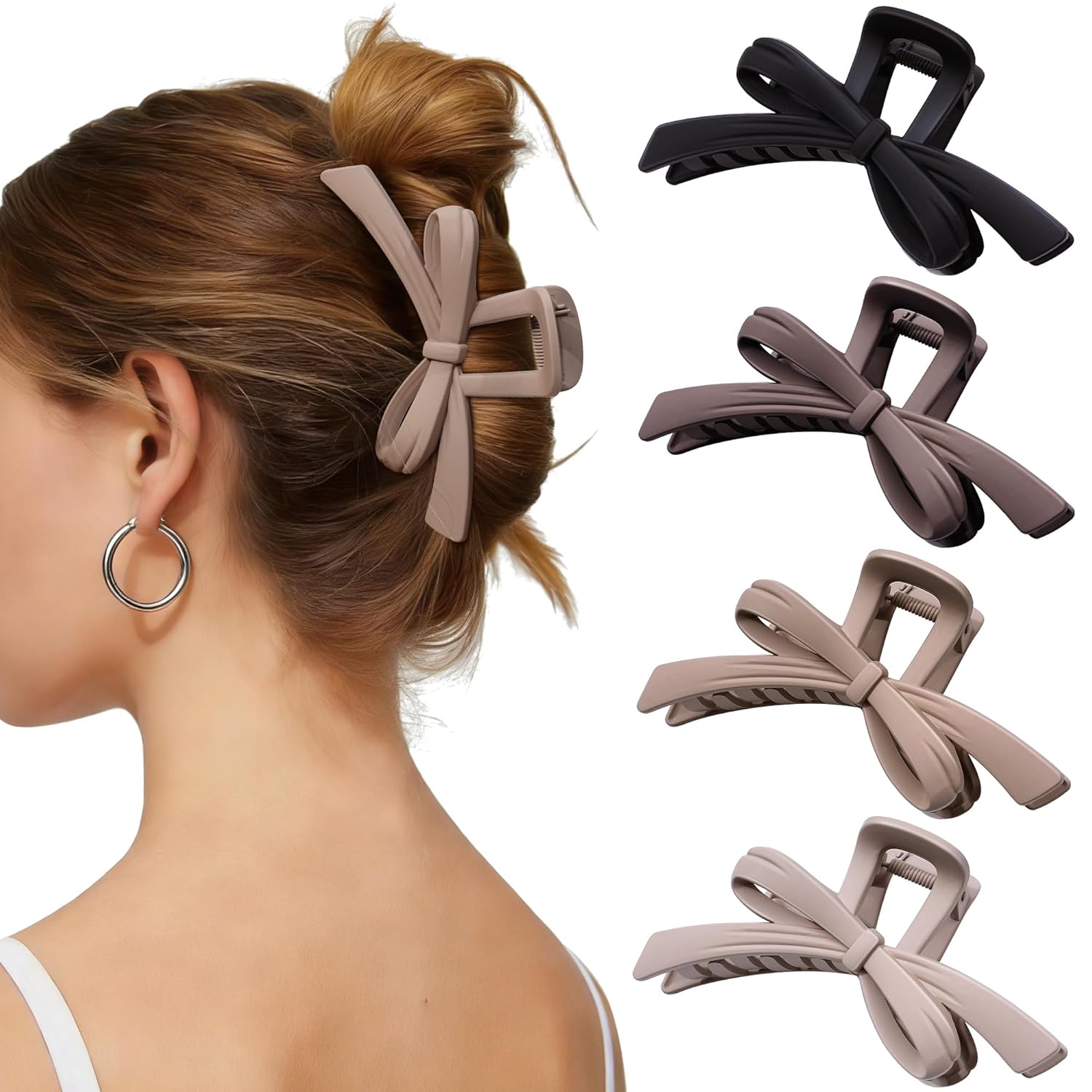
Small butterfly clips are best for sections, braids, and front pieces. Large butterfly clips, usually butterfly-shaped claw clips, are better for holding more hair in half-up styles. The classic tiny clip is decorative first and structural second.
Byrdie’s 2026 claw-clip guidance quoted stylists saying thicker hair generally needs larger clips, while less dense hair benefits from smaller clips that do not overwhelm the style.[9] That rule also applies to butterfly clips.
2. Clear, candy-color, acetate, and metal options
Clear or translucent plastic gives the strongest classic Y2K look. Candy colors feel playful and youthful. Acetate-look versions usually feel more elevated and adult-friendly. Metal, jeweled, or pearl-detailed butterfly clips are more decorative and work best as statement accents.
Construction still matters. Strong springs, smooth edges, and reliable teeth are more important than surface design if the clip will actually hold hair.
3. Minimal versus decorative styles
Minimal butterfly clips work better for everyday styling and adult wardrobes. Decorative butterfly clips make more sense for parties, vacations, concerts, and editorial looks. The general rule is simple: the more elaborate the clip, the simpler the hairstyle should be.
Suggested image alt text: side-by-side comparison of transparent, pastel, acetate-look, and metallic butterfly clips
| Type | Best Use | Style Effect |
|---|---|---|
| Mini butterfly clip | Sections, braid accents, face-framing pieces | Classic Y2K and playful |
| Large butterfly claw clip | Half-up styling and visible back placement | Statement and practical |
| Metal or jeweled butterfly pin | Decorative placement and dressier looks | Polished and feminine |
How People Use Butterfly Clips
1. Which hairstyles work best?
Butterfly clips work best when the section being held is relatively small and visible. The strongest options are half-up styles, bubble braids, mini ponytails, crown sections, braid accents, and face-framing twists. Vogue specifically recommended little butterfly clips to dress up bubble ponytails, while NYLON highlighted braids, ponytails, and free placement on strands.[6][4]
2. Why do they suit braids and half-up styles?
These hairstyles already create structure. The clip does not need to carry the full weight of the hair; it only needs to secure a small section or decorate an anchor point. That is why butterfly clips often perform better in styled sections than in loose heavy hair.
3. How do kids, teens, and adults wear them differently?
Children usually wear them for color and fun. Teens often use them in Y2K looks, braid sets, and festival styling. Adults tend to choose fewer clips, better materials, and more strategic placement. The product is the same, but the styling language changes.
Suggested image alt text: butterfly clips used in bubble braids, half-up style, and braid accents on different hair lengths
| Hairstyle | Why Butterfly Clips Work | Difficulty |
|---|---|---|
| Half-up half-down | Creates shape without a bulky clip | Easy |
| Bubble braids | Adds playful detail and rhythm | Easy to medium |
| Face-framing twists | Keeps front sections neat and decorative | Easy |
| Braid accent | Decorates texture without extra styling tools | Medium |
Who Butterfly Clips Are Best For
1. Which hair textures suit them best?
Mini butterfly clips usually work best on fine, thin, or medium-density sections. TELETIES explicitly notes that butterfly clips, understood as tiny and mini clips, are especially good for fine hair because the gripping area is smaller.[3] People with thick hair can still wear them, but usually as accent clips rather than all-hair holders.
On wavy, curly, or textured hair, butterfly clips often perform best on defined twists, braids, or stretched sections rather than loose bulk.
2. How should short, medium, and long hair use them?
Short hair benefits from side accents and fringe control. Medium hair is ideal for half-up and crown placement. Long hair works well with butterfly clips when they are used to decorate selected sections, not to replace a strong structural clip.
3. Who tends to love butterfly clips most?
They appeal strongly to people who like cute hair accessories, nostalgia, soft statement details, and easy outfit upgrades. They also fit shoppers building looks around Y2K, coquette, festival, or playful romantic aesthetics.
Category context: Europe’s hair accessories market generated USD 4.71 billion in 2024, and the US market generated USD 4.56 billion.[10][11] Those are the same regions where beauty trends, editorial styling, and accessory-led wardrobes have strong influence.
Suggested image alt text: butterfly clips shown on fine hair, medium wavy hair, and a short bob
Expert safety note: the American Academy of Dermatology warns that repeated tight pulling can contribute to traction alopecia over time.[12] Butterfly clips are generally gentler than very tight elastics when used correctly, but any clip can tug if overloaded or clipped repeatedly at the same fragile area.
How to Choose the Right Butterfly Clips
1. Match the size to the section, not the trend photo
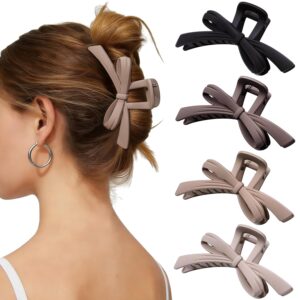
If you want to hold bangs, front twists, or braid details, choose mini clips. If you want more hold in a half-up style, choose a larger butterfly-shaped claw clip. The most common buying mistake is expecting a tiny nostalgic clip to perform like a full-size jaw clip.
2. Check the parts that affect performance
Look at spring strength, edge smoothness, tooth shape, and finish quality. Rough plastic can snag. Weak springs slip. Teeth that are too shallow will not grip. Better-made clips usually feel more comfortable and create fewer returns.
3. Choose the finish by occasion
For everyday wear, neutrals, clear resin, and acetate-look finishes usually work best. For explicit Y2K styling, choose translucent pastels, glitter, and candy colors. For dressier adult styling, metallic, pearl, or gemstone butterfly clips usually feel more elevated.
4. A fast 4-step buying framework
- Define the use case: decoration, sectioning, or hold.
- Match the size to hair density.
- Choose the finish by outfit and occasion.
- Check the spring, teeth, and edge quality.
Suggested image alt text: close-up of butterfly clip teeth, spring hinge, and finish quality details
Internal link suggestion: link “wholesale hair accessories” or “custom butterfly clips” to an appropriate page on QN Beauty.
Butterfly Clips Pros, Cons, and Case Study
1. The biggest advantages
Butterfly clips offer a high style payoff for very little effort. They are lightweight, easy to collect, easy to bundle, and visually distinctive. For brands, they are also good add-on products because they are low commitment but trend-rich.
The commercial logic is strong. Grand View Research values the global clips & pins segment at USD 5.162 billion in 2024 with projected growth to USD 10.326 billion by 2033.[2]
2. The main limitations
The biggest limitation is hold. Most classic mini butterfly clips are not designed to secure large or heavy sections. Lower-cost versions may also have weak springs, brittle plastic, or rough edges. And when overused in bright colors, they can look more childish than intentional.
3. Real case study: the adult repositioning of butterfly clips
Butterfly clips returned successfully because they were reinterpreted rather than copied. NYLON framed them as a major Y2K comeback.[4] Allure then showed polished celebrity uses through Alicia Keys and Megan Fox.[5][8] Vogue later normalized them inside current Y2K hair styling, treating them as a usable beauty detail instead of a novelty.[6]
Key takeaway: the modern version works best when the styling is edited—better materials, fewer clips, and more intentional placement.
4. Pros and cons at a glance
| Pros | Cons |
|---|---|
| Fast visual impact | Limited hold for dense hair |
| Strong nostalgia and trend value | Can look juvenile if overdone |
| Easy to style with braids and half-up looks | Cheap versions can snag or break |
| Affordable and bundle-friendly | Not a substitute for strong structural clips |
Suggested image alt text: modern adult styling of butterfly clips on a sleek ponytail and short bob
The Future of Butterfly Clips and Final Verdict
1. Are butterfly clips still worth buying in 2026?
Yes, if they are bought for the right purpose. Butterfly clips are not meant to replace every other clip in a hair wardrobe. They are best treated as accent tools that add quick style and trend recognition.
2. What trends will shape the category next?
The next phase will likely focus on refinement: more acetate-look and metallic finishes for adults, fewer random color assortments, better hardware, and hybrid designs that combine stronger claw-clip engineering with butterfly-inspired silhouettes.
3. Final expert take and CTA
If you want the shortest accurate definition, Butterfly Clips are decorative hair clips—usually mini claw clips or butterfly-shaped clips—that combine light hold with visible styling impact. They stay relevant because they give shoppers a fast way to look more styled without a complex routine.
CTA: If you are building a hair accessory collection or developing products for a brand, treat butterfly clips as a curated accent category. Pair them with clear size guidance, hairstyle examples, and strong product photography. That is how nostalgia becomes repeat business.
Internal link suggestion: place this CTA near a category or sourcing page on https://qnbeauty.com/.
Suggested image alt text: curated set of adult-friendly butterfly clips in metallic, translucent, and acetate-inspired finishes
FAQ About Butterfly Clips
1. Are butterfly clips still in style?
Yes. Butterfly clips remain relevant within Y2K, nostalgic, festival, and playful romantic aesthetics, supported by ongoing coverage from beauty and fashion media.[4][6]
2. Are butterfly clips for adults or kids?
They work for both. Kids often wear bright plastic mini clips, while adults usually choose fewer clips and more refined finishes such as metal or acetate-look resin.
3. Can butterfly clips hold thick hair?
Mini butterfly clips usually cannot hold a full thick hairstyle. They work better as accent clips for sections, braids, or front pieces.
4. What hairstyles work best with butterfly clips?
Half-up styles, bubble braids, braid accents, and face-framing twists are the strongest options because the clip stays visible while holding a manageable section.
5. Do butterfly clips damage hair?
Not inherently, but any accessory can stress the hair if it is too tight, rough, or repeatedly placed in the same area. Low tension and smooth construction matter.[12]
6. What is the difference between butterfly clips and claw clips?
Butterfly clips are often a sub-type of claw clip. They are usually smaller and more decorative, while the general claw-clip category includes everything from mini clips to jumbo hold clips.
Sources
- Grand View Research, Hair Accessories Market Size, Share | Industry Report, 2033.
- Grand View Research, Clips & Pins – Hair Accessories Market Statistics.
- TELETIES, When to Use Which Hair Clip And Why.
- NYLON, How To Style Butterfly Clips, According To 2 Pro Hairstylists.
- Allure, Alicia Keys Just Wore Y2K Butterfly Clips in the Most Glamorous Way.
- British Vogue, Y2K Hair Is Back! Here Are 9 Looks To Try This Summer.
- Pinterest Business, Pinterest Predicts 2025.
- Allure, Megan Fox Gave My Butterfly Hair Clips from Middle School a Hyperrealistic Upgrade.
- Byrdie, Exactly How to Wear Your Hair in a Cute Claw Clip.
- Grand View Research, Europe Hair Accessories Market Size & Outlook, 2025–2033.
- Grand View Research, U.S. Hair Accessories Market Size & Outlook, 2025–2033.
- American Academy of Dermatology, Hairstyles that pull can lead to hair loss.