What Affects Custom Hair Accessories Cost? A B2B Buyer’s Guide to Materials, Labor, and Packaging
For a B2B buyer, custom hair accessories cost cannot be judged from product size alone. Two scrunchies with the same diameter may require different fabric consumption, gathering, elastic, stitching, labels, and packaging. A padded headband with an apparently simple silhouette may involve several hand-wrapped layers. A low initial quote can become expensive if color variation, weak elastic recovery, loose decorations, or unsuitable retail packaging causes rework, delays, returns, or lost launch time.
This guide shows how those variables shape a quotation, prepare a cost-ready specification, and simplify a design without damaging retail value.
If you are developing a new collection, review Q&N Beauty’s custom hair accessory development options or share your concept for material and construction guidance before fixing the final design.
Define the Product and Commercial Brief Before Comparing Prices
Match the Product Type to the Target Customer, Price Position, and Sales Channel
Start with the commercial goal. A promotional scrunchie, a premium silk hair bow, a children’s clip set, and a boxed heatless curling kit do not need the same material, construction, testing, or packaging. Define the target customer, intended age, retail channel, quality position, expected retail price, launch date, and destination markets before asking a factory to optimize cost.
The sales channel changes the specification. Wholesale multipacks prioritize consistency and compact packing; beauty gift sets may need a box, insert, or matching pouch. E-commerce claw clips need parcel protection, while store programs may require specified cards, barcodes, hang holes, warnings, and carton labels.
Build a Cost-Ready Specification Instead of Requesting a Price from a Photo
A reference photo communicates style but rarely defines cost. The factory still has to assume dimensions, materials, internal parts, logo method, color count, quality level, packaging, and order quantity. Different assumptions produce quotations that look comparable but are not.
A cost-ready request should state:
- Product type, finished dimensions, shape, and construction;
- Fabric composition, surface finish, weight or thickness where relevant;
- Elastic width, cut length, stretch and recovery expectation for scrunchies;
- Clip style and dimensions, insert or padding details, and decoration method;
- Pantone reference or approved color standard, print artwork, and pattern placement;
- Logo file, finished logo size, position, and preferred process;
- Quantity by style and color, not only the total program quantity;
- Individual and retail packaging, carton marks, and barcode requirements;
- Delivery country, target date, and applicable market or age-grade requirements.
When details are undecided, request clearly labeled alternatives—for example, polyester satin with a woven label versus silk with embroidery.
How Product Type and Construction Affect Custom Hair Accessories Cost
Sewn Products: Scrunchies, Hair Bows, Fabric Hair Clips, and Heatless Curling Sets
Sewn accessories are priced through more than fabric area. Cutting yield, gathering ratio, panel count, seam finishing, print alignment, and inspection all matter. An oversized or fuller scrunchie uses more fabric and sewing time, while narrow slippery fabric is harder to control than a stable woven.
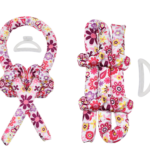
Hair bows may require shaped layers, pressing, folding, center wrapping, and attachment to an alligator clip or French barrette. A heatless curling set can combine a fabric tube, internal core, matching scrunchies, and a pouch or box. Each part adds assembly and inspection points.
Structured Products: Padded Headbands, Barrettes, and Claw Clips
A padded headband normally includes a base, padding, outer fabric, end finishing, and sometimes trim. Its padding profile and wrapping method determine shape consistency and labor; pleating, knots, braids, and exact motif placement add handling time.
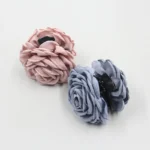
Barrettes depend on base quality, plating, alignment, and attachment. Claw clips add body material and thickness, teeth geometry, hinge parts, spring tension, polishing, and possibly tooling. A custom shape therefore differs greatly from decorating an existing mold.
Pros and Cons of Simple, Premium, and Highly Decorated Constructions
| Construction level | Typical examples | Advantages | Limitations and risks | Cost impact |
|---|---|---|---|---|
| Simple | Single-fabric scrunchie, plain clip | Fewer operations; easier consistency | Less visual differentiation | Lower labor and setup burden |
| Premium material | Silk scrunchie, acetate claw clip | Distinct hand feel and brand position | Higher material cost; tighter handling control | Material and yield become major drivers |
| Structured | Padded or knotted headband | Strong silhouette and shelf presence | Shape tolerance and hand finishing need control | More components and labor |
| Highly decorated | Pearl bow or rhinestone barrette | High perceived detail | Attachment, scratch, glue, and small-part risks | Higher assembly and inspection cost |
| Multi-piece set | Heatless curler, two scrunchies, pouch | Gift-ready value proposition | More BOM lines and packing checks | Higher packing and inventory complexity |
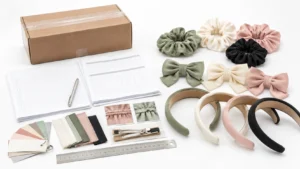
Material and Component Choices That Change Hair Accessory Manufacturing Cost
Compare Silk, Satin, Velvet, Cotton, Organza, Nylon, and Terry Cloth
Material names alone are insufficient: “satin” describes a weave or surface character, not one fixed fiber. Confirm composition, width, relevant weight, finish, shade standard, and performance. Silk and polyester satin differ in cost and care; velvet has directional pile; organza and chiffon need edge control; cotton and linen may vary in shade or shrinkage; and terry cloth adds bulk and lint considerations.
| Material | Appearance and hand feel | Customization fit | Advantages | Limitations and quality risks | Relative cost impact |
|---|---|---|---|---|---|
| Polyester satin | Smooth, lustrous | Good for many dyeing and print routes | Consistent and versatile | Snags, shine variation, heat sensitivity | Usually cost-efficient; specification dependent |
| Silk | Soft, natural luster | Suitable for premium programs | Strong premium positioning | Higher material cost; shade and care control | High material and handling impact |
| Velvet | Plush, directional pile | Works with labels and selected embroidery | Rich seasonal appearance | Pile direction, pressure marks, lint | Moderate to high |
| Cotton or linen blend | Matte, natural texture | Good for prints and woven branding | Casual or natural positioning | Shrinkage, creasing, lot variation | Varies by composition and finish |
| Organza or chiffon | Sheer, light, decorative | Good for layered effects | Volume with low visual weight | Fraying, seam visibility, alignment | Labor can outweigh fabric cost |
| Nylon or terry cloth | Technical or absorbent | Useful for sports or spa products | Function-led product story | Finish, stretch, bulk, and lint need review | Specification dependent |
Specify Elastic, Padding, Clips, Springs, Inserts, and Wire
Hidden components decide performance. For scrunchies, record elastic type, width, cut length, join method, stretch, and recovery. Correct values depend on scrunchie size, gathering, hair volume, and intended wraps, so confirm them after sample evaluation.
For headbands, define base width, flexibility, pressure, padding, and profile. For clips, confirm dimensions, relevant metal thickness, spring tension, holding strength, alignment, teeth, plating, and finish.
Control the Cost and Risk of Pearls, Rhinestones, Plating, and Other Decorations
Decorations add placement, fixing, curing, cleaning, inspection, and protective packing to the component price. Many hand-set stones require more labor than one approved ornament; custom metal parts may add molds, plating setup, and longer development.
Specify attachment and acceptance criteria for position, suitable pull resistance, glue overflow, sharp edges, scratches, coating, and discoloration. Detachable decorations on children’s items can also change small-parts risk and testing.
Labor, Color, Printing, and Logo Customization Costs
Why Cutting, Sewing, Pleating, Gluing, and Hand Assembly Drive Labor Complexity
Labor rises with the number and repeatability of operations. Straight cutting and standard sewing are easier to control than bias cutting, matched prints, narrow turning, layered bows, symmetrical pleating, hand wrapping, or precise ornament placement. Cleaning and inspection also count.
Ask the supplier to identify labor-intensive steps. Fewer decorative pieces, a workable seam allowance, one continuous panel, or a repeatable placement guide may reduce cost without changing the main visual signature.
Pantone Color Matching, Custom Printing, and Pattern Placement
Stock colors reduce development work; custom dyeing introduces lab dips, approval time, lot control, and material minimums. Pantone references are useful targets, but fiber, weave, pile, gloss, and lighting affect appearance. Approve a physical standard on the actual material.
For printing, provide artwork, repeat size, color references, direction, and placement rules. Random all-over prints are easier to cut than motifs centered on each bow or aligned across seams. Approve the relevant print sample before bulk.
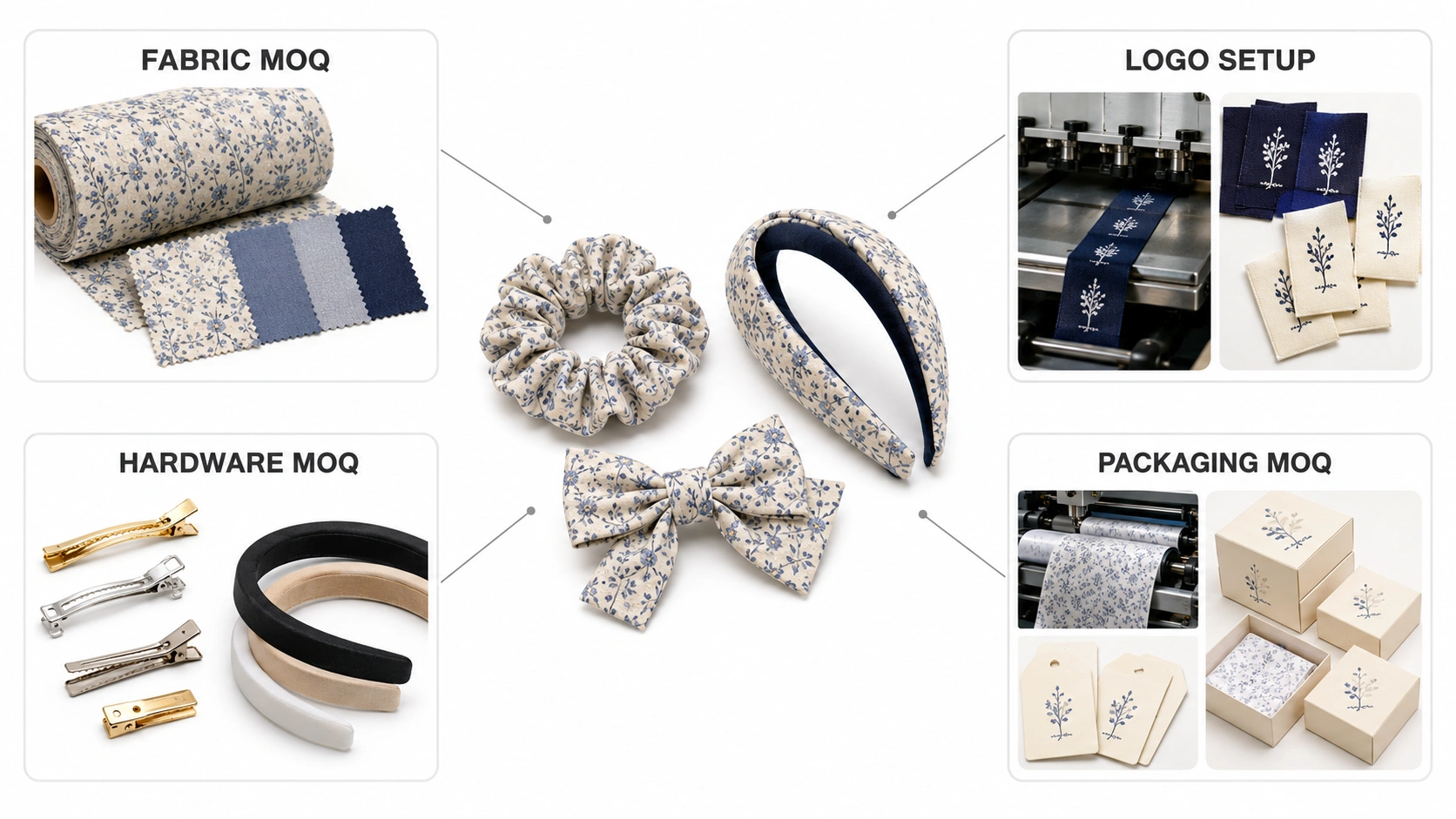
Compare Woven Labels, Embroidery, Heat Transfer, and Metal Logo Plates
- Woven labels: Repeatable and suitable for many sewn products, but add a component and sewing operation. Very small text must remain legible.
- Embroidery: Premium and durable when compatible with the fabric. Stitch count, size, backing, and distortion risk influence cost.
- Heat transfer or printing: Useful for flat, suitable surfaces and multicolor artwork. Adhesion, cracking, hand feel, and colorfastness should be evaluated on the actual substrate.
- Metal logo plates: Create a structured premium look. Tooling, plating, attachment, weight, sharp edges, and protective packing require attention.
- Branded cards and packaging: Place branding outside the product and can simplify manufacturing, but they do not provide permanent product identification.
How MOQ, Packaging, and Logistics Affect Wholesale Hair Accessories Pricing
Custom Hair Accessories MOQ, SKU Count, and Setup-Cost Allocation
MOQ is not universal. Fabric dyeing, component suppliers, molds, logos, packaging, and production setup can each set a minimum. A large order split across many styles and colors may be less efficient than the same volume in one construction and two colors.
Volume can spread setup and tooling, but premium fabric, handwork, tests, special packaging, and freight remain. Request price breaks against one specification and state quantity per SKU.
Compare Protective, Retail-Ready, Gift, and E-Commerce Packaging
| Packaging option | Best use | Advantages | Limitations and risks | Cost and logistics impact |
|---|---|---|---|---|
| Simple protective bag | Wholesale or inner protection | Light and compact | Limited retail presentation | Low packing burden; material choice matters |
| Display card and bag | Retail hooks and multipacks | Branding, barcode, organized display | Card bending, incorrect attachment, extra assembly | Printing, card setup, and labor added |
| Printed folding carton | Beauty sets and gifting | More surface for instructions and story | Color matching, crushing, insert fit | Higher unit and shipping volume |
| Rigid gift box | Premium launch or gift set | Strong presentation and protection | High cube, weight, and development complexity | High packaging and freight impact |
| Reusable pouch | Heatless curling or coordinated sets | Useful secondary function | Adds another manufactured product | More materials, inspection, and packing |
Carton Efficiency, Product Protection, and International Shipping
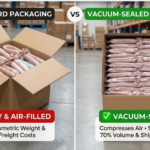
Evaluate packaging as a system. A light card may fail in parcels, while an oversized rigid box raises chargeable volume. Protect claw-clip teeth and surfaces, avoid compressing padded headbands, and keep fabric products clean, dry, and in shape.
Confirm units per pack and carton, packed dimensions, gross weight, marks, and Incoterm. Freight, duties, taxes, inspection, and destination handling may be outside the unit quote; compare landed cost only after packing is confirmed.
Sampling and Mass Production: Turn the Approved Design into a Cost Standard
Prepare Reference Photos, a Design Sketch, Artwork, and a Tech Pack
A tech pack turns a visual concept into instructions. Include relevant views, finished dimensions, bill of materials, components, seams, elastic or clip specifications, padding, colors, artwork, logo placement, packaging, labels, target market, and test requirements.
Mark critical features and value-engineering opportunities. If silhouette and hand feel are fixed but a hidden finish may change, the factory can propose savings intelligently.
Evaluate Samples, Record Revisions, and Approve a Sealed Sample
A sample costs more than one bulk unit because it can require small-lot sourcing, pattern work, logo setup, one-off operations, and revisions without line efficiency. Treat it as a development tool.
- Check dimensions and construction against the tech pack.
- Evaluate appearance under consistent lighting and compare physical color standards.
- Test function: elastic recovery, headband comfort, clip opening, spring action, holding strength, and closure behavior as relevant.
- Inspect seams, edges, glue, ornaments, plating, scratches, and print placement.
- Test the proposed packaging fit and opening experience.
- Record every change in one revision file and approve a sealed sample or signed specification.
Mid-project CTA: Send your reference photos, design sketch, artwork, and preliminary specifications through the Q&N Beauty project inquiry page for a manufacturability review. The team can identify details that require confirmation before sampling and quotation.
Manage Material Booking, Production Lead Time, and Change Control
Lead time depends on materials, dyeing or printing, components, logo tooling, packaging, approvals, testing, quantity, and factory loading. Ask for milestones rather than assume one standard schedule.
After approval, freeze the bill of materials and critical dimensions. Late changes can trigger new samples, cost, or testing. Require written approval for substitutions and delivery effects.
Quality Control and Compliance Costs Buyers Should Plan Early
Inspection Checks for Fabric, Elastic, Clips, Decorations, and Packaging
| Area | Buyer-defined check | Common defects | Prevention |
|---|---|---|---|
| Dimensions and shape | Approved measurement points and tolerances | Wrong size, asymmetry, inconsistent padding | Tech pack, pattern control, first-piece approval |
| Fabric and color | Composition, hand feel, shade, print placement | Dye-lot variation, stains, snags, mismatched motifs | Approved material standard and lot review |
| Sewing and elastic | Seams, skipped stitches, stretch and recovery | Open seams, loose threads, early relaxation | Operation standard and functional checks |
| Clip or headband | Alignment, edges, tension, holding function | Burrs, weak spring, tooth damage, excessive pressure | Component approval and assembly inspection |
| Decoration and finish | Position, attachment, plating, surface | Glue marks, loose parts, scratches, discoloration | Attachment standard and protected handling |
| Packaging | Correct SKU, barcode, quantity, protection | Mix-ups, crushed cards, missing labels | Pack sample, line clearance, final audit |
Do not copy one tolerance or test method across every product. A fabric scrunchie, a padded headband, and an acetate claw clip have different critical-to-quality points. Define measurable criteria during sampling and agree whether checks are performed in-line, at final inspection, or both.
REACH, CPSIA, Prop 65, UK Product Safety, and Children’s Product Risks
Compliance depends on product classification, materials, intended age, sales market, and marketing claims. A certificate name alone does not establish that a specific SKU is compliant.
- United States: The U.S. Consumer Product Safety Commission’s children’s product guidance explains that products designed or intended primarily for children 12 or younger are children’s products, while general-use products are treated differently. Applicable children’s product rules can require third-party testing and a Children’s Product Certificate. For designs intended for young children, review small parts, sharp points and edges, accessible lead or restricted substances, coatings, tracking labels, warnings, and flammability only where applicable to the specific product.
- Small parts: CPSC small-parts and choking-hazard guidance shows why age and detachable ornaments require early review. An age label alone does not determine classification.
- European Union: The EU General Product Safety Regulation guidance states that Regulation (EU) 2023/988 has applied since December 13, 2024. Buyers should determine the relevant economic-operator, traceability, labeling, risk-assessment, and online-offer obligations. Chemical restrictions may also apply to fabrics, coatings, plastics, adhesives, prints, and metal finishes. ECHA explains that REACH restrictions can apply to substances in articles.
- United Kingdom: Specify Great Britain or Northern Ireland so the responsible party can review the correct safety, technical-record, labeling, and safe-use requirements.
- California: Proposition 65 is not a universal product certificate or automatic warning requirement. California’s official business guidance explains the exposure-based warning framework. Buyers should assess relevant listed chemicals and exposure with qualified advice rather than request a generic “Prop 65 certificate.”
Agree testing scope with a qualified laboratory or compliance specialist for the exact SKU and market; cost is subject to specification review. For children’s accessories, decide age grading before finalizing decorations, coatings, adhesives, labels, and warnings.
Why Prevention Usually Costs Less Than Rework, Returns, or Delayed Shipping
Approved materials, functional trials, required reports, in-line checks, and final inspection add visible cost but protect the launch from sorting, rework, repacking, expedited freight, returns, or missed selling time.
Illustrative Manufacturing Scenario: A rhinestone bow looks correct, but stones detach in handling and its card bends in parcel delivery. Attachment criteria and a packed-product trial could have exposed both issues before bulk. This explains procurement logic and is not a customer case.
How to Reduce Cost Without Lowering Quality and Evaluate a Manufacturer
Use Design-to-Cost Decisions That Preserve the Customer Experience
Protect hand feel, silhouette, holding function, color, and visible branding; simplify low-value complexity.
- Use an existing clip body or headband base instead of custom tooling when the silhouette allows.
- Reduce color and SKU fragmentation while keeping a clear collection story.
- Choose a stock fabric color when exact custom dyeing is not commercially essential.
- Use one well-positioned ornament instead of many hand-applied pieces.
- Use repeat printing when exact motif placement is unnecessary.
- Standardize logo, card, and carton formats across related SKUs.
- Match packaging protection to the distribution channel rather than overpack or underpack.
Request samples of the cost-reduced option. Savings are only valid if function, appearance, compliance, and pack performance remain acceptable.
Compare Total Landed Cost, Not Unit Price Alone
Compare product, setup, tooling, samples, packaging, testing, inspection, export packing, freight basis, known duties and taxes, payment costs, and defect or delay risk. Confirm EXW, FOB, or delivered inclusions and use one specification.
A higher unit price may carry lower landed risk through stable components, efficient cartons, correct retail packing, and documented QC. Premium packaging may also be justified when it adds value and reduces damage.
Supplier Evaluation Questions for Stable Bulk Production
- Does the supplier manufacture or regularly manage the exact product construction?
- Can it identify critical materials and components instead of describing everything as “standard”?
- Will it document dimensions, tolerances, color standards, and functional requirements?
- Can it show how samples, revisions, sealed standards, in-line checks, and final inspections are controlled?
- Does it explain which work is in-house and which processes are subcontracted?
- Can it separate product, tooling, packaging, testing, and freight assumptions in the quote?
- Will it confirm production capacity and material lead times for the required delivery window?
- Can it support documents and test coordination relevant to the destination market and intended age?
Q&N Beauty publicly describes 15+ years of OEM/ODM hair accessory experience, 200+ skilled workers, a design team, and BSCI-certified production. Published capabilities include scrunchies, fabric clips, bows, padded headbands, heatless curling sets, materials, colors, printing, branding, packaging, sampling, bulk production, inspection, and pre-shipment QC. Buyers should still evaluate every project’s specification, schedule, and compliance scope.
Frequently Asked Questions About Custom Hair Accessories Cost
How Much Do Custom Hair Accessories Cost?
There is no responsible universal price. The quote depends on product type, dimensions, fabric and components, construction, decoration, logo method, quantity per SKU, packaging, quality plan, testing, delivery terms, and schedule. Submit the same complete specification to each supplier for a meaningful comparison.
What Has the Biggest Effect on Custom Hair Accessories Cost?
The dominant driver changes by product. Fabric consumption may lead for an oversized silk scrunchie; hand assembly for a pearl bow; tooling and body material for a custom claw clip; and components plus packaging for a heatless curling set. Ask for the top three cost drivers in your specific design.
Does a Higher MOQ Always Reduce the Unit Price?
No. Higher volume often spreads setup and improves material purchasing, but per-unit fabric, manual decoration, testing, special packing, and freight remain. SKU fragmentation can also reduce efficiency. Review quantity by style and color, not only total order volume.
Why Is the Sample More Expensive Than One Bulk Unit?
Pattern work, small-lot sourcing, logo setup, manual production, and revisions are not spread across a production run. Confirm whether further revisions, molds, freight, and testing are separate.
How Can Buyers Reduce Cost Without Sacrificing Quality?
Preserve the features that drive use and retail perception, then simplify low-value operations. Standardize bases, fabrics, logo sizes, packaging, and colors across the range; reduce fragile decorations; improve carton efficiency; and approve a lower-cost sample before committing to bulk.
When Should Compliance Testing Be Quoted?
Discuss it before the final sample whenever the market, intended age, material, coating, decoration, or packaging may change the applicable requirements. Final scope should be confirmed for the exact SKU with a qualified laboratory or compliance specialist. Testing too early on a design that later changes may create duplicated cost.
Future Cost Trends, Expert Summary, and B2B Sourcing Action
Future Trends in Design-to-Cost, Traceability, and Packaging
Sourcing is moving toward clearer bills of materials, traceable lots, controlled artwork, and packaging developed with the product. Reduced packaging, efficient pack-out, and better SKU data may not lower unit price, but they can reduce errors and launch risk.
Platform development is another practical direction: one proven headband base, clip, or scrunchie construction can support seasonal fabrics and colors, balancing brand variety with repeatable manufacturing.
Expert Summary: Build the Quote Around a Controlled Specification
Control custom hair accessories cost by controlling the specification. Define the user, channel, age, and market; then lock structure, materials, components, colors, branding, packaging, inspection, and testing. Compare the same assumptions and use the sample as the bulk standard.
Low cost matters only when appearance, performance, safety, packaging, and timing remain acceptable. A capable manufacturer should explain tradeoffs and mark unknowns as subject to specification review or to be confirmed after sample evaluation.
Request a Manufacturability Review, Sample Plan, or Bulk Quotation
To request a practical custom solution or bulk quotation, send the following information:
- Product type and finished dimensions;
- Reference photos, design drawings, or tech pack;
- Fabric and material requirements;
- Pantone colors or print artwork;
- Logo file and preferred branding method;
- Target quantity by style and color;
- Individual, retail, and carton packaging requirements;
- Delivery country and target delivery date;
- Intended age group, applicable market, and known compliance requirements.
Browse Q&N Beauty’s customizable hair accessory range, then contact the OEM/ODM team to discuss material options, sample development, packaging, quality control, and a specification-based bulk quotation.