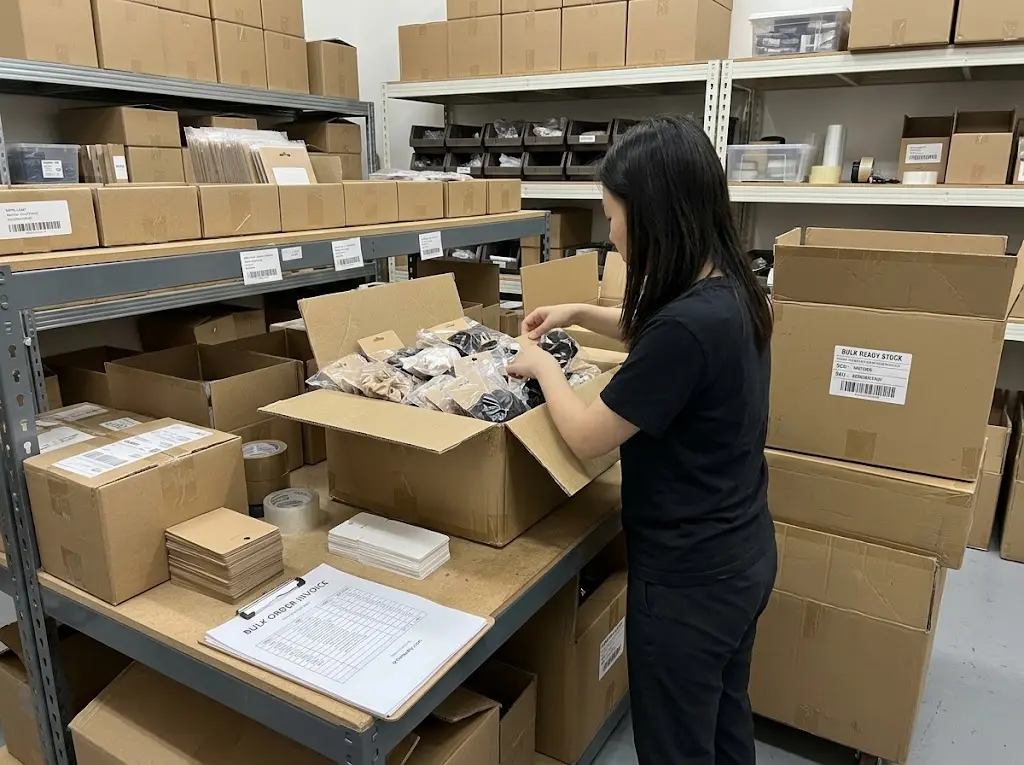
Launching a startup boutique or an e-commerce beauty brand is a thrilling venture, but the supply chain decisions you make in the first year can dictate your long-term survival. For B2B buyers entering the hair accessories market, the first major sourcing hurdle is deciding between private label vs. white label hair accessories.
On the surface, both models allow you to sell products under your own brand name without owning a manufacturing facility. However, the structural differences in how these products are engineered, customized, and quality-controlled will drastically impact your profit margins, customer return rates, and overall brand equity.
In this comprehensive guide, we will dissect the critical differences between white label and private label sourcing. Backed by over 15 years of source factory expertise, we will reveal how choosing the right manufacturing strategy can help you avoid costly pitfalls like the dreaded “headband headache,” exorbitant shipping fees, and fading fabrics.
1. The B2B Sourcing Dilemma: Defining Private Label vs. White Label
1.1 What Are White Label Hair Accessories?
In the manufacturing world, white label wholesale refers to generic, mass-produced products created by a factory to be sold to multiple different retailers. The factory designs the product, chooses the cheap raw materials, and manufactures tens of thousands of units. As a buyer, you simply purchase these pre-made items and ask the supplier to attach your brand’s tag or logo.
The primary advantage of white labeling is speed to market. You can launch a product line in weeks. However, the exact same scrunchie or headband is likely being sold by dozens of your direct competitors, making it a highly commoditized product.
1.2 What Are Private Label Hair Accessories?
Private label hair accessories, on the other hand, involve a deeper partnership with a source factory. While you don’t own the factory, you have exclusive rights to the product design, material specifications, and structural engineering. The product is manufactured specifically for your brand according to your precise requirements.
According to e-commerce experts at Shopify, private labeling allows brands to differentiate themselves in saturated markets by offering unique value propositions, better materials, and superior quality control.
2. The Hidden Risks of White Label Sourcing for Startup Boutiques
[Insert Image: A side-by-side comparison of a generic, low-quality white label headband snapping under pressure vs. a highly flexible, premium private label headband bending without breaking.]
2.1 The “Race to the Bottom” on Price and Quality
When you rely on generic white label products from standard trading companies, you are forced to compete solely on price. Because your competitors are selling the exact same item, consumers will simply hunt for the cheapest option.
To keep wholesale costs artificially low, white label factories universally cut corners on raw materials. They frequently utilize cheap, recycled Polystyrene (PS) plastics and low-density sponge fillers that flatten out after just a few wears, leading to immediate buyer’s remorse and high RMA (Return Merchandise Authorization) processing costs.
2.2 Lack of Structural Control: The “Headband Headache” Problem
The biggest threat to any boutique selling hair accessories is structural discomfort. Generic white label headbands are notorious for causing the “headband headache.” Because they are mass-produced with rigid, unforgiving plastics and a generic mold, they dig painfully into the temporal bone behind the wearer’s ears.
If your startup brand becomes associated with physical discomfort, negative e-commerce reviews will plummet your conversion rates. You cannot modify the inner core of a white label product; you are stuck with the factory’s standard, uncomfortable design.
3. Why Private Label is the Ultimate Growth Strategy
3.1 Total Control Over Raw Materials (EVA Foam vs. Cheap Plastics)
Partnering with a professional factory for your private label hair accessories allows you to dictate the Bill of Materials (BOM). Instead of settling for cheap pearl cotton or standard sponge, you can upgrade your product’s internal structure.
Illustrative Manufacturing Scenario: We advise our B2B clients to utilize High-Density EVA (Ethylene-Vinyl Acetate) foam for padded accessories. EVA foam provides a luxurious, cloud-like bounce that retains its volume over time, ensuring your product feels expensive and premium from the first wear to the fiftieth.
3.2 Tailored Ergonomics for Lower Return Rates
Through private labeling, you can engineer pain-free products. As a factory specializing in pain-free padded headbands, we help our clients upgrade to Memory Polycarbonate (PC) cores.
Unlike brittle white label plastics, Memory PC cores possess incredible tensile strength and memory spring-back. They adapt perfectly to diverse head sizes without snapping or causing pressure points, virtually eliminating fit-related customer returns.
3.3 Verifiable Eco-Friendly and Skin-Safe Compliance
When you control the manufacturing process, you can demand compliance. High-end boutiques must ensure their fabrics do not bleed toxic dyes onto customers’ hair. By choosing private label, you can mandate the use of eco-friendly, reactive dyes that comply with OEKO-TEX® Standard 100, guaranteeing your products are safe, colorfast, and premium.
4. Factory Expertise: How We Manufacture Premium Private Label Accessories
[Insert Image: A factory QC technician performing a mechanical tension fatigue test on a custom PC headband core, stretching it to verify memory retention before assembly.]
4.1 Strict Quality Control and Color Fastness Verification
A major pain point for buyers using trading companies is inconsistent quality between batches. As a direct source factory, we implement strict ISO-aligned quality management principles.
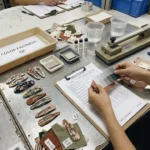
Every private label batch undergoes rigorous testing. We conduct AATCC Crocking tests to ensure fabric dyes will not rub off on skin, and we perform 2,000-cycle stretch tests on elastic cores to guarantee structural longevity. You can review our full testing protocols on our factory capabilities page.
4.2 Custom Branding Touchpoints and Artisanal Finishing
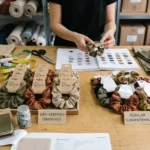
Private labeling isn’t just about the core; it’s about the unboxing experience. We offer extensive custom hair accessories solutions, including bias-cut fabric wrapping, artisanal hand-stitching (to avoid toxic glue odors), and custom-woven interior logo tags that elevate your brand’s perceived value.
4.3 Reducing Shipping Costs with Vacuum Packaging Technology
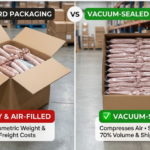
B2B buyers know that shipping bulky accessories like padded headbands or heatless curlers results in devastating Dimensional Weight (DIM) shipping fees. You end up paying to ship empty air.
To protect your budget, our factory has perfected industrial vacuum sealing strategies. Because we use high-resilience EVA foam and premium PC cores, we can safely compress your bulk orders by up to 40% in volume. Upon unboxing at your 3PL facility, the products instantly rebound to their flawless, plump shape. This logistics expertise directly increases your net profit margin.
5. Overcoming the MOQ Barrier for Startup Brands
5.1 The Danger of Overstocking Unproven Inventory
The primary reason many startup boutiques default to white label products is the Minimum Order Quantity (MOQ). Traditional private label factories often demand MOQs of 3,000 to 5,000 units per color. For a young brand, tying up vital cash flow in unproven inventory is a massive financial risk.
5.2 How Our Factory Supports an Agile MOQ of 500 Pieces
We believe that high-quality custom manufacturing should be accessible to growing brands. Because we own our production lines and manage a deep supply chain of raw materials, we proudly support a low MOQ of just 500 pieces for custom OEM/ODM orders.
This allows your boutique to test new seasonal fabrics, launch exclusive colorways, and build a genuine private label brand without breaking your budget or risking dead stock.
6. Partner with a Verified Source Factory to Scale Your Brand
6.1 Bypassing Trading Companies for Direct Factory Access
If you want to build a sustainable, high-margin boutique, you must evolve past white label trading companies. Partnering directly with a source factory that has over 15 years of specialized experience gives you complete control over your product’s destiny, quality, and unit cost.
6.2 Launch Your Custom Line Today
Stop settling for generic products that cause headaches and high return rates. Differentiate your brand with custom-engineered, pain-free hair accessories that your customers will love and recommend.
Ready to make the transition to premium private labeling? Contact our OEM/ODM experts today. We are ready to provide a fast B2B quotation, guide you through our low-MOQ customization program, and send you a physical B2B sample box featuring our signature [Internal link opportunity: Pain-Free Padded Headbands] and premium fabrics.