The custom hair accessories manufacturing process can fail long before bulk production starts. An unclear reference photo, an unapproved elastic, a digital-only color decision, or a missing packaging requirement may appear minor during quotation but create repeated revisions, inconsistent goods, delayed launches, and unplanned costs later.
Professional product development converts a creative idea into a repeatable manufacturing standard. For scrunchies, hair bows, fabric clips, padded headbands, heatless curling sets, and claw clips, that means controlling the design, materials, dimensions, components, branding, safety requirements, packaging, and inspection criteria before volume work begins.
This guide explains each buyer decision from the first technical brief through sampling, approval, production, quality control, testing, packing, and shipment release. Buyers planning a new collection can first review Q&N Beauty’s custom hair accessories range to compare possible product constructions before preparing an RFQ.
Stage 1: Define the Development Path and Project Requirements
Start with the Market, User, and Commercial Goal
Development should begin with the intended customer and sales channel, not with fabric alone. A premium beauty gift set, children’s bow collection, promotional scrunchie, spa headband, and fashion-retail claw clip require different quality levels, packaging, compliance reviews, and cost structures.
Tell the manufacturer the target market, intended user or age group, retail channel, desired positioning, launch date, order quantity by SKU, target cost, and delivery country. These inputs influence material availability, branding options, testing, packaging, and the realistic production route.
Choose Existing-Style Customization, OEM, or New Tooling
| Development Route | Best Use | Advantages | Limitations and Risks | Buyer Decision |
|---|---|---|---|---|
| Existing style with private label | Fast market tests and basic collections | Known construction, fewer technical unknowns, simpler sampling | Limited exclusivity; available materials or dimensions may constrain the design | Confirm which details can change without rebuilding the pattern or mold |
| Modified ODM style | Brands needing faster development with visible differentiation | Balances customization, cost, and development risk | Changes can interact and require more than one sample round | Identify the fixed platform and every modified component |
| Buyer-led OEM design | Brands with drawings, specifications, or a defined concept | Greater control over shape, function, and brand identity | Requires clearer documentation and more engineering work | Provide a tech pack and assign approval responsibility |
| Custom mold or component | Proprietary claw clips, charms, logo hardware, or special bases | Strongest differentiation and potential exclusivity | Tooling cost, longer validation, higher commitment, engineering risk | Agree ownership, maintenance, exclusivity, and acceptance before payment |
Existing components offer speed but less uniqueness. Custom development offers greater differentiation but adds decisions, revisions, and risk. A good manufacturer should explain which changes affect the pattern, mold, assembly method, minimum material quantity, cost, and lead time.
Prepare a Product Brief or Tech Pack
A reference photo communicates visual direction, but it rarely defines a manufacturable product. Add annotated drawings or a tech pack showing finished dimensions, tolerances, materials, construction, component orientation, colors, logo details, packaging, and performance expectations.
For sewn products, specify fabric composition or approved supplier reference, width, weight where relevant, print direction, elastic construction, stitch location, gathering, padding, and label placement. For clips, specify body material, finished dimensions, tooth geometry, hinge, spring, metal finish, decoration, and attachment method.
Convert Subjective Language into Approval Criteria
Terms such as “soft,” “luxury,” “strong,” or “light gold” are not manufacturing standards. Pair each description with evidence: an approved swatch, measurable dimension, physical component, Pantone reference, finish sample, or agreed functional test.
- Replace “strong grip” with an approved clip configuration and repeatable holding test.
- Replace “soft satin” with a material reference and approved hand-feel sample.
- Replace “full scrunchie” with the pattern dimensions, gathering construction, and approved sample.
- Replace “secure decoration” with an attachment method and agreed pull or use test.
Identify Compliance Requirements Before Design Approval
State the destination and whether the product is intended primarily for children. Compliance cannot be added reliably at the end because restricted substances, sharp edges, detachable decorations, labels, and traceability information may affect the design, material selection, test plan, and packaging.
Stage 2: Confirm Feasibility, Quotation, and Material Strategy
Run a Design-for-Manufacturing Review
The manufacturer should review whether the proposed shape can be cut, sewn, molded, polished, plated, assembled, and inspected consistently. This review should identify narrow sewing areas, unstable fabric grain, excessive bulk, weak attachment points, visible adhesive zones, mold-release limitations, or components that cannot meet the desired dimensions.
Ask the supplier to separate confirmed specifications from assumptions and open decisions. When a feature requires a physical trial, it should be marked “to be confirmed after sample evaluation,” not silently treated as approved.
Build a Preliminary Bill of Materials
The bill of materials, or BOM, lists each fabric, elastic, base, clip, spring, thread, label, trim, adhesive, decoration, and packaging component. Early versions may contain alternatives, but every item should have a code, description, source or quality reference, color, placement, and approval status.
For custom-dyed or printed materials, confirm minimum material quantities, expected excess, shade variation controls, and ownership of leftover stock. For metal or plastic components, confirm whether the color is created through plating, painting, coating, molding, or another process because the appearance, testing, and durability risks differ.
Compare Quotations on the Same Specification
A unit-price comparison is valid only when suppliers quote the same design, materials, quantity per color, logo, packaging, testing, inspection, and trade term. Ask each supplier to state exclusions, tooling, sample charges, packaging setup, minimum quantities, and price-validity conditions.
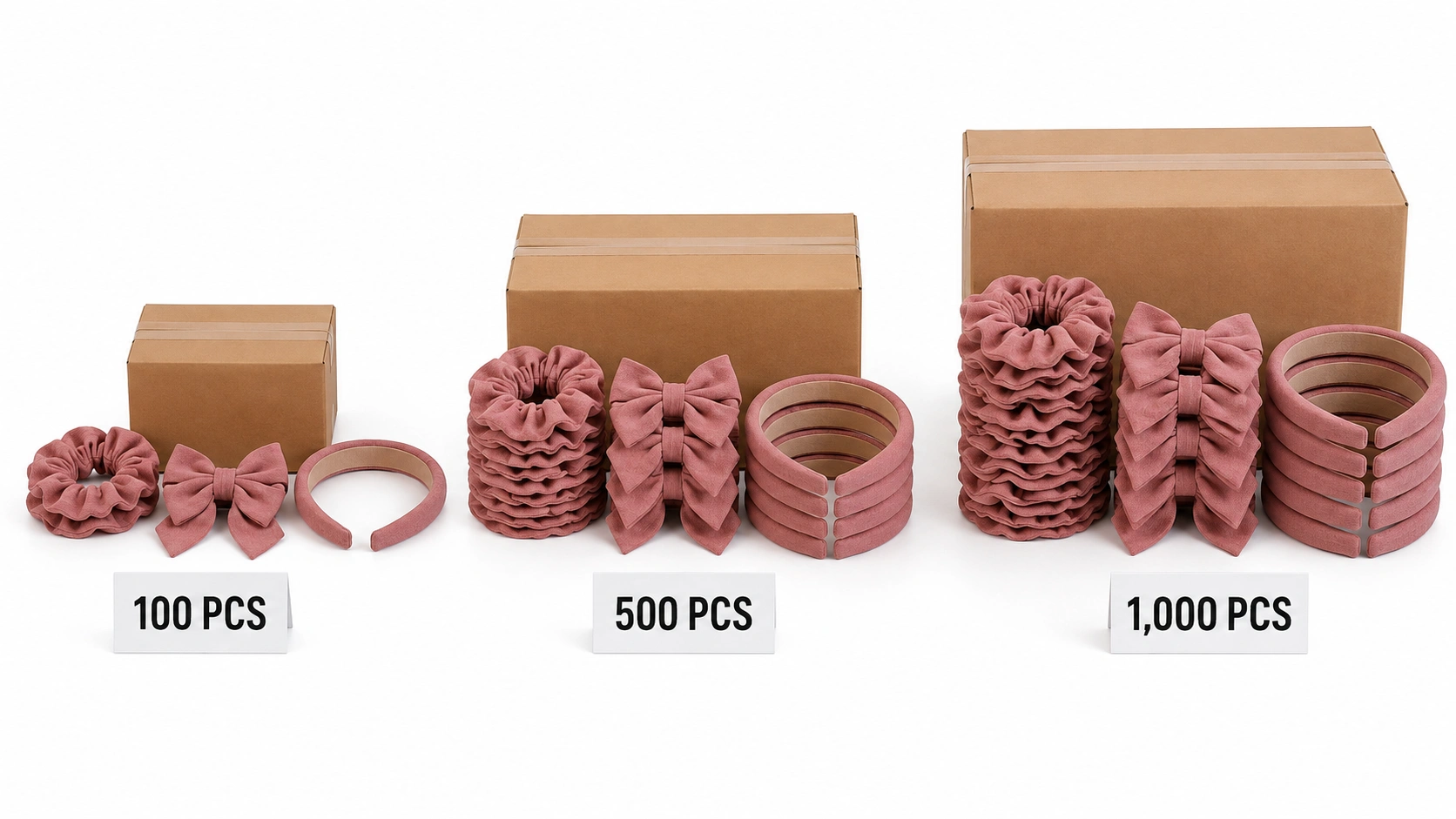
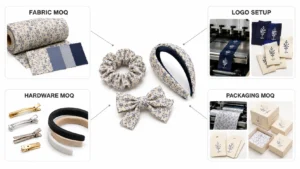
MOQ may apply per design, color, print, size, mold, or packaging item rather than to the total order. Clarify each minimum before approving the collection architecture. Too many low-volume colors can make a simple product commercially inefficient even if its sewing or assembly is straightforward.
Stage 3: Sample Development in the Custom Hair Accessories Manufacturing Process
Know Which Type of Sample You Are Approving
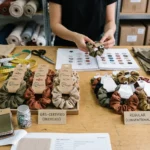
A prototype may test shape and function with substitute materials. A development sample may include closer materials but still contain unresolved details. A color or print strike-off isolates appearance. A packaging mockup tests artwork and structure. A pre-production sample should represent the approved bulk specification as closely as possible.
Label each sample with the project, style, version, date, and purpose. Otherwise, feedback may be applied to the wrong version or a buyer may approve a prototype that was never intended to represent bulk materials.
Select Fabrics, Colors, Elastic, and Components
Approve material in the form that matters to production. Digital images help with communication but do not replace a physical color standard. Fabric color can shift with fiber content, weave, pile direction, gloss, lighting, and dye lot. Printed artwork should be checked for scale, repeat, direction, placement, and distortion after gathering or wrapping.
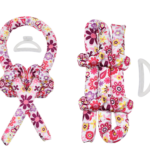
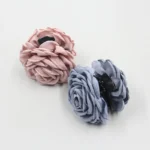
For scrunchies and headbands, evaluate elastic or base performance inside the finished item. For heatless curling sets, assess filling density, rod dimensions, fabric friction, fastening, and shape recovery. For claw clips and barrettes, review body material, surface finish, spring action, alignment, teeth, edges, opening, and grip.
Develop Logos, Labels, and Decorative Details
The branding method must match the product construction. Woven labels suit many fabric accessories; embroidery adds texture but may distort thin fabric; heat transfer supports detailed artwork but requires adhesion and appearance checks; metal charms increase perceived value but add weight and an attachment operation.
Provide vector artwork, color references, finished logo dimensions, position, orientation, and acceptable placement tolerance. Check legibility at actual size. For bows and patterned fabrics, define whether the logo or print must face a consistent direction after assembly.
Review Product-Specific Engineering Risks
A visually approved sample may still fail functionally. Repeatedly stretch scrunchies and inspect the elastic join and recovery. Wear-test headbands for pressure, slipping, exposed ends, and symmetry. Operate clips repeatedly and check spring behavior, hinge alignment, tooth contact, sharp edges, cracking, and loose decorations.
Testing methods and acceptance limits should be agreed for the actual product. Avoid adopting a generic cycle count or pull force without considering intended use, age group, materials, retailer requirements, and applicable standards.
Stage 4: Review, Revise, and Approve the Golden Sample
Use a Structured Sample Approval Checklist
| Approval Area | What the Buyer Checks | Evidence Retained | Common Risk |
|---|---|---|---|
| Dimensions and shape | Finished measurements, symmetry, orientation, fit, and profile | Measurement report and approved sample | Ambiguous measuring points or tolerance |
| Materials | Composition, hand feel, weight, color, surface, elastic, and components | Approved swatches, component codes, and BOM | Substitution or dye-lot difference |
| Workmanship | Stitching, seams, edges, adhesive, alignment, polish, and plating | Detail photos and defect standard | Appearance feedback without defined limits |
| Function | Stretch, recovery, grip, opening, comfort, attachment, and repeated use | Test method and recorded result | Approving appearance without performance |
| Branding | Artwork, color, size, position, orientation, and durability | Approved artwork and placement sheet | Wrong version or unreadable small logo |
| Packaging | Structure, artwork, barcode, labels, warnings, count, and protection | Packaging sample and packing instruction | Late changes after production starts |
Control Revisions with One Consolidated Comment List
Give each revision a version number and consolidate feedback from design, procurement, compliance, and sales before sending it to the factory. Each comment should identify the current condition, required change, acceptance reference, responsible party, and whether a physical resample is necessary.
Do not approve unrelated elements again during every revision. Mark dimensions, colors, components, and packaging as open, conditionally approved, or closed. This reduces accidental changes and makes the effect on cost and lead time visible.
Freeze the Golden Sample and Production Specification
Final approval should create a controlled production package: signed or sealed golden sample, final BOM, drawings, measurement method, color standards, artwork files, packaging dielines, functional tests, defect criteria, and compliance plan. Both buyer and factory should retain matching references.
A golden sample is valuable only when its materials and construction are identifiable. “Bulk must match sample” is insufficient if the prototype used substitute fabric or an unrecorded clip. State any approved deviations and the documents that take priority if references conflict.
Stage 5: Prepare Materials and the Production Line
Hold a Pre-Production Meeting
Before cutting or assembly, the sales, merchandising, production, quality, and packaging teams should review the same controlled specification. Confirm the order quantity by SKU, approved materials, critical-to-quality points, workmanship limits, testing, packing, inspection stages, schedule, and escalation contacts.
The meeting should identify high-risk processes. Examples include pile direction in velvet, print placement on bows, elastic joining, end finishing on padded headbands, adhesive curing, spring assembly, plating color, decoration attachment, and mixed-SKU packing.
Inspect Incoming Materials and Authorize Any Change
Incoming inspection should verify identity, quantity, shade, defects, dimensions, surface finish, and relevant supporting documents before materials are released. Production fabric should be compared with the approved standard under agreed lighting. Components should be checked against codes and measurements rather than memory.
If the source, formulation, material, color process, or manufacturing method changes, stop and evaluate the effect on appearance, function, compliance, cost, and timing. The U.S. CPSC’s material-change guidance explains that a change to a children’s product’s design, process, or component source that could affect compliance may require additional testing and a new Children’s Product Certificate.
Approve First Pieces or a Pilot Run
First-piece approval verifies that the production line—not only the sample room—can follow the specification. Check the first units from actual bulk materials, tooling, operators, and settings before full output. For a higher-risk or large order, a pilot quantity can reveal variation, production speed, defect patterns, and packaging problems.
Record approval results and required adjustments. Recheck the first pieces after a line change, new operator group, new material lot, tooling repair, or any modification that may affect the product.
Stage 6: Manage Bulk Production and Quality Control
Control Cutting, Sewing, Molding, and Assembly In Process
In-process inspection should occur where defects are created. Fabric goods may require checks after spreading and cutting, initial sewing, elastic joining, turning, pressing, and final trimming. Clip products may require checks after molding or cutting, polishing, decoration, spring assembly, and functional operation.
Inspectors need visual defect references and measurable standards. A general instruction to “check quality” does not define allowable color variation, stitch appearance, bow symmetry, glue visibility, plating marks, spring behavior, or logo placement.
Monitor Critical Performance and Lot Consistency
Measure a defined sample throughout production rather than waiting until packing. Compare dimensions, color, construction, elastic performance, grip, attachment security, and appearance with the approved references. Track results by date, line, operator group, and material lot where practical.
If defects trend upward, pause the affected process, isolate suspect goods, determine the cause, correct it, and reinspect both reworked and potentially affected units. Increasing final inspection without correcting the process does not prevent recurrence.
Protect the Approved Specification from Uncontrolled Changes
Production pressure can encourage shortcuts: a similar thread replaces the approved one, a faster adhesive is used, or two close shades are mixed to keep the line moving. Require written authorization for deviations and maintain a change log. Procurement should know which changes require buyer approval and which can be managed within predefined tolerances.
Q&N Beauty’s OEM/ODM customization process covers material preparation, sample approval, production, quality control, packaging, and delivery coordination. Buyers can use this workflow as a starting point, then add project-specific hold points and documents.
Stage 7: Complete Compliance, Packaging, Final Inspection, and Shipment
Connect Compliance Documents to the Production Version
Testing should match the intended market, age classification, actual colors, accessible materials, components, coatings, and production construction. A factory audit or quality-system certificate does not replace product-specific compliance evidence.
For U.S. products primarily intended for children age 12 or younger, identify applicable CPSC rules before testing. CPSC guidance states that covered children’s products generally require testing by a CPSC-accepted third-party laboratory and a written Children’s Product Certificate. Requirements vary by classification and product, so a generic “CPSIA certificate” should not be treated as universal evidence.
For consumer products in the European Union, the General Product Safety Regulation requires manufacturers within scope to address safety, carry out internal risk analysis, and prepare technical documentation. REACH restrictions may affect textiles, dyes, adhesives, plastics, metals, and coatings depending on material and exposure.
For the United Kingdom, current government product-safety guidance explains the responsibility to supply safe products, maintain relevant technical documentation, and apply appropriate labeling. Great Britain and Northern Ireland have different general product-safety frameworks, so confirm the exact destination.
Approve Retail Packaging Before It Reaches the Packing Line
Packaging development should be completed alongside the product, not after it. Approve the card or box structure, artwork, barcode data, product name, material or care information where required, warnings, responsible-business details, country-of-origin marking, quantity, orientation, seals, and anti-scratch protection.
Run a packing trial using production goods. Confirm that clips do not scratch each other, bows are not crushed, padded products recover their shape, cards do not bend, and mixed sets contain the correct colors. Verify inner packs, case quantities, carton marks, carton dimensions, and gross weight for logistics planning.
Conduct a Risk-Based Pre-Shipment Inspection
The final inspection should use an agreed sampling plan and classify critical, major, and minor defects. Inspect product identity, quantities, workmanship, measurements, function, assortment, packaging, barcodes, labels, and cartons. Safety-critical features should have appropriate acceptance criteria rather than being averaged into a cosmetic defect score.
State what happens after failure: sorting, rework, replacement, reinspection, shipment delay, or another agreed remedy. Independent inspection can provide useful evidence, but it does not transfer the buyer’s or responsible economic operator’s compliance obligations.
Release the Shipment Only After Closing Documents and Defects
Shipment release should follow closure of inspection findings, approval of any rework, completion of required test reports and declarations, verification of packing lists, and confirmation of shipping marks and booking data. Keep the final specification, test records, inspection report, approved deviations, production dates, and lot information together.
Control Cost, Lead Time, and Common Development Risks
Understand What Changes Cost and Lead Time
The largest development effects usually come from custom-dyed or printed materials, multiple low-volume colors, new molds, special plating, hand-applied decorations, complex packaging, repeated sample rounds, compliance testing, and late artwork changes. The interaction between decisions matters: a new charm may change cost, weight, attachment testing, packaging protection, and delivery timing at once.
Build the schedule backward from the required delivery date. Include design clarification, material sourcing, sample production, courier transit, buyer review, revisions, testing, bulk material preparation, production, inspection, rework allowance, packing, freight booking, customs, and delivery buffer. Do not treat bulk-production time as the entire project lead time.
Avoid Common Sample-to-Bulk Production Mistakes
- Requesting a quote from a photo without dimensions, materials, quantity by SKU, or packaging.
- Approving colors on a screen without retaining a physical standard.
- Using substitute materials in the sample without documenting the bulk replacement.
- Approving appearance while leaving elastic, grip, comfort, or attachment performance undefined.
- Starting bulk work before the BOM, artwork, packaging, and golden sample are frozen.
- Changing a material or component without reviewing compliance and testing effects.
- Scheduling testing or packaging development only after production is complete.
- Failing to define inspection criteria and remedies in the purchase order.
Use Clear Supplier Communication and Approval Ownership
Assign one buyer-side owner to consolidate decisions and one factory-side owner to maintain the specification. Confirm key decisions in writing after calls. Keep artwork, drawings, BOMs, sample comments, and packaging files in a controlled version system.
For an early manufacturability review, send Q&N Beauty your drawings or reference images, dimensions, target materials, logo, packaging, quantities, destination, and deadline through the custom project inquiry page. Ask the team to identify assumptions and items requiring sample confirmation.
Frequently Asked Questions About Custom Hair Accessories Production
How Are Custom Hair Accessories Manufactured?
The process normally includes requirements definition, feasibility review, material selection, quotation, sample development, revision, golden-sample approval, bulk material inspection, pre-production planning, production, in-process QC, compliance testing where applicable, packaging, final inspection, and shipment release. The exact sequence depends on construction and market.
What Happens After a Hair Accessory Sample Is Approved?
The factory and buyer should freeze the BOM, drawings, artwork, colors, packaging, performance criteria, and golden sample. The factory then prepares bulk materials, conducts a pre-production meeting, approves first pieces or a pilot run, and begins controlled production.
How Many Sample Rounds Are Needed?
There is no universal number. An existing style with available materials may require fewer rounds than a new mold or complex handmade bow. The goal is not to minimize rounds at any cost; it is to close all critical design, function, branding, packaging, and compliance decisions before bulk production.
How Can Buyers Ensure Bulk Production Matches the Sample?
Use a recorded BOM, measurable specification, approved swatches and components, matching golden samples, change control, incoming inspection, first-piece approval, in-process checks, and final inspection. Prohibit substitutions without written approval.
How Long Does Sample-to-Bulk Production Take?
Timing depends on product complexity, material availability, custom color or print, tooling, number of revisions, testing, quantity, packaging, capacity, and season. Ask for a milestone schedule based on the approved specification rather than relying on a generic lead-time promise.
Expert Summary, Future Trends, and the Next Procurement Step
Expert Summary: Approval Must Create a Repeatable Standard
The purpose of the custom hair accessories manufacturing process is not merely to produce one attractive sample. It is to translate a buyer’s concept into a repeatable standard that purchasing, production, QC, testing, and packaging teams can all follow.
The strongest projects control the BOM, dimensions, materials, colors, component sources, branding, function, packaging, and defect criteria before volume production. They also preserve traceability and require written review when a material, supplier, design, or process changes.
Future Trends in Hair Accessory Product Development
Development is moving toward digital specification control, faster use of proven construction platforms, better component traceability, product-level evidence for recycled-material claims, and packaging designed jointly for retail presentation and logistics efficiency. These improvements can shorten decision cycles without removing physical samples or functional validation.
Brands will also expect suppliers to connect creative development with risk assessment earlier. That favors manufacturers that maintain organized material libraries, reliable component records, clear revision systems, and documented quality gates rather than depending on individual memory.
Information to Provide for Sampling and Bulk Quotation
To begin a custom project, provide:
- Product type and intended user or age group
- Finished dimensions and critical tolerances
- Reference photos, design drawings, or tech pack
- Fabric, elastic, clip, base, padding, filling, trim, and component requirements
- Pantone colors, print artwork, and pattern-placement instructions
- Logo file, dimensions, position, and preferred branding method
- Target quantity by design, color, and size
- Packaging, barcode, labeling, and carton requirements
- Delivery country and preferred trade term
- Target delivery date and launch deadline
- Applicable market, retailer, testing, and compliance requirements
Q&N Beauty can review these details for scrunchies, bows, fabric clips, padded headbands, heatless curling sets, and related custom accessories. A useful proposal should separate confirmed specifications from open decisions and show what must be validated by a physical sample before bulk production.