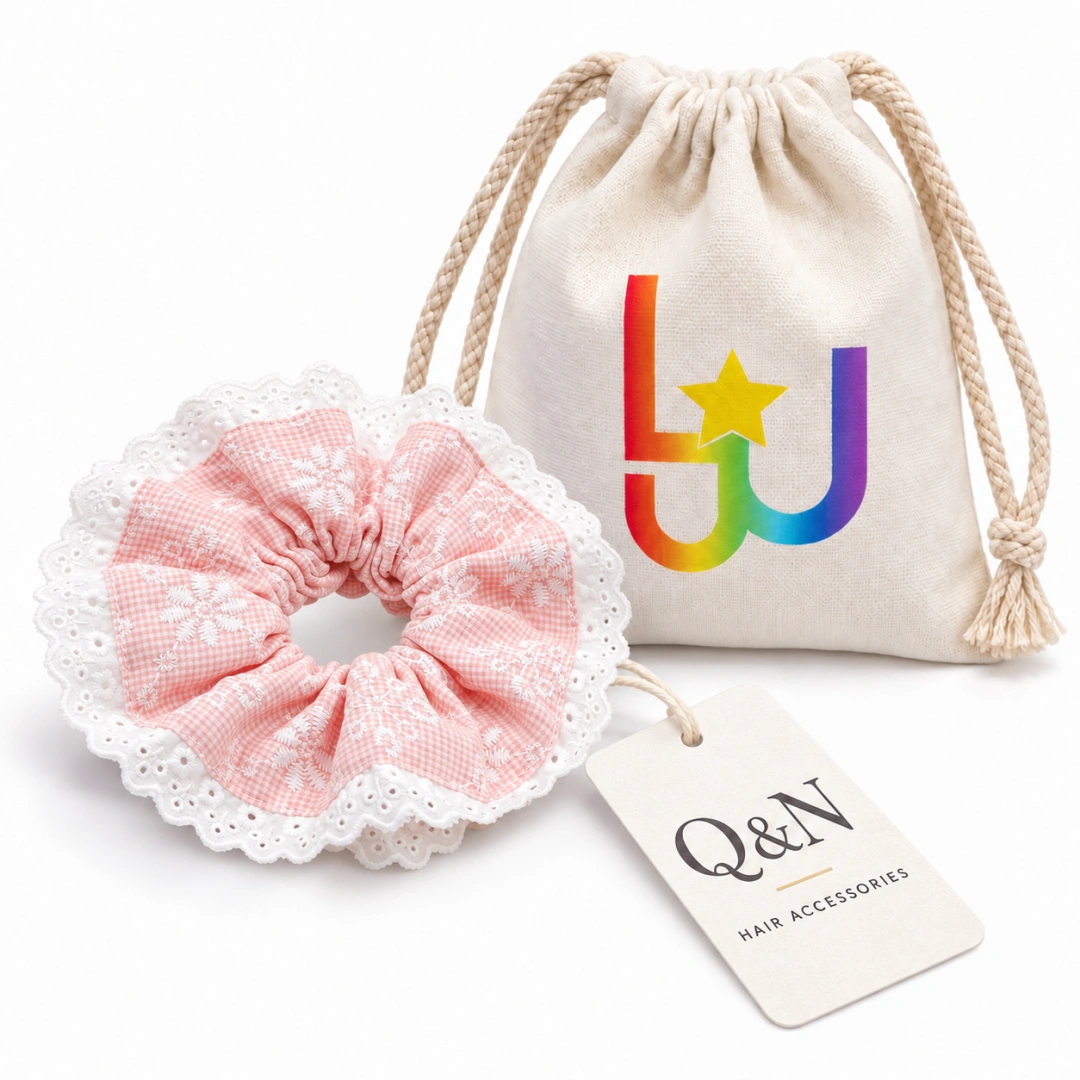
This guide explains what to prepare, how to review custom hair accessories samples, and what to confirm before approving bulk production. Whether you are developing scrunchies, headbands, bows, or claw clips, the goal is the same: resolve important design decisions before they become production inconsistencies.
The Hair Accessories Sampling Process at a Glance
A practical development sequence is:
- Submit the design brief and intended use.
- Confirm dimensions, construction, materials, and color references.
- Review logo artwork and packaging requirements.
- Develop and evaluate the first sample.
- Consolidate feedback and approve revisions.
- Confirm the pre-production sample and final specification.
- Release the order to bulk production with agreed inspection criteria.
Some stages can overlap, and sample names vary between suppliers. At the outset, agree on what each sample is intended to prove and what it will not yet represent.
Q&N Beauty’s custom hair accessories service covers OEM/ODM development, physical sampling, production, quality control, and packaging. A clear brief helps the team identify which decisions can be made from artwork and which require a physical trial.
What Information Is Needed Before Sampling?
You do not need a finished technical pack to begin a discussion. However, the manufacturer needs enough information to distinguish your essential requirements from areas where you want design support.
| Information | What to provide | Why it matters |
|---|---|---|
| Product and intended use | Accessory type, target wearer, hairstyle, and use occasion | Guides fit, construction, and material choices |
| Design reference | Photos, sketches, or a physical reference with annotated changes | Separates the desired features from details you want changed |
| Dimensions | Measurement points, units, and relaxed or stretched condition where relevant | Makes size requirements reproducible |
| Material and color | Preferred composition, texture, finish, and color reference | Supports sourcing and realistic color evaluation |
| Branding | Logo file, application method, size, and placement | Allows artwork and application feasibility checks |
| Packaging | Pack quantity, card or box format, labels, and artwork | Allows the complete retail presentation to be assessed |
| Commercial scope | Estimated quantity by style and color, target cost, and launch date | Helps identify feasible materials and development routes |
| Market requirements | Destination market, intended age group, and retailer testing or documentation requirements | Allows the relevant review and testing scope to be planned |
Mark uncertain items as “recommendation requested.” For example, you may know the desired fabric appearance but need help selecting a suitable weight or elastic construction. Explicit questions are easier to resolve than unstated assumptions.
Design References and Technical Specifications
Explain What You Like About the Reference
Instead of writing “make this style,” identify the features you want to retain: silhouette, fabric fullness, bow proportions, surface finish, or packaging presentation. Annotate anything that should change.
A physical reference can help communicate hand feel and fit. It should still be accompanied by written instructions, especially when the reference differs from your intended product.
Define Dimensions by Product Type
- Scrunchies: Relaxed outer diameter, finished fabric tube width, gathering, elastic specification, and label position.
- Fabric headbands: Band width, relaxed circumference where applicable, stretch behavior, knot or bow dimensions, and seam placement.
- Padded headbands: Base shape, covering material, padding profile, end finish, and fit expectations.
- Claw clips: Overall dimensions, opening range, tooth arrangement, spring function, surface finish, and any decoration.
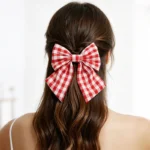
- Hair bows: Bow width, loop proportions, tail length, backing, and attachment method.
Add a measurement sketch and agree on tolerances appropriate to the construction. A soft gathered textile and a rigid molded component should not automatically use the same measurement method or tolerance.
For products such as custom scrunchies, separate appearance from fit. A larger fabric shell does not necessarily require a tighter or longer elastic loop. These variables should be reviewed independently.
Material and Color Selection
Approve the Actual Material, Not Just Its Name
Terms such as “satin,” “velvet,” or “soft fabric” leave room for interpretation. Confirm fiber composition, surface texture, thickness or weight where relevant, and the finish you expect.
Q&N Beauty offers material directions including satin, cotton, velvet, organza, and printed fabrics. Request a suitable swatch or sample so the material can be evaluated in the intended construction. A fabric that looks attractive when flat may gather, fold, or cover a headband differently than expected.
If a substitute material is used in an early prototype, record it clearly. Approving the shape of that prototype should not automatically approve the substitute for production.
Use an Agreed Color Reference
Provide the complete color reference, including the relevant system or suffix, or send a physical swatch. Confirm which reference takes priority if the artwork, photo, and swatch differ.
Pantone explains how physical and digital color standards support a shared color target. In practice, use an agreed physical reference when evaluating material samples rather than relying only on a phone photograph.
Review color under agreed lighting. Pantone also explains that colors can appear different under different light sources. A satin scrunchie, plastic clip, and printed card may not look identical even when they are developed toward the same color target.
Where custom dyeing or printing is involved, ask whether a color swatch, lab dip, or print strike-off should be approved before the complete sample is assembled. Availability and sequencing depend on the project.
Logo and Packaging Confirmation
Branding should be reviewed at the size and position intended for the finished accessory. A logo that is readable on a screen may become difficult to recognize on a small label or within gathered fabric.
- Supply vector artwork when available, with outlined text or the required font information.
- State the finished logo dimensions and placement relative to a seam or other fixed point.
- Confirm the application method, such as a woven label, printed label, or an agreed decoration process.
- Review visibility, edge finish, attachment, and contact with hair or skin.
- Approve the artwork version used for each product and packaging component.
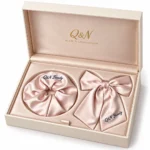
Q&N supports branding through labels, hang tags, packaging cards, and gift packaging. Select the method around the product’s construction and the amount of readable branding space.
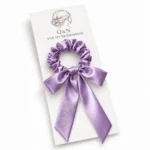
For packaging, confirm the quantity per pack, product orientation, attachment method, card or box dimensions, printed content, and barcode requirements where applicable. Review a packed sample: an attractive card can still stretch an elastic too far, flatten a bow, or conceal a logo.
A digital packaging proof approves layout. It does not, by itself, confirm the physical fit, board stiffness, print finish, or protection provided by the package.
Sample Development: What Happens at Each Stage?
Not every project needs every sample type below. Agree on the stages that will answer the unresolved questions in your design.
| Stage | Main purpose | Approval boundary |
|---|---|---|
| Material or component submission | Evaluate fabric, color, trim, elastic, or hardware | Does not confirm the assembled product |
| Development prototype | Evaluate shape, proportions, fit, and construction | May contain documented provisional materials or processes |
| Revised sample | Check the agreed changes | Review both the changes and any effects on previously accepted features |
| Pre-production sample | Confirm the intended production specification | Identify any remaining differences before granting production approval |
| Production inspection reference | Guide comparison during bulk manufacturing | Must be used together with written specifications and acceptance criteria |
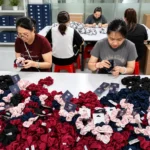
During development, the manufacturer reviews feasibility, sources components, prepares patterns or tooling as needed, assembles the accessory, and checks it before submission. The exact route depends on whether the project modifies an existing construction or develops a new one.
For a new rigid shape, confirm whether tooling is required and whether an early model can represent the final function. A visual model alone cannot demonstrate the performance of the intended production material and mechanism.
Sample Review and Revisions
Review Appearance, Function, and Construction Separately
- Appearance: Compare dimensions, proportions, color, surface finish, and branding against the brief.
- Function: Assess fit, hold, opening or stretching, and removal in the intended use.
- Construction: Check seams, elastic joints, attachment points, component edges, and finishing.
- Packaging: Check product fit, presentation, printed content, and handling.
- Documentation: Confirm the sample version and identify any substitutions or unfinished details.
Photos and videos help discuss visible details, but they cannot fully communicate elastic resistance, headband pressure, fabric hand feel, or clip operation. Use a physical review for these decisions.
Send One Consolidated Revision List
Collect feedback from the relevant design, buying, and quality reviewers before requesting changes. Conflicting messages from different team members make version control difficult.
For each requested revision, state the observation, the desired change, and the feature that should remain unchanged. For example: “The label is hidden by the gathers. Move it to the marked position shown in the photo; retain the approved label size and color.”
Assign a version number to each sample and feedback sheet. Ask the manufacturer to confirm the revision scope and explain any effect on materials, tooling, cost, or the schedule before work proceeds.
Illustrative Manufacturing Scenario
The following is a hypothetical example, not a customer case study.
A beauty brand approves the color and fullness of a satin scrunchie but finds its hold too loose in the intended hairstyle. The buyer marks the fabric appearance as accepted and requests a fit revision.
The manufacturer proposes an alternative elastic specification. The revised sample is checked for hold, comfortable removal, recovery, and any change to the gathered appearance. This keeps the feedback focused while recognizing that an internal change can affect the exterior.
Pre-Production Sample Approval
A pre-production sample, often called a PP sample, is intended to represent the specification planned for bulk production. Confirm that it uses the agreed materials, dimensions, construction, branding, and packaging, or explicitly document any exceptions.
Do not assume a sample is production-representative solely because it carries a PP label. Ask how it was made and which details, if any, differ from the proposed production method.
Before approval, confirm:
- Style code, sample version, and approval date.
- Material and component specifications.
- Measurements, measurement methods, and agreed tolerances.
- Color references and approved finishes.
- Logo artwork, application, and placement.
- Function checks and agreed acceptance criteria.
- Packaging, labels, assortment, and carton requirements.
- Any required test results or separately outstanding documents.
Use a clear status: approved, revision required, or approved only for specified features. If approval is limited to color or appearance, state that it does not release the full product to production.
Retain matching approved references where practical, supported by the final specification sheet and approval record. A physical sample shows workmanship; written requirements describe measurable limits and details that may not be visible.
From Approved Sample to Bulk Production
After final sample approval and commercial confirmation, the approved specifications should be transferred to purchasing, production, and quality control. Remove superseded artwork and clearly identify the current reference version.
Q&N’s hair accessories manufacturing capabilities support the transition from development to bulk orders. For each project, agree on the inspection checkpoints and records needed to check consistency with the approved sample.
- Incoming materials: Compare supplied materials and components with approved references.
- Early production: Check the first production pieces before the full run progresses.
- In-process checks: Monitor the relevant dimensions, assembly, branding, and functional characteristics.
- Final inspection: Review finished appearance, function, quantities, assortment, and packing against the agreed criteria.
If a material, component, or process must change after approval, document the proposed substitution and obtain the required approval before using it. Re-sample or repeat relevant checks when the change can affect fit, appearance, or performance.
Sample approval establishes the production target. It does not replace inspection of the actual bulk goods.
Common Questions About Custom Hair Accessories Samples
Can development start with only a reference photo?
Yes, an initial discussion can start with a photo. Identify the features you want, then confirm dimensions, materials, fit, branding, and packaging before treating the reference as a production brief.
How long does sampling take, and what does it cost?
Ask for a project-specific quotation and schedule after the brief is reviewed. Material availability, custom colors, tooling, logo development, packaging, revisions, and shipping can affect the scope. Confirm what the sample fee includes and any refund or credit conditions in writing.
Does every color require a complete sample?
Not necessarily. Agree on which variations need complete samples and which can be reviewed through material or color submissions. A different fabric, finish, or component may justify a separate functional sample even when the shape is unchanged.
Is a PP sample the same as a compliance test sample?
Not automatically. Design approval and compliance testing serve different purposes. Identify the testing requirements and confirm that any test sample represents the relevant final materials and construction.
Can I change the design after approval?
Changes may still be possible, depending on production status. Ask the manufacturer to assess the effect on work already completed, materials, cost, and timing. Update the approval record and verify affected features before proceeding.
Turn Your Design Brief Into a Production Reference
A clear hair accessories sampling process connects the design brief, physical sample, revision record, and production specification. When materials, fit, branding, and packaging are confirmed together, the approved sample becomes a practical reference for both the buyer and the factory.
Ready to develop your collection? Send Q&N Beauty your design brief with reference images, target dimensions, material preferences, logo files, packaging requirements, and estimated order quantities. The team can review the development scope and identify the next decisions needed for sampling.