Comparing custom hair accessories pricing can be frustrating when similar-looking products receive different quotes. One supplier may include branded packaging, while another prices the accessory alone. A small change in fabric, construction, or color assortment can also change the production requirements—and the cost.
Without a clear specification, buyers risk comparing different products or discovering additional charges after approving a sample. This guide explains seven factors that affect an OEM/ODM quote and shows how to prepare an inquiry that produces a more useful, comparable quotation.
Quick answer: There is no reliable universal price for a custom hair accessory. The quote depends on the exact product, materials, colors, branding, quantities, packaging, and development scope. Confirm what the unit price includes and identify any separate charges before comparing suppliers.
What Drives Custom Hair Accessories Pricing?
| Factor | Why it affects the quote | What to specify |
|---|---|---|
| 1. Design and construction | Material consumption, assembly steps, components, and finishing | Dimensions, drawings, structure, and intended function |
| 2. Material selection | Material grade, usable yield, sourcing, and processing needs | Composition, construction, finish, and reference swatch |
| 3. Custom colors | Color development, dyeing or finishing batches, and approvals | Color reference and quantity per color |
| 4. Logo application | Artwork preparation, setup, application, and added components | Method, size, colors, placement, and artwork |
| 5. Quantity and MOQ | How production and sourcing requirements are spread across the order | Quantity by style, size, and color |
| 6. Packaging | Packing materials, printing, assembly, and shipping volume | Retail unit, pack format, artwork, and labeling |
| 7. Sampling and development | Pattern work, prototypes, revisions, trials, and tooling where needed | Development scope and sample approval requirements |
These factors do not have fixed cost percentages. Their relative importance changes with the product. A sewn scrunchie, a covered headband, and a molded claw clip can require very different production routes.
1. Product Design and Construction
A reference photo communicates appearance, but it may not reveal the work needed to produce the item. Hidden seams, lining, interlining, elastic joints, and attachment methods can all affect hair accessories manufacturing cost.
- Scrunchies: Fabric dimensions, fullness, elastic specification, closure method, and added bows or tails.
- Fabric headbands: Soft or rigid construction, padding, fabric covering, end finishing, and front details.
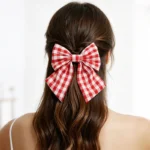
- Hair bows: Number of layers, loop and tail dimensions, reinforcement, and attachment type.
- Claw clips: Material, geometry, spring and hinge assembly, surface finish, and whether existing tooling can be used.
Start with an existing design reference where helpful. For example, the QN Beauty scrunchie collection can help communicate shape and styling direction. The quote still needs your finished dimensions and construction requirements.
Useful quote question: “Which construction details are included, and what changes would require a revised price?”
2. Material Selection
Material names need enough detail to support a meaningful comparison. “Satin” alone does not identify fiber composition, weight, or quality. Likewise, “plastic” does not define a particular resin, finish, or clip construction.
Specify the material properties that matter to the product:
- Fiber or material composition.
- Fabric construction, weight or thickness where relevant, and surface finish.
- Stretch and recovery requirements for elastic components.
- Required hand feel, drape, stiffness, or shape retention.
- Any product-specific testing or documentation requirements.
Material consumption and usable yield also matter. Directional prints may restrict pattern placement, while defects or pattern-matching requirements can reduce the usable portion of a fabric. A lower price per meter does not necessarily produce a lower cost per finished item.
QN Beauty supports material sourcing and sample development. Approve the actual material before treating a preliminary estimate as a confirmed production quote.
Useful quote question: “Is this quote based on the approved swatch, or on an alternative material that still needs approval?”
3. Custom Colors and Pantone Matching
Choosing an available material color and developing a custom color are different sourcing tasks. Custom dyeing, printing, or surface finishing may require development work and a minimum material batch.
A Pantone reference helps define the target, but it does not remove the need to approve the physical result. Satin sheen, velvet pile, and matte surfaces can produce different visual effects even when the intended color is the same.
- Available colors: Confirm the actual material, quantity available, and whether enough can be reserved for the order.
- Custom colors: Ask whether color development and approval samples are included or separately charged.
- Multiple colors: Provide the quantity for each color so sourcing and production can be assessed correctly.
- Reorders: Retain an approved physical reference and confirm the approach to batch-to-batch consistency.
Available fabric does not mean finished products are held in stock. A custom accessory may still require cutting, assembly, branding, and packing.
Useful quote question: “Can you quote the nearest available material color and a custom-matched option separately?”
4. Logo Application
Private label hair accessories pricing depends partly on where and how the brand appears. A woven label, a printed logo, embroidery, and a molded detail involve different preparation and application steps.
- Woven labels: Specify size, fold, artwork, quantity, and attachment position.
- Printed logos: Confirm the method, artwork dimensions, color count, placement, and suitable substrate.
- Embroidery: Review design coverage, detail, backing, and its effect on fabric stiffness.
- Custom hardware or molded details: Ask whether development or tooling is necessary and how it is charged.
- Packaging-only branding: Price the branded card, tag, or box as part of the packing specification.
QN Beauty’s OEM/ODM customization service includes printing, embroidery, and label options for compatible hair accessories. The selected method should be confirmed on the actual product rather than assumed to work on every material.
Useful quote question: “Please separate any artwork or setup charge from the recurring logo application cost, if they are charged separately.”
5. Order Quantity and MOQ
Minimum order quantity and unit price answer different questions. MOQ describes the minimum order the supplier accepts under a given specification. The unit price describes the cost per quoted unit at the stated quantity.
A larger order may spread setup work across more pieces or support more efficient material purchasing. However, a lower unit price is not guaranteed at every quantity, and ordering more also increases the total commitment.
Always identify whether the minimum applies per style, size, color, material, or packaging design. The total order quantity may not satisfy every component supplier’s minimum.
Typical Buyer Example: One Color Versus Several Colors
This is an illustrative sourcing example, not a customer case study, price offer, or QN Beauty MOQ policy.
Two buyers request the same total number of scrunchies. One chooses a single available fabric color; the other splits the order across several custom colors with different labels. The second brief may create more sourcing batches and setup work, so the total quantity alone is not enough to compare the quotes.
Useful quote question: “Please quote my planned quantity and the next practical quantity tier using the same specification and color split.”
6. Packaging Requirements
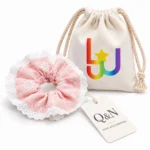
Packaging changes more than presentation. It can affect materials, printing, packing labor, carton size, and freight estimates. Define whether the quote covers a single accessory, a pair, or a multi-piece retail set.
- Individual protective packing: Specify the material, size, and any required labels.
- Printed display cards: Include dimensions, artwork, attachment method, and barcode requirements.
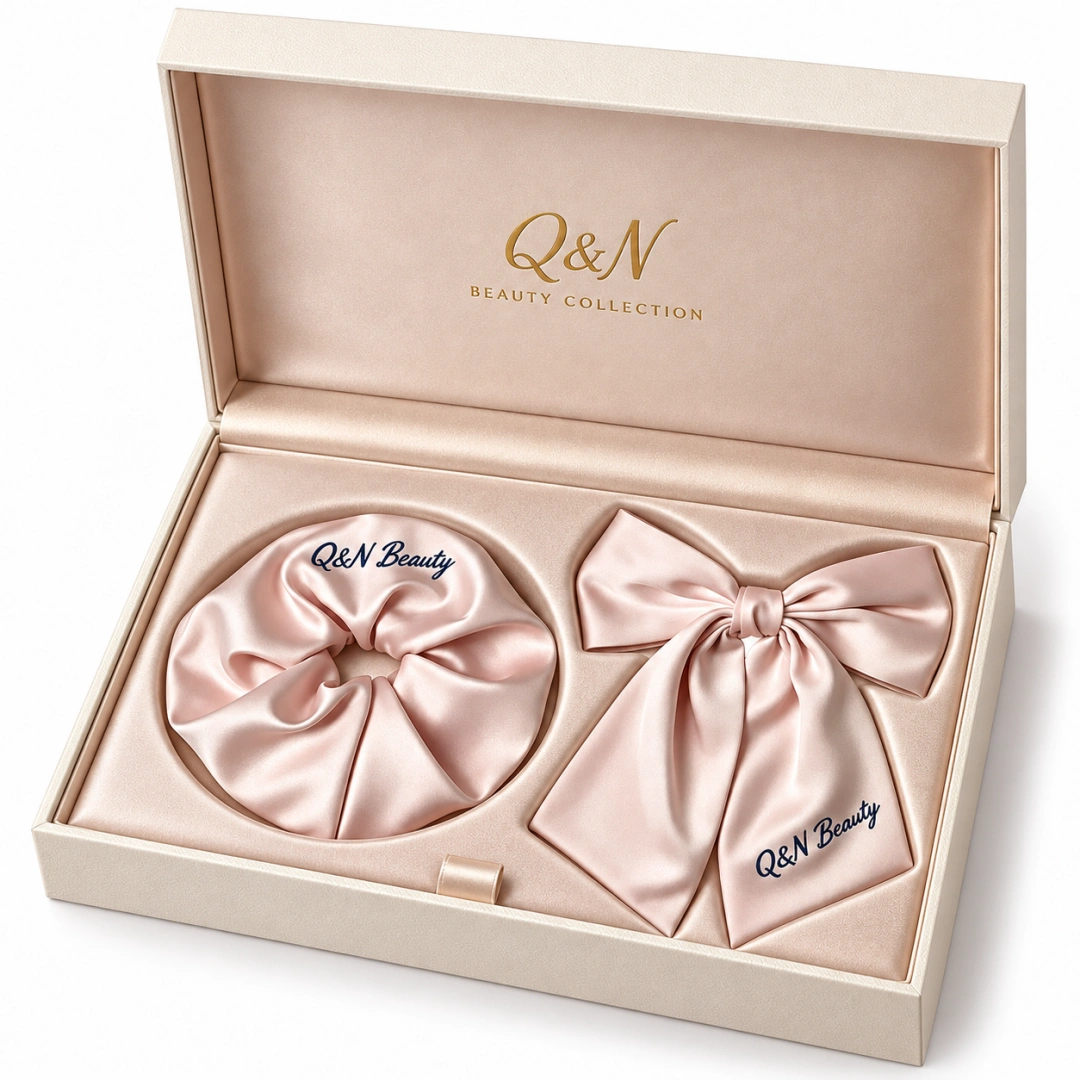
- Gift boxes: Confirm structure, inserts, printing, and how the accessory is secured.
- Mixed sets: Identify the number of pieces, color sequence, and assembly arrangement.
- Shipping cartons: Confirm packing quantities and any carton marking requirements.
Make sure suppliers quote the same retail unit. A price per scrunchie cannot be compared directly with a price per boxed set without accounting for the number of pieces and included packaging.
Useful quote question: “Does the unit price include the approved retail packaging, labeling, and packing labor?”
7. Sampling and Development Costs
Sampling may involve more than making a single finished item. Development can include patterns, material sourcing, color trials, logo trials, prototype assembly, and revisions. A new molded component may also require tooling, while some designs can use an existing base.
OEM and ODM are useful service descriptions, but neither label determines the price by itself. A buyer-supplied design may be straightforward to produce, while adapting an existing design can still require substantial changes.
- Confirm what the sample fee covers and how many versions are included.
- Ask how changes after the original brief are charged.
- Separate sample courier charges where applicable.
- Confirm any tooling ownership, storage, or reuse terms when tooling is required.
- Ask whether any fee credit or refund applies; do not assume it is automatic.
QN Beauty supports design review, physical sampling, revisions, and production after approval. Its company and manufacturing overview provides background on its OEM/ODM services.
Useful quote question: “Which development charges are one-time, which may recur, and what would trigger a new charge?”
Comparing Custom Hair Accessories Pricing on the Same Basis
A lower quoted unit price is only meaningful when the product specification and included services match. Ask suppliers to identify the following items clearly, even if some are included within a combined price.
| Quote item | What to confirm |
|---|---|
| Quoted unit | Per piece, pair, set, or retail pack |
| Product specification | Same material, dimensions, construction, color, and attachment |
| Quantity basis | Total quantity and breakdown by style, size, and color |
| Branding and packaging | What is included and what is separately charged |
| Development | Sample, artwork, tooling, revision, and courier charges |
| Quality requirements | Agreed inspection scope and any separately priced testing or inspection |
| Delivery basis | Shipping scope, named location, and agreed trade term where used |
| Commercial terms | Currency, payment terms, quote validity, and schedule assumptions |
Separate Product Cost From the Total Project Budget
For planning, start with the quoted unit price multiplied by the number of those units. Add only charges that are not already included: development, packaging, testing, transport, or destination costs, as applicable. This avoids counting the same charge twice.
The International Chamber of Commerce explains that Incoterms® rules clarify delivery tasks, costs, and risks between buyers and sellers. When a quote uses a trade term, confirm the named location and the specific included services rather than relying on the abbreviation alone.
Ask whether freight is a current estimate or a confirmed charge. Also confirm the requested delivery date, since transport choices can change the total project cost without changing the accessory itself.
How to Get an Accurate Manufacturer Quote
An accurate OEM hair accessories quotation starts with a complete brief. If a detail is undecided, identify it as an option rather than leaving the manufacturer to guess.
- Identify the product: Include reference images and describe its intended use.
- Provide dimensions: Distinguish finished measurements from material or component dimensions.
- Specify materials and construction: Include fabric, elastic, clip or headband base, and important finishing details.
- List colors and quantities: Show the breakdown by style and color, not just the total order.
- Attach logo artwork: State the desired size, placement, colors, and application method.
- Define the retail pack: Explain whether the item is sold singly or as a set and include packing references.
- State quality requirements: Identify functional checks, documentation, and any requested external testing.
- Share delivery details: Provide the destination and requested schedule.
- Request a clearly scoped quotation: Confirm inclusions, separate charges, assumptions, and validity.
If you have a target budget, state whether it covers the accessory alone, the packed retail unit, or delivery to your destination. This helps the manufacturer suggest relevant options without unintentionally removing a feature you need.
How to Reduce Cost Without Losing the Features That Matter
Ask for alternatives that change one variable at a time. This makes the effect on appearance, function, and custom hair accessories cost easier to assess.
- Compare an available material color with custom color development.
- Consider fewer launch colors if the assortment can still serve the customer.
- Compare a standard attachment with a specially developed component.
- Review a simpler package that still protects the product and communicates the brand.
- Compare logo methods using actual samples rather than choosing on price alone.
Keep essential fit, elastic performance, attachment security, and agreed workmanship criteria in the brief. A cheaper version is useful only if it still meets the product’s requirements.
Frequently Asked Questions
Why do similar-looking accessories have different prices?
Photos may hide differences in materials, internal construction, elastic, hardware, workmanship, and packaging. Compare written specifications and samples before deciding that two offers cover the same product.
Does a larger order always lower the unit price?
No. It may improve production efficiency, but the result depends on the specification, sourcing requirements, and order breakdown. Request quantity tiers instead of assuming a fixed discount.
Are samples and logos included in the quoted unit price?
They may be included, separately charged, or subject to project-specific conditions. Ask for the treatment of sampling, setup, logo application, and packaging to be stated in the quotation.
Can I get a quote from a reference photo?
A photo can support an initial estimate. A firmer quote usually needs dimensions, materials, construction, quantity, branding, and packaging details. The sample review may reveal specifications that require an update.
Why can the price change after sampling?
Sampling may confirm a different material consumption, construction, component, or finishing requirement from the original assumptions. Ask the manufacturer to identify any changes and approve the revised specification and quote before bulk production.
Request a Quote Based on Your Actual Product
Clear specifications make custom hair accessories pricing easier to understand and compare. Define the seven cost factors, separate recurring unit costs from development charges, and confirm the delivery scope before making a purchasing decision.
QN Beauty supports material selection, structure customization, logo application, sampling, production, quality inspection, and retail packing. Request a custom hair accessories quote with your reference images, dimensions, quantity breakdown, logo artwork, and packaging requirements to start a project-specific review.