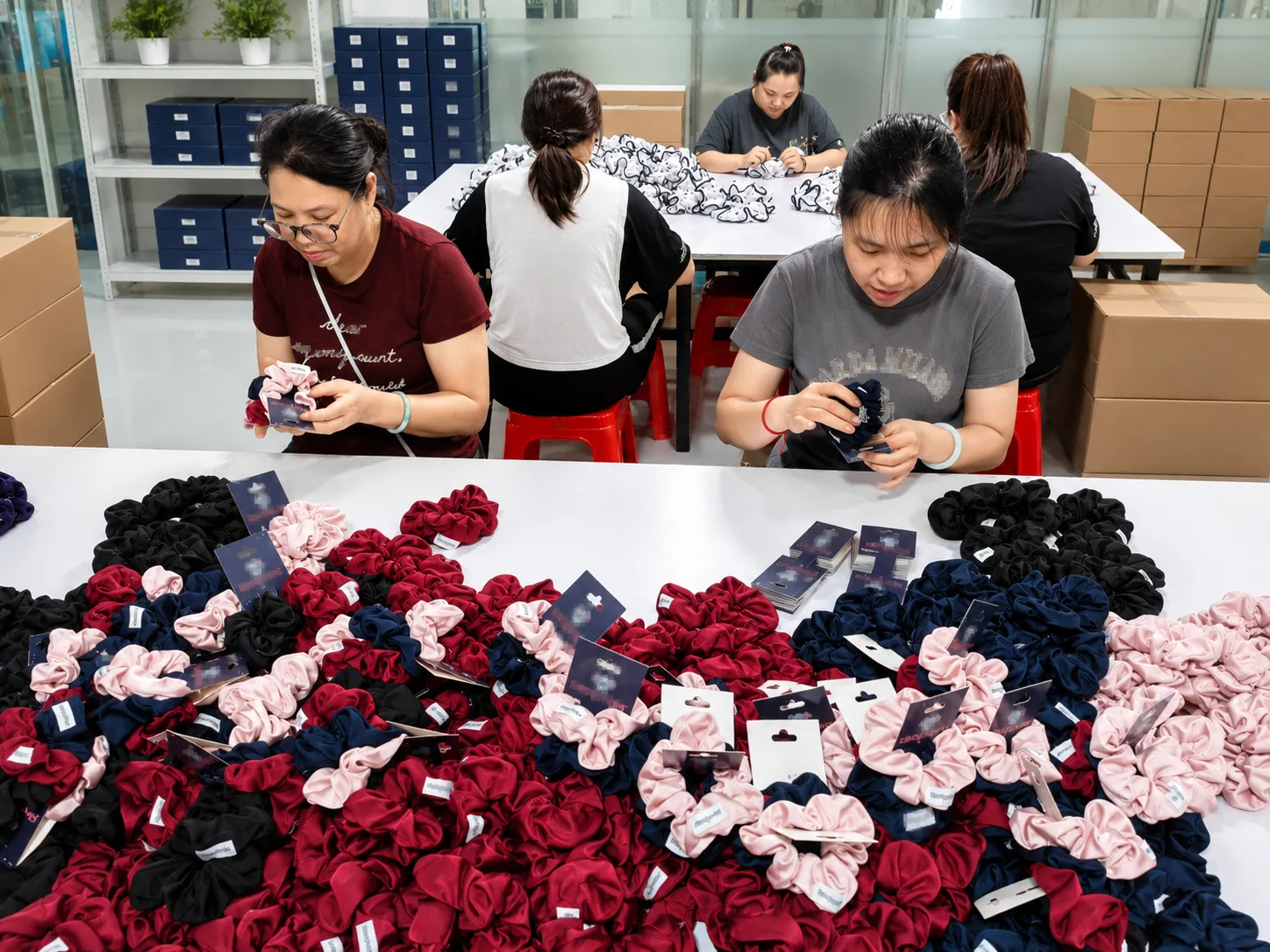
This guide follows fabric scrunchies, headbands, and bows from material selection to packing. It explains the purpose of each stage, the construction differences between products, and the checks buyers should discuss with their manufacturer.
QN Beauty offers OEM/ODM development, material sourcing, sampling, production, quality control, and customized packaging. The workflow below describes common manufacturing practices and recommended control points; the exact route should be confirmed for each design.
The Fabric Hair Accessories Manufacturing Process at a Glance
- Select and inspect fabric, elastic, thread, and other components.
- Prepare approved patterns, spread fabric, and cut the pieces.
- Sew the fabric components using the specified construction.
- Insert elastic or attach the required backing and hardware.
- Apply branding at the stage best suited to the chosen method.
- Trim threads, shape the product, and complete finishing.
- Inspect appearance, dimensions, construction, and function.
- Pack approved goods and prepare the shipment.
This is a process overview, not a fixed sequence for every accessory. A woven label may be sewn into a seam during construction, while a printed design or embroidery may need to be applied before assembly.
1. Fabric Selection and Inspection
Fabric influences the accessory’s volume, drape, surface appearance, and sewing behavior. Buyers should approve the actual material rather than relying on a color name or a photograph.
Specify fiber composition separately from fabric construction. For example, “satin” describes a weave rather than confirming that a fabric is silk. A material specification should identify the agreed composition, construction, color, and finish.
- Satin: Evaluate sheen, drape, seam appearance, and resistance to visible needle marks.
- Cotton fabrics: Assess hand feel, print appearance, and dimensional behavior under the intended care method.
- Velvet: Check pile direction and shade consistency when pieces are laid in different orientations.
- Organza: Review transparency, edge treatment, and the visibility of internal seams.
- Stretch knits: Compare stretch direction, recovery, and the finished product’s fit.
Incoming checks should compare the material with the approved swatch and identify stains, holes, shade differences, printing defects, or other visible inconsistencies. Keep material batches identifiable so a color issue can be traced before pieces are mixed together.
Elastic, thread, interlining, labels, and clips also belong in the material specification. A change to any of these components may affect the finished accessory even when the outer fabric remains the same.
2. Fabric Cutting and Preparation
Cutting begins with an approved pattern that distinguishes the cut dimensions from the finished dimensions. Seam allowances, folds, turning openings, and any gathering allowance must be accounted for before production pieces are cut.
Fabric is spread and aligned before cutting. Cotton Incorporated’s CottonWorks garment construction guide describes spreading and pattern placement as preparation for cutting. The same basic planning principle is relevant to small sewn accessories.
- Grain and stretch direction: Keep orientation consistent with the approved pattern.
- Print placement: Define whether a motif must be centered or whether random placement is acceptable.
- Pile direction: Keep velvet components oriented consistently where appearance requires it.
- Cut accuracy: Check dimensions and shape before sending a batch to sewing.
- Bundle identification: Separate pieces by style, size, color, and material batch.
Stretch-sensitive materials may need to relax before cutting. The preparation method should suit the actual fabric; one fixed resting time is not appropriate for every material.
3. Sewing and Construction
Sewing joins the prepared pieces into a stable shape while controlling seam bulk and appearance. Needle, thread, stitch type, tension, and feeding need to suit the fabric and the intended movement of the accessory.
Coats’ technical guide to eliminating seam puckering identifies fabric structure, seam construction, needle and thread size, tension, and feeding as possible contributors. This is why a sewing trial on the approved fabric is more useful than assuming one machine setting works for every style.
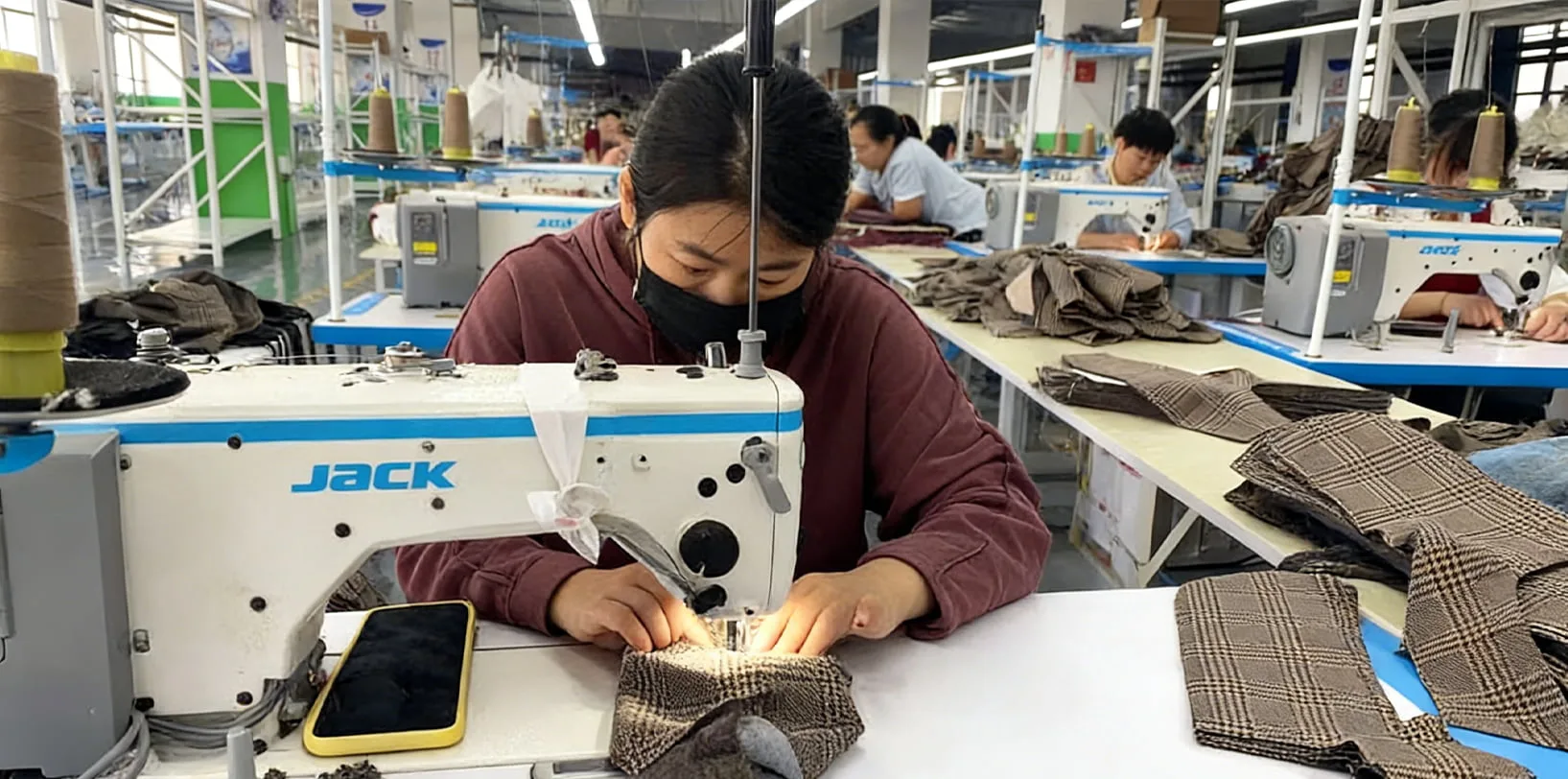
Scrunchie Manufacturing Process
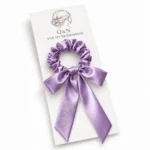
A common scrunchie construction uses a fabric tube with an elastic loop inside. The tube is sewn and turned, elastic is threaded through it, and the elastic ends are joined before the opening is closed. Alternative assembly sequences can achieve the same finished structure.
The fabric strip controls fullness and visible width, while the elastic helps determine fit and tension. Changing only the strip length does not automatically produce the desired hold. Compare the sewn sample with the intended hairstyle and the approved dimensions.
Explore the QN Beauty scrunchie collection when selecting a starting shape, then specify the construction details needed for your own version.
Fabric Headband Manufacturing
Fabric headband manufacturing differs by structure. A soft loop headband may rely on stretch fabric or an elastic section. A rigid headband instead uses a shaped base covered or wrapped with fabric, with the inner surface and ends finished for comfort.
For a twisted or knotted design, approve the position and bulk of the front detail. For an elastic-backed headband, check both the relaxed measurement and the agreed fit condition. A rigid covered headband does not require the same elastic-insertion step as a scrunchie.
Hair Bow Production
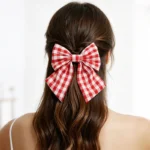
Hair bow production commonly involves sewing or folding the fabric components, forming the loops and tails, and securing a center wrap. Depending on the design, the bow is then attached to an elastic, clip, or headband.
Check symmetry, center-wrap alignment, tail length, and the visibility of the backing. Any reinforcement or adhesive should be specified and reviewed on the sample rather than left as an unapproved production substitution.
4. Elastic Insertion and Attachment
Elastic is a functional component, not simply an internal trim. Its width, construction, cut length, joining method, and recovery influence how the accessory behaves in use.
- Confirm the elastic: Match it to the approved specification and sample.
- Cut consistently: Define whether the recorded length is measured before joining and how the joining allowance is handled.
- Insert without twisting: Thread the elastic through the fabric tube or casing as required by the design.
- Secure the joint: Use the approved joining method and inspect it before concealing it.
- Check the assembled accessory: Assess stretch, recovery, gathering, and comfort under an agreed test method.
Do not assign a universal stretch ratio or test-cycle count without a product specification. Buyers and manufacturers should agree on the test conditions and acceptable result for the intended use.
5. Logo Application
QN Beauty’s custom hair accessories service includes printing, embroidery, and label options. Select the branding method alongside the fabric and construction so it can be applied at the correct production stage.
- Woven labels: Confirm the fold, seam insertion, exposed dimensions, and orientation.
- Printing: Review artwork scale, placement, color, and compatibility with the fabric.
- Embroidery: Evaluate backing, stitch coverage, and whether the design changes the fabric’s drape or comfort.
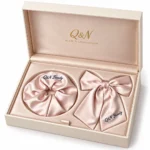
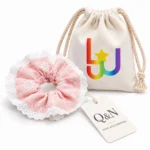
- Packaging branding: Use printed cards, tags, or boxes when the accessory itself needs a minimal appearance.
Approve branding on a physical sample where possible. A logo that looks centered on a flat panel may become partly hidden when the fabric is gathered, folded, or tied.
6. Trimming and Finishing
Finishing includes removing loose thread ends, checking closures, shaping gathers, and arranging bow loops or headband details. Pressing or steaming should be trialed on the chosen material before use, especially where pile, sheen, elastic, or attached decorations could be affected.
Look for visible seam openings, exposed backing, adhesive residue, uneven gathers, and distorted shapes. Repairable defects should be corrected and checked again before the item proceeds to packing.
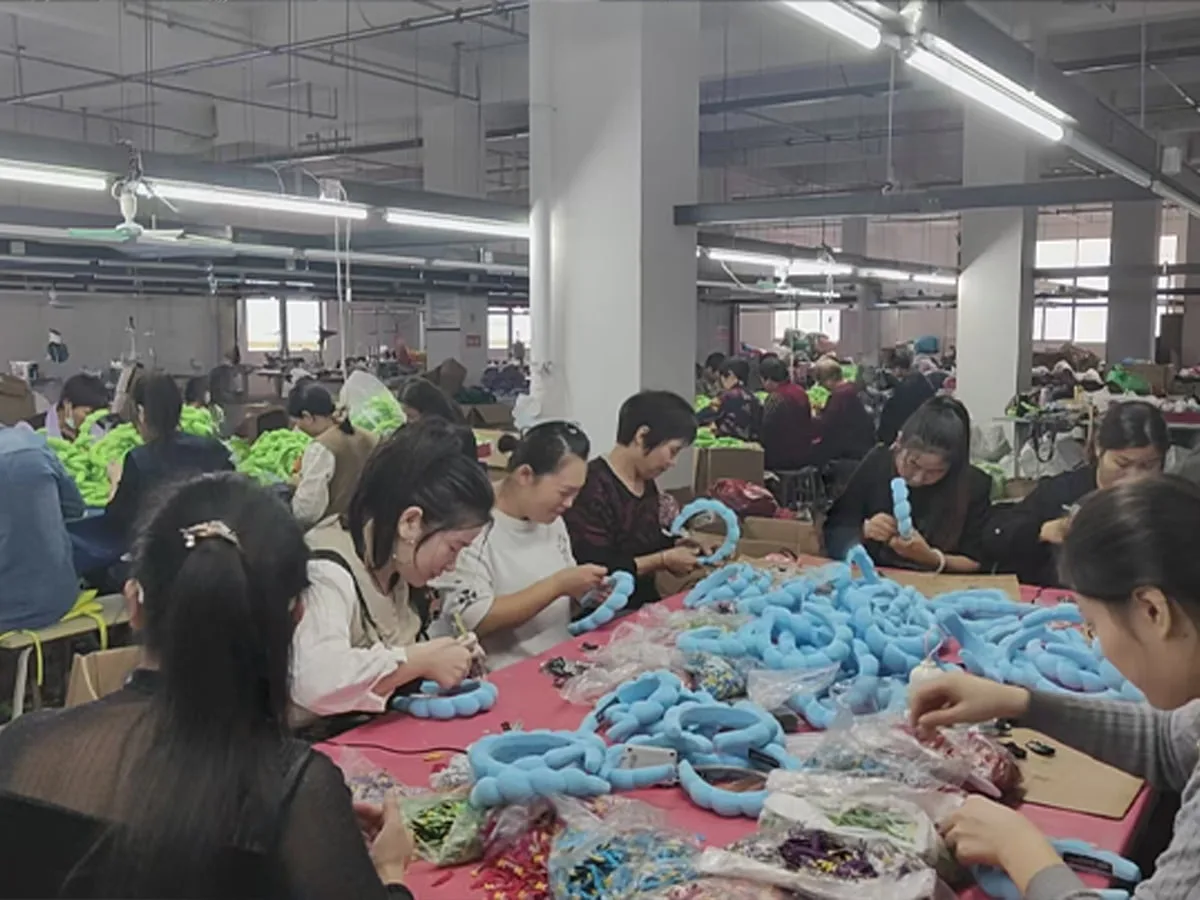
7. Final Quality Inspection
Final inspection should compare finished goods with the approved sample and written specification. Appearance alone cannot confirm elastic recovery, seam security, or attachment strength, so functional checks need their own agreed methods.
| Check area | What to review | Reference |
|---|---|---|
| Materials and appearance | Fabric, shade, print direction, stains, and surface defects | Approved swatch and sample |
| Dimensions | Finished width, diameter or circumference, and bow or headband dimensions as applicable | Measurement method and agreed tolerances |
| Sewing | Open seams, skipped stitches, puckering, and loose threads | Construction specification |
| Elastic and attachments | Joining security, recovery, and clip or decoration attachment | Agreed functional test and acceptance criteria |
| Branding | Artwork, position, orientation, and finish | Approved logo sample |
| Packing | Style, color, quantity, labels, and protective presentation | Approved packing instructions |
Specify which checks apply to every item and which use an agreed sampling plan. A visual inspection does not replace laboratory testing where the buyer’s product brief requires it.
Ask for an inspection record tied to the style and order. Photographs can document selected details, but they do not establish the result for every unit in a shipment.
8. Packaging and Shipment
Packaging should preserve shape while keeping the assortment easy to identify. A bow may need support to protect its loops, while an overly tight display card can distort a scrunchie’s gathers.
- Confirm the number of pieces per retail set and the color assortment.
- Check printed cards, tags, and barcode information against approved artwork.
- Use the agreed protective packing without crushing decorative details.
- Keep carton contents identifiable by style, color, and quantity.
- Reconcile the packing list with carton counts before dispatch.
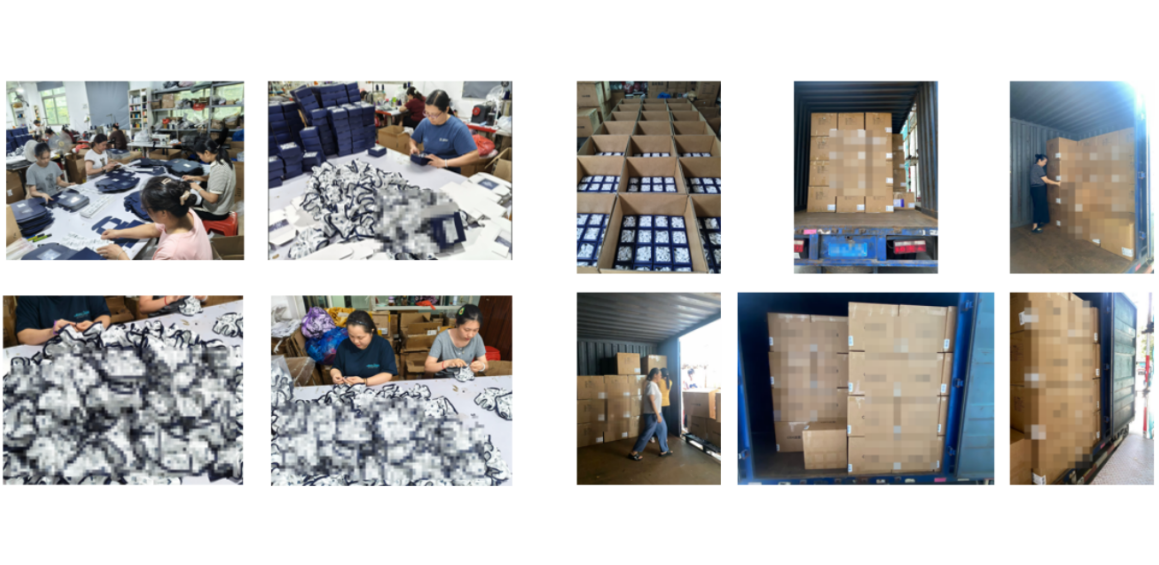
Confirm shipping arrangements against the completed packing information. Packaging type, order quantity, and delivery requirements should be agreed for the specific project rather than inferred from a general process description.
How to Control the Fabric Hair Accessories Manufacturing Process
The most useful production reference is an approved sample supported by clear written specifications. Keep the material, dimensions, construction, elastic, artwork, and packaging requirements together so production and inspection teams use the same information.
- Define the design: Supply reference images, intended use, dimensions, and material preferences.
- Review the sample: Assess appearance, fit, function, and branding together.
- Record revisions: Identify each change and approve the updated version.
- Authorize the production specification: Confirm the final materials and construction before bulk work starts.
- Control substitutions: Require approval when a material, component, or construction change could affect the result.
- Review completion evidence: Check inspection records, packing details, and relevant production photographs.
QN Beauty supports buyer-supplied designs through OEM manufacturing and design adaptation through ODM development. Its company and manufacturing overview provides background on these services. Project-specific samples and records are the next step in evaluating whether a proposed construction meets your requirements.
Frequently Asked Questions
Do scrunchies, fabric headbands, and bows follow the same production process?
They share material preparation, sewing or assembly, finishing, inspection, and packing. Their functional construction differs: scrunchies commonly contain elastic, soft headbands may use stretch fabric or elastic, and bows may attach to clips or other bases.
When should the logo be applied?
It depends on the method and construction. Printing or embroidery may be easier before assembly, while a woven label can be inserted during sewing. Confirm the sequence before approving the sample.
What should buyers approve before mass production?
Approve the physical sample, material specification, dimensions, construction, elastic or backing, branding, packaging, and inspection criteria. Record any agreed differences between the sample and the final order.
Which production photographs are most useful?
Ask for clear views of fabric cutting, sewing, elastic attachment where applicable, finished-product inspection, and packing. Each photograph should show the actual operation and product clearly enough to support its caption.
From Approved Construction to Consistent Finished Products
A well-defined fabric hair accessories manufacturing process connects material selection, cutting, sewing, elastic assembly, finishing, and inspection to the same approved specification. For buyers, that means fewer assumptions about how the accessory should look, fit, and arrive.
To discuss a custom scrunchie, fabric headband, or bow, send QN Beauty your design brief with reference images, dimensions, material preferences, logo artwork, and packing requirements. These details provide a practical starting point for sampling and production planning.