French barrette is one of those search terms people use when they know the accessory they want, but not quite how it works, how it differs from other clips, or which version will actually hold their hair. If you have ever bought a beautiful barrette only to find that it slips, pinches, or feels too delicate for daily wear, this guide is for you.
Drawing on market research, product construction details, styling tutorials, and hair-health guidance, this article explains what a French barrette is, why it remains a classic, which hairstyles it suits best, and how to choose a high-quality option for fine, medium, or thick hair. By the end, you will know whether a French barrette fits your routine, your texture, and your style goals.
What Is a French Barrette
1. What is the definition of a French barrette?
A French barrette is a barrette that uses a hinged metal clasp system designed to close over a section of hair and lock it in place. In the accessories market, the term usually refers to the classic French-made or French-style clasp that combines a decorative top piece with a functional spring mechanism underneath. In practical terms, it sits between ultra-simple clips and larger claw clips: cleaner than a snap clip, flatter than a claw clip, and usually more polished than a basic drugstore barrette.
That definition matters because not every decorative clip is a French barrette. Some look similar from the front but use entirely different back mechanisms. A true French barrette sits relatively flat and distributes hold more evenly across the section.
2. What are its classic structure and visual features?
The classic French barrette combines a decorative top piece with an engineered metal clasp underneath. Premium versions tend to feel smooth, balanced, and slightly curved so they follow the contour of the head better than flatter, lower-cost clips.
Visually, French barrettes are known for their understated elegance. Even when decorative, they are rarely bulky. The profile is usually slimmer than a claw clip, which is why French barrettes work so well for half-up styles, low ponytails, and formal finishing touches. France Luxe, for example, markets its classic French barrettes as handmade, polished, and built around a durable clasp system, reinforcing the category’s association with craftsmanship and longevity.[3]
3. Why is it considered a classic hair accessory?
The French barrette has remained relevant because it adds polish without adding visual weight. It can secure hair, finish a ponytail, dress up a half-up style, or sit neatly in an updo without dominating the look.
It also benefits from broad aesthetic flexibility. A matte acetate rectangle can read minimal and office-ready. A satin bow on a French clasp can feel romantic and formal. A tortoiseshell curved barrette can look timeless. That range gives the category long-term staying power, especially with Western consumers who want accessories that feel wearable beyond trend spikes.
Suggested image alt: “Close-up of a classic French barrette showing a polished decorative top and metal clasp underneath.”
How a French Barrette Works
1. What is the clasp mechanism of a French barrette?
A French barrette works through a spring-loaded clasp that opens when pressure is applied and closes over a gathered section of hair. Tutorials from Tegen Accessories describe the movement simply: open the clasp, gather the section, slide the lower bar under the hair, then press the upper bar down and lock the clasp.[4] This mechanism is intuitive after a few uses, but its performance depends heavily on spring strength, hinge quality, and the width of the barrette relative to the hair section.
That is why the same hairstyle can feel secure with one French barrette and unreliable with another. The clasp is not just a closure. It is the engineering core of the product.
2. Why is it more secure than some basic clips?
A well-made French barrette often feels more secure than basic slide-in clips because it encloses the hair rather than merely pressing against it. France Luxe’s product descriptions distinguish between smaller tige boule clasps for fine hair and larger engineered clasps for thicker hair, showing how clasp scale directly affects hold.[5][6]
Security, however, should never be confused with excessive tension. The American Academy of Dermatology warns that repeated tight pulling can contribute to traction alopecia over time. A secure barrette should hold the style without forcing the wearer to over-tighten the section beneath it.[7]
3. How much hair can it hold?
The answer depends on the barrette’s length, curvature, clasp depth, and spring strength. Petite French barrettes tend to work best on fine hair, side sections, or subtle decorative placement. Mid-size styles are ideal for half-up looks and low ponytail finishes. Larger or “volume” barrettes are better for denser hair, thicker ponytails, or fuller half-up sections.
| French barrette size | Best for | Typical use | Risk if mis-sized |
|---|---|---|---|
| Mini / small | Fine hair, side sections, accents | Face-framing pieces, mini half-up | Can pop open on thick hair |
| Medium | Most hair types | Half-up styles, small ponytails | Can slip if section is too small |
| Large / volume | Thick or long hair | Fuller half-up, denser sections | Can feel loose on fine hair |
Suggested image alt: “Diagram showing how a French barrette clasp opens, slides under hair, and locks closed.”
Common Uses for a French Barrette
1. Which hairstyles commonly use a French barrette?
The most common French barrette hairstyles are half-up looks, low ponytails, side-swept sections, and French twists or pleats. These styles all benefit from an accessory that lies close to the head and reads polished from the side and back. Tegen Accessories specifically highlights low ponytails, half-up styles, and French pleats as standard barrette use cases.[4]
That versatility is one reason French barrettes retain strong commercial relevance. One piece can move from weekday office wear to wedding guest styling with only small changes in placement and finish.
2. Why is it especially good for half-up styles and low ponytails?
Half-up hair and low ponytails require visible control but not the volume needed for a claw clip. A French barrette solves that tension perfectly. It finishes the hairstyle, keeps the section neat, and still allows hair to flow underneath. Allure’s 2026 barrette roundup describes modern barrettes as a way to make even a simple ponytail look more intentional and polished, while tester feedback notes that larger styles can hold voluminous half-up hair without the snagging associated with older clips.[8]
3. How do daily and formal use differ?
For daily wear, minimalist acetate or matte-finish French barrettes work best. They are comfortable, visually quiet, and easy to pair with denim, tailoring, or knitwear. For formal use, the same clasp can support velvet bows, pearls, crystals, or high-gloss finishes. Allure’s coverage of modern barrettes emphasizes that the category spans understated day pieces and occasion-driven statement designs, while Marie Claire’s 2024 Paris Couture Week coverage noted barrettes with pearl accents in half-up hairstyles as part of elevated warm-weather styling.[8][9]
Suggested image alt: “French barrette used in a half-up hairstyle and a low ponytail for day-to-night styling.”
French Barrette vs Other Barrettes
1. How is it different from a regular barrette?
In casual conversation, people often use “regular barrette” as a catch-all term. In product language, however, the difference usually comes down to clasp construction and finish quality. A French barrette typically implies a more refined clasp system and a flatter, more elegant wearing profile.
2. How does it compare with snap clips and claw clips in use?
Snap clips are fast, small, and ideal for quick side sections. Claw clips are bulkier, easier for full twists, and especially useful for casual updos. French barrettes sit in the middle. They are slimmer than claw clips, dressier than snap clips, and better when you want hair to appear neatly finished rather than loosely gathered.
| Accessory type | Best use | Look | Typical drawback |
|---|---|---|---|
| French barrette | Half-up, low ponytail, polished updo detail | Flat, elegant, classic | Needs correct sizing |
| Snap clip | Small sections, quick pin-back | Simple, youthful, practical | Limited hold capacity |
| Claw clip | Quick twists, full hair up | Casual, voluminous, visible | Bulkier silhouette |
3. Who is best suited to a French barrette?
A French barrette suits people who value a controlled, low-bulk silhouette. It is especially good for professionals who want a polished accessory, event dressers who need a refined finishing detail, and shoppers who prefer timeless over obviously trend-led. It is also strong for people who find claw clips visually too large or impractical for dressier outfits.
For thick or textured hair, the question is not simply “French barrette or not,” but which clasp strength and size you choose. Allure’s 2026 roundup highlights that higher-grip barrettes and thoughtfully engineered closures are better for thicker or textured hair that needs more hold.[8]
Suggested image alt: “Side-by-side comparison of a French barrette, snap clip, and claw clip on different hairstyles.”
How to Choose a Good French Barrette
1. How should you choose the right size?
Start with your actual use case, not the look of the accessory in product photos. If you want to hold only side pieces or a narrow top section, choose a smaller French barrette. If you wear fuller half-up styles or have thick hair, move up in length and clasp depth. France Luxe’s own product pages separate petite tige boule styles for fine hair from larger volume barrettes for thicker hair, which is a practical model for buying.[5][6]
2. Why does metal quality matter so much?
Because the clasp is the product. Decorative materials attract the eye, but the metalwork determines whether the barrette survives months or years of use. Low-grade hinges loosen. Poor springs lose tension. Rough edges catch strands. Better metalwork creates more predictable open-close resistance, cleaner locking, and less hair breakage during removal.
This is also where a premium barrette often earns its price. The difference is not only aesthetic. It is mechanical reliability over time.
3. How should material and color match personal style?
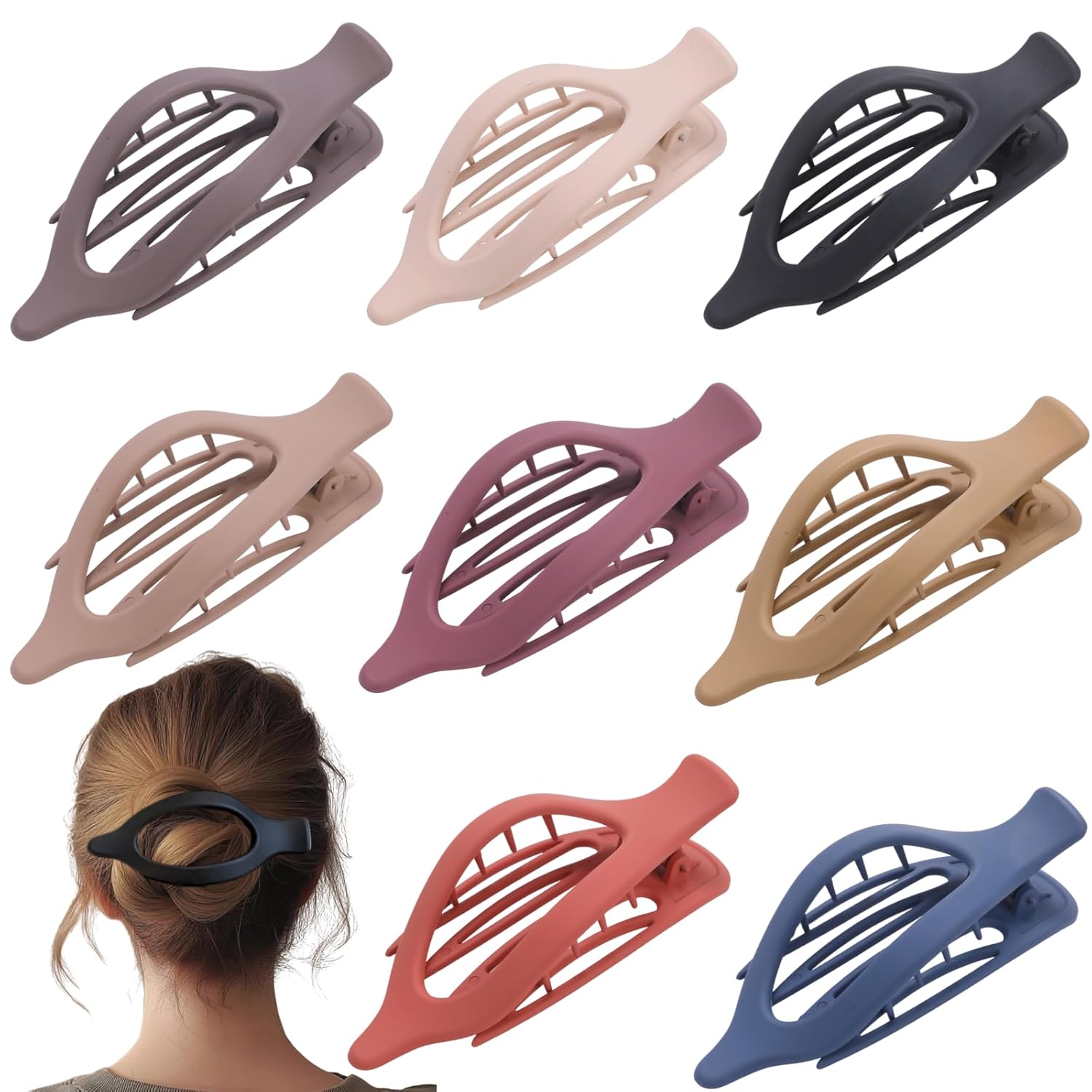
Use finish to decide how visible you want the accessory to be. Cellulose acetate, tortoiseshell patterns, and neutral resin finishes blend easily into everyday wardrobes. Satin, velvet, pearls, and crystal details signal occasion wear. If your goal is frequent wear, start with tortoiseshell, black, brown, ivory, or soft metallics.
- Match the size to the hair section, not just your overall hair density.
- Check whether the clasp is intended for fine hair, standard hold, or thick hair.
- Prefer smooth finishes and clean edges.
- Choose a color you can wear at least twice a week.
- Test whether the barrette holds without forcing the section too tight.
Suggested image alt: “French barrette sizing comparison for fine hair, medium hair, and thick hair.”
Materials, Metalwork, and Comfort
1. Which materials are most common in a French barrette?
Premium French barrettes often use cellulose acetate, which is prized for its smooth polish, depth of color, and more luxurious feel compared with brittle low-cost plastics. France Luxe explicitly lists cellulose acetate in multiple French barrette products.[5][6] Other common top materials include resin, metal, velvet, ribbon, and crystal embellishment.
2. What makes one clasp more comfortable than another?
Comfort comes from balanced tension, smooth edges, and the right curvature for the hairstyle. A clasp that is too weak slips, leading the wearer to re-fasten repeatedly. A clasp that is too tight can pinch the scalp or encourage over-pulling. The best French barrette feels secure but not aggressive.
That comfort question is not trivial. Dermatology guidance shows that repetitive tension and overly tight styling can increase the risk of hair damage over time.[7] An accessory that forces you to over-pack hair into the clasp is not a good fit, no matter how attractive it looks.
3. How can you tell if a French barrette is well made?
Look for a consistent spring action, polished edges, a sturdy hinge, and a top piece that feels securely attached to the clasp. The closure should not wobble. It should also not scratch the hair as you remove it. On fabric-topped or embellished styles, inspect how decorations are secured. High-quality attachments should feel intentional, not glued on as an afterthought.
| Quality signal | Why it matters | What to avoid |
|---|---|---|
| Smooth clasp edges | Reduces snagging and breakage | Rough stamped metal |
| Consistent spring tension | Better day-long hold | Loose or overly stiff hinge |
| Curved, balanced body | Sits closer to the head | Flat, awkward silhouette |
| Polished finish | Improves comfort and appearance | Cloudy or sharp-edged top pieces |
Suggested image alt: “Close-up comparison of premium cellulose acetate French barrette and low-quality rough-edged clip.”
Pros and Cons of a French Barrette
1. Main advantages of a French barrette
- Elegant, low-profile silhouette
- Ideal for half-up styles and low ponytails
- Works for casual and formal dressing
- Can feel more polished than claw clips
- Available in fine-hair and thick-hair versions
- Fit is highly dependent on sizing
- Cheap clasps lose tension quickly
- Not the fastest option for full-hair twists
- Decorative styles may be less versatile
- Can stress hair if overfilled or worn too tight
2. When is a French barrette the wrong choice?
If you need to throw all your hair up in seconds, a claw clip may be more practical. If you only want to pin back tiny sections, a snap clip or bobby pin can be faster. If your hair is extremely dense and you are shopping in the wrong size, a French barrette may feel frustrating rather than chic.
3. Is it still worth buying in 2026?
Yes, especially if you value longevity and refined styling. Fashion cycles change, but the French barrette sits in a category of accessories that are functional first and trend-compatible second. Even when overt hair trends shift toward bows, metallic accents, or sculptural clips, the French clasp remains relevant because it is a reliable platform for both minimalist and decorative design.
Suggested image alt: “Pros and cons comparison graphic for French barrettes in everyday and occasion styling.”
Case Study, Market Data, and Future Trends
1. Real-world case study: why French barrettes still show up in modern styling
Paris Couture Week 2024 offered a useful real-world example of how barrettes continue to function in contemporary styling. Marie Claire reported that barrettes with pearl detailing appeared in half-up looks among fashion attendees, showing that the accessory still works in elevated styling when the goal is practical control with visible refinement.[9]
Allure’s 2026 barrette testing points in the same direction from a consumer angle. Editors and testers described barrettes as practical daily finishing pieces for ponytails, half-up styles, and occasion wear, with specific appreciation for comfortable hold and reduced snagging.[8] Together, these examples show that the category is not surviving on nostalgia alone. It continues to solve everyday styling needs.
2. What does the market say about this category?
The broader market supports long-term demand. Grand View Research says the total hair accessories market was worth USD 23.41 billion in 2024 and projects an 8.0% CAGR through 2033. The clips and pins segment alone reached USD 5.162 billion in 2024.[1][2] Consumers are not moving away from hair-fastening accessories. They are becoming more selective about design, finish, comfort, and purpose.
That matters for content strategy too. Searchers no longer want generic definitions only. They want answers about clasp type, hair thickness, use case, quality, and comfort. The best content therefore blends education with practical buying guidance.
3. What future trends are likely for French barrettes?
The next phase of French barrettes will probably follow three directions. First, cleaner everyday shapes in acetate, soft neutrals, and tortoiseshell. Second, more occasion-led tops built on reliable French clasps, such as bows, pearls, or crystal trims. Third, better segmentation by hair type, with more brands clearly labeling styles for fine hair, medium density, and thicker hair.
Suggested image alt: “Modern French barrette trend board featuring acetate classics, pearl styles, and oversized ponytail barrettes.”
FAQ
1. Is a French barrette good for thick hair?
Yes, but only if you choose a large enough size with a deeper or stronger clasp. Smaller French barrettes are usually better for fine hair or narrow sections. Thick hair often needs a volume-style barrette or a medium-to-large clasp designed for denser hair sections.[6]
2. Can a French barrette be used on fine hair?
Absolutely. In fact, smaller tige boule and mini French barrettes are often especially effective for fine hair because they grip smaller sections without requiring a bulky clip. The key is choosing a clasp designed for delicate or lower-density hair.[5]
3. Is a French barrette formal or casual?
It can be both. A tortoiseshell or matte acetate French barrette is ideal for everyday wear. A satin, velvet, pearl, or crystal-topped French barrette works beautifully for weddings, dinners, and formal events.
4. Does a French barrette damage hair?
Not inherently. Damage risk usually comes from rough edges, poor construction, repeated snagging, or excessive tension. If the barrette is well made and not worn too tightly, it can be a gentler option than some fast styling methods. Dermatology guidance still applies: avoid styles that pull too hard for too long.[7]
5. What hairstyles work best with a French barrette?
Half-up styles, low ponytails, side sweeps, and French pleats are among the best options. These styles suit the flat, elegant profile of the clasp and make the accessory visible without overloading the look.[4]
6. How do I stop a French barrette from slipping?
Use less hair in the clasp, not more. Match the barrette size to the section, add a little texture spray if your hair is very silky, and make sure the clasp is not too large for the amount of hair you are securing.
Conclusion
A French barrette is more than a pretty clip. It is a clasp-driven hair accessory designed to hold hair neatly while keeping the final look refined, flat, and wearable. It works for half-up hairstyles, low ponytails, side sections, and polished occasion styling.
The biggest buying mistake is choosing based on appearance alone. Choose instead by section size, clasp strength, finish quality, and how often you will realistically wear it. Do that, and a French barrette can become one of the most useful accessories in your collection.
Clear next step: If you are building a hair accessories line or sourcing custom French barrette styles for your brand, review your target user by hair density, clasp strength, finish, and occasion use first.
For product development inspiration, visit Q&N Beauty or explore custom service options to develop French barrette collections with better fit, finish, and positioning.
Future trend summary: Expect continued demand for French barrettes that combine clean everyday silhouettes, better hair-type segmentation, and decorative tops built on reliable clasp engineering. The category’s future is not less functionality. It is more precise functionality with better styling language.
References
- Grand View Research, Hair Accessories Market Size, Share & Industry Report.
- Grand View Research, Clips & Pins Hair Accessories Market Statistics.
- France Luxe, Classic French Hair Barrettes.
- Tegen Accessories, How To Use Barrette Clips.
- France Luxe, Oblong Tige Boule Barrette – Classic.
- France Luxe, Oval Volume Barrette – Classic.
- American Academy of Dermatology, Hairstyles That Pull Can Lead to Hair Loss.
- Allure, 7 Best Barrettes to Elevate Your Everyday Hairstyles.
- Marie Claire, French Girl Updos Are Trending at Paris Couture Week.