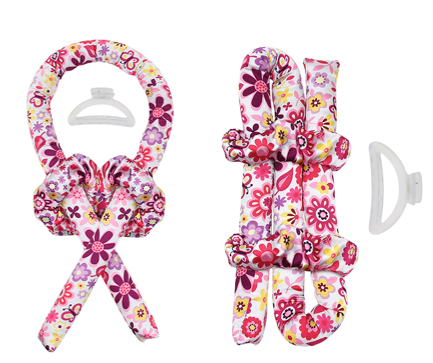
Fine hair responds best when rod diameter, set weight, surface grip, moisture and section size work together. Using research, dermatologist guidance and published user testing, this guide explains how to choose a rod, improve retention and assess a private-label set.
Why Fine Hair Needs the Right Heatless Curlers
Characteristics of Fine Hair
“Fine” describes the diameter of an individual hair fiber. It does not describe how many hairs grow on the scalp. Someone can have many fine strands and therefore high density, while another person can have coarse strands but low density. This distinction matters: the first person may need a longer rod because there is a lot of hair to wrap, yet still need a lightweight rod because each strand is delicate.
There is no universal at-home micrometer cutoff for fine hair. A 2023 comparison found substantially different readings from two hair-caliber methods, so an online diameter chart is not a diagnosis. At home, a strand that is difficult to feel and becomes flat under rich products is likely to behave like fine hair. Review the measurement study.
| Term | What it describes | Why it changes curler choice |
|---|---|---|
| Fine hair | Small diameter of each strand | Benefits from low weight, gentle tension and a smaller-to-medium rod |
| Low density | Fewer strands per area of scalp | Needs fewer or smaller sections and very gentle root tension |
| Fine, high-density hair | Many small-diameter strands | May require a longer rod and more wrapping space, but not a heavier core |
| Miniaturization or thinning | A change that may be associated with hair loss | Requires professional assessment rather than a styling-product solution |
Why Fine Hair Loses Curls Easily
Water makes hair easier to reshape; as it dries around a form, weak physical bonds reset in the new configuration. Humidity, gravity, natural oil, heavy conditioner and oversized curl geometry can reduce definition. Because fine hair is sensitive to product load, a light mousse or foam usually supports the set with less collapse than a rich cream or oil.
How Heavy Curling Rods Can Affect Fine Hair
Weight alone does not “damage” hair, but an unnecessarily heavy rod can create root drag, loosen the wrap and make sleep uncomfortable. The American Academy of Dermatology advises loose styles, covered hair bands and avoidance of pulling or tugging. That principle applies to overnight curlers: the set should feel secure, never tight or painful. See the AAD’s hair-damage prevention guidance.
What Type of Heatless Curling Rod Is Best for Fine Hair?
Lightweight Curling Rod Designs
For most fine hair, start with a fabric-covered rod with a low-mass foam or fiber core. It should stay close to the head without aggressive clipping. Dense rubber can feel heavy overnight, while underfilling can collapse into sharp bends. Evaluate the whole kit: large clips and metal decorations may add more pull than the core.
Soft and Flexible Rod Construction
The rod should flex around the head and recover after use. A rigid cylinder may lift near the temples; a floppy core can twist and create different curl sizes on each side.
Smooth Materials That Reduce Friction
Hair-fiber reviews describe the intact cuticle and its lipid layer as important defenses that help lower friction. Repeated rubbing, especially on weathered or chemically treated hair, can raise the cuticle and contribute to roughness. A smooth cover therefore makes sense for frequent use, although no fabric can make an overly tight wrap safe. Read the peer-reviewed hair physicochemistry review.
Secure Designs That Do Not Pull the Roots
Security should come from balanced placement and surface grip, not high tension. If the rod slides, change the anchor or cover before pulling harder.
| Feature | Good sign | Warning sign |
|---|---|---|
| Weight | Stays positioned without root drag | Needs tight clipping to stop movement |
| Flexibility | Bends smoothly and rebounds | Kinks, flattens or rotates during wrapping |
| Seam | Flat, soft and placed away from the hair-contact zone | Raised ridge that catches strands |
| Ends | Softly finished with no hard edge | Bulky knots or exposed fasteners |
| Accessories | Covered elastics with moderate recovery | Narrow, high-tension bands or rough hook-and-loop contact |
Choosing the Best Heatless Curler Diameter
Small Diameter for Longer-Lasting Curls
Rod diameter sets the maximum curl radius, but section size and wrapping angle also affect the result. On fine, straight hair that quickly relaxes, a finished rod diameter around 1.5–2.0 cm is a practical development starting point for defined curls. It creates more rotations along the hair length than a thick rod. Expect the first release to look tighter than the final style; the curl normally softens after separation and wear.
Medium Diameter for Natural Waves
A diameter around 2.0–2.8 cm is the most versatile range for soft curls and waves on shoulder-length to long fine hair. It is easier to sleep on than multiple small rollers and usually leaves less dramatic root-to-end variation. For a looser finish, increase section size slightly rather than moving immediately to an extra-large rod.
When to Avoid Extra-Large Curling Rods
A rod above roughly 3.0 cm can create a blowout-like bend, but it may not produce enough rotation to survive on short or curl-resistant fine hair. This is a geometry issue, not a product defect. Extra-large rods are more appropriate when the user wants volume, has long hair and accepts a relaxed finish.
| Finished diameter | Expected result | Best starting use | Trade-off |
|---|---|---|---|
| 1.5–2.0 cm | Defined curl or tighter wave | Very straight, curl-resistant fine hair | More wrapping time; may look tight at first |
| 2.0–2.8 cm | Natural curl and polished wave | Most fine-hair users | Retention still depends on complete drying |
| 2.8–3.2 cm | Loose wave and body | Long fine hair or blowout effect | Can drop quickly in humidity |
| Above 3.2 cm | Large bend, limited curl | Very long hair and volume-led styling | Often too large for lasting definition |
Product-development note: These are practical starting ranges, not clinical standards. Finished diameter should be measured after the cover and filling are assembled. Brands should wear-test at least two adjacent sizes across short, medium and long fine hair before committing to a production specification.
Best Heatless Curler Materials for Fine Hair
Satin Heatless Curlers
Satin is a weave, not a fiber. Most satin curlers use polyester, although silk can also have a satin weave. Polyester satin is smooth, lightweight and color-consistent, but freshly conditioned hair may slide on it.
Silk Heatless Curlers
Genuine silk is light, smooth and strongly positioned for luxury. It costs more, needs careful cleaning instructions and requires accurate fiber labeling. “Silky” does not mean silk.
Velvet Heatless Curlers
Velvet offers more grip and can reduce reliance on tight elastics. A coarse pile may drag during removal, so velvet designs should pass snagging and repeated-use tests.
Comparing Smoothness, Grip and Weight
| Cover | Advantages | Limitations | Best fit |
|---|---|---|---|
| Polyester satin | Smooth, lightweight, color-consistent, cost-efficient | Can slip; quality varies by yarn and finish | Mainstream fine-hair sets |
| Silk | Premium fiber, smooth feel, luxury story | Higher cost and stricter care/labeling needs | Premium or giftable sets |
| Velvet | Higher grip and stable wrapping | More drag; pile can catch damaged ends | Very slippery fine hair |
| Cotton jersey | Soft, breathable, moderate grip | Less glide and a more casual appearance | Daytime sets and natural-texture positioning |
There is no single “healthiest” material independent of construction. A smooth cover with a rough seam can perform worse than a carefully finished moderate-grip textile. Judge the whole contact surface, not just the fabric name on the front of the package.
How to Prepare Fine Hair for Heatless Curls
Start with Slightly Damp, Not Wet, Hair
Start when the mid-lengths feel faintly cool or damp but do not transfer water to the hand. Roots should be mostly dry, leaving enough moisture for reshaping and a realistic path to complete drying.
More water is not automatically better. Research on repeated drying found increasing surface damage as drying temperature rose, while prolonged wetting also affected the hair’s internal cell membrane complex. The practical lesson is balanced: avoid high heat, but do not keep fragile hair saturated and under tension for unnecessary periods. See the hair-drying study.
Use Lightweight Styling Products
Choose one primary hold product, such as a light layer of volumizing mousse or foam. Apply less near the roots. Stacking leave-in cream, oil, serum, mousse and hairspray can leave fine hair coated and limp.
Add Texture Without Weighing Hair Down
If clean hair is too slippery, add a little texture mist or foam instead of more tension. Fine hair can be oily at the roots and dry at the ends, so avoid aggressive clarifying.
Divide Hair into Smaller Sections
Smaller sections dry faster and make more complete contact with the rod. They also create more turns, which improves visible definition. Keep the sections similar on both sides so the curl pattern does not change abruptly at the back.
- Dry strategically: let washed hair air-dry until only slightly damp.
- Detangle gently: use fingers or a wide-tooth comb, beginning at the ends.
- Apply one light hold product: distribute it evenly rather than concentrating it in one patch.
- Create the final part: changing the part after release can disturb the root pattern.
- Anchor without pulling: center the rod and confirm that the scalp feels comfortable.
- Wrap in even sections: keep tension controlled and consistent.
How to Make Heatless Curls Last on Fine Hair
Wrap with Consistent Tension
Uneven tension creates a tight front and loose back. Hold each strand flat, add hair steadily and avoid twisting the rod. If the scalp feels pinched, restart more loosely.
Allow Hair to Dry Completely
Dryness at release is the highest-leverage variable. Check the innermost section near the nape, not only exposed ends. Dense hair, large sections, humidity and a non-breathable cover extend drying time.
Remove the Rod Without Pulling the Curls
Unwind each side in reverse; do not drag the rod through the spiral. Let curls rest, then separate with dry fingers. Brushing creates softness but quickly reduces definition.
Set and Separate the Finished Curls
For maximum longevity, use a light, flexible-hold spray from a distance and let it dry before touching the hair again. Separate each curl into two or three pieces rather than combing repeatedly. In humid conditions, choose a smaller rod and a stronger humidity-resistant finish, while accepting that temporary styling still responds to atmospheric moisture.
| Observed result | Likely cause | Next test |
|---|---|---|
| Curl disappears within an hour | Rod too large, set released damp, or no hold support | Reduce diameter one step and verify full dryness |
| Front holds; back falls flat | Back sections too large or wrapped at lower tension | Divide the back more evenly and begin closer to the crown |
| Ends are straight | Ends were not kept flat against the rod | Smooth and fully wrap the final 5–8 cm |
| Roots feel sore | Excess tension or heavy hardware | Stop, loosen the set and use lighter accessories |
| Hair is frizzy after removal | Hair was rubbed, pulled or separated while damp | Unwind fully dry hair and separate with dry fingers |
Common Heatless Curling Mistakes with Fine Hair
Using a Rod That Is Too Thick
A thick rod may look comfortable and luxurious, but it cannot create multiple rotations on shorter hair. If a released wave relaxes immediately, test a smaller diameter before adding more product.
Applying Too Much Styling Product
Strong hold and heavy application are not the same. A thin, even film can support shape; saturated strands become sticky, slow to dry and easy to clump. Begin with less than you think you need and record the amount so the next trial is comparable.
Wrapping Hair Too Loosely
Large gaps between turns reduce contact and create random bends. Maintain full contact with the rod, but protect the hairline. The correct set feels stable when you move your head and comfortable when you lie down.
Brushing the Curls Immediately
A fresh fine-hair set needs minimal manipulation. Aggressive brushing separates the fibers and increases the visual radius of the curl, making it appear to fall. Use fingers first; brush only when a soft, blended wave is the intended finish.
Case Study: What a Published Fine-Hair Test Reveals
A Go-To Skin Care editorial documented two community team members’ heatless-curl routines. It is not a controlled trial or proof of performance, but it records hair type, process, time and retention instead of showing only an after-photo. Read the original test.
| Tester | Hair description | Method | Reported result | Actionable lesson |
|---|---|---|---|---|
| Alex | Very straight, thin, long and high-density | Mousse, rod set, hairspray; novice wrapping | Best for 1–2 hours, then dropped over the next 2–5 hours | Technique consistency and product testing matter; high density does not mean coarse strands |
| Tara | Straight, fine and normally poor at holding curl | Damp hair, mousse, small added sections, 5-hour daytime set | Back lasted a few hours; shorter front pieces remained into the next day | Section size, hair length and set duration can create different retention on the same head |
Both users saw uneven retention. Check moisture, section thickness and number of wraps by zone: back sections are often larger, while shorter front pieces complete more rotations around the rod.
Product Design Considerations for Fine-Hair Sets
Lightweight Filling Options
For brands, “soft” is not a specification. Define finished weight, core density, compression recovery and diameter tolerance. Foam can form a smooth cylinder; fiber fill can feel softer. Both need recovery testing because flattening changes curl shape.
Recommended Rod Length and Diameter
Specify usable wrapping length, not only total length. A 2.0–2.8 cm diameter can anchor a collection, with smaller and larger options for definition and volume. Long or high-density fine hair needs more length without unnecessarily heavier fill.
Soft Scrunchies and Gentle Accessories
Specify elastic recovery, fabric width and seam placement. A full-looking scrunchie may hide narrow, high-tension elastic. Test repeated stretching and wear on fine, color-treated hair.
Custom Heatless Curler Sets for Haircare Brands
The commercial opportunity is broader than a single rod. Statista projects worldwide hair-care revenue of approximately US$99.91 billion in 2026. Grand View Research values the global hair-accessories market at US$23.4 billion in 2024 and forecasts US$46.6 billion by 2033, an 8.0% CAGR for 2025–2033. These figures describe adjacent categories—not the size of the heatless-curler niche—but they show why brands are developing styling accessories that complement hair-care routines. View Statista’s hair-care forecast and Grand View Research’s hair-accessories outlook.
| Specification | What to define | Why it matters for fine hair |
|---|---|---|
| Rod geometry | Finished diameter, usable length, tolerance | Controls turns, curl size and consistency |
| Mass | Rod weight and complete kit weight | Limits root drag and improves sleep comfort |
| Core | Material, density, rebound, wash response | Prevents flattening and angular bends |
| Cover | Fiber content, weave/pile, seam and colorfastness | Balances glide, grip and snag risk |
| Accessories | Elastic tension, clip teeth, edge finishing | Secures without concentrated pressure |
| Claims | Performance protocol and care instructions | Keeps marketing specific and supportable |
| Testing | Hair length, density, damage level, humidity and set time | Prevents one-model product decisions |
Q&N Beauty supports brands developing coordinated rods, scrunchies, clips, labels and retail packaging. Start with a target curl, hair-length range, cover material and positioning—not only a reference photo. Visit Q&N Beauty to discuss a custom heatless curling set and request development guidance for your market.
Pros and Cons of Heatless Curlers for Fine Hair
| Pros | Cons |
|---|---|
| Avoids direct curling-iron heat during the set | Requires hours rather than minutes |
| Can create curls, waves or volume through diameter changes | Results vary with humidity, moisture and natural texture |
| Reusable and easy to include in a nighttime routine | Poorly designed rods can slip or disturb sleep |
| Pairs naturally with lightweight styling products | Fine hair may still need hold product |
| Supports premium material and gifting options | “Silk,” “satin” and “damage-free” claims are often used imprecisely |
Heatless does not mean frictionless, tension-free or guaranteed to hold. The strongest benefit is the removal of direct high-temperature contact from the curling step. Laboratory research has shown that higher drying temperatures can increase hair-surface damage, and dermatologists advise limiting hot-tool exposure. That makes a well-fitted heatless method a sensible alternative for frequent stylers, provided it remains comfortable and gentle.
Frequently Asked Questions
Do heatless curlers work on fine hair?
Yes. Fine hair can form heatless curls, but retention depends on rod diameter, section size, starting moisture, complete drying and product weight. A smaller-to-medium lightweight rod is usually more reliable than an oversized, heavy one.
What size heatless curling rod is best for fine hair?
Start around 2.0–2.8 cm for natural curls or waves. Move toward 1.5–2.0 cm if very straight hair loses shape quickly. Use a larger rod only when a loose blowout bend is the goal. These are development ranges, so hair length and density still require testing.
Should fine hair be wet or dry for heatless curls?
Slightly damp is usually the most practical starting condition. Hair should not be dripping, and roots should be mostly dry. If the inner sections remain damp at release, the curl is likely to relax.
Why do heatless curls fall out of fine hair?
The most common reasons are a rod that is too large, sections that are too thick, removal before the hair is dry, uneven tension, heavy products or high humidity. Change one variable at a time so you can identify the cause.
Is satin, silk or velvet better for fine hair?
Satin or silk suits users who prioritize a smooth surface. Velvet suits hair that slips off smooth rods. Construction quality, seam placement and rod weight matter as much as the cover name.
How long should fine hair stay wrapped?
There is no universal number of hours. The set is ready when the wrapped hair is completely dry. A daytime set may need several hours; an overnight set provides more time but should never cause pain or pulling.
Can using a heatless curling rod every night damage fine hair?
It avoids direct heat, but repeated friction or tension can still stress hair. Alternate placement, keep the wrap comfortable, choose smooth accessories and inspect the hairline and ends for breakage. Stop if the scalp becomes tender.
Conclusion: Choose Heatless Curlers as a System
The best heatless curlers for fine hair are lightweight, moderately flexible, appropriately sized and secure without aggressive tension. Start with a 2.0–2.8 cm rod for versatile waves, move smaller for stronger retention, and reserve extra-large designs for loose volume. Wrap hair when it is only slightly damp, use one lightweight hold product, keep sections even and wait for complete drying before release.
Future products will likely become more precise rather than merely softer: multiple diameter options, published finished weights, replaceable covers, clearer fiber labeling and testing protocols organized by hair length, strand diameter and density. Brands that document those variables can make more credible claims and reduce the gap between a viral demonstration and a repeatable consumer result.
For haircare and beauty brands: turn the selection principles in this guide into a clear product brief. Define the target curl, usable rod length, finished diameter, total weight, cover composition, accessory tension and packaging requirements. Then contact Q&N Beauty to develop a custom heatless curler set for your collection.