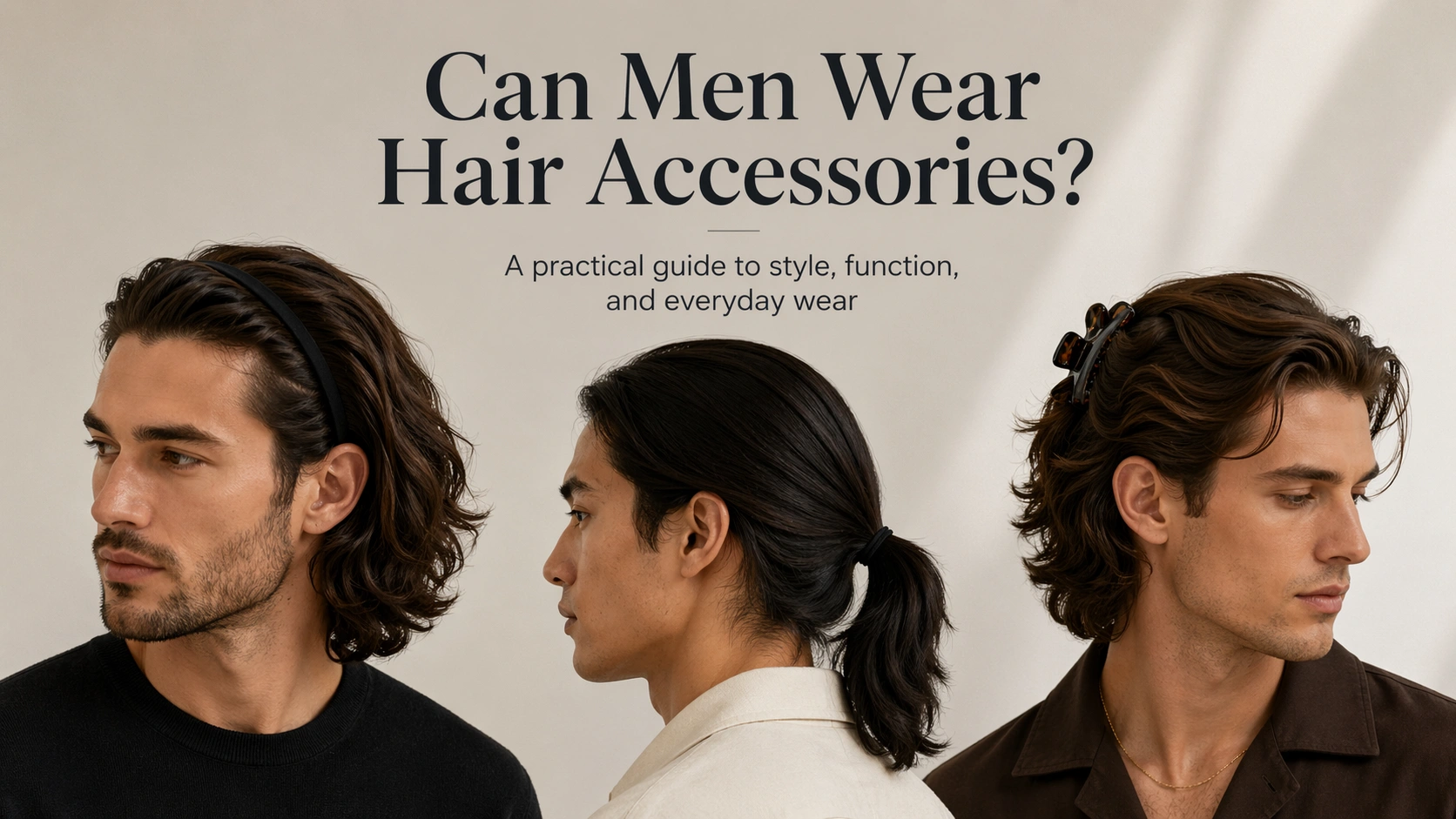
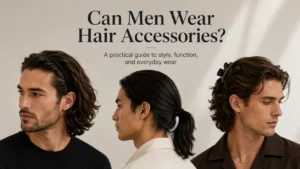
This guide uses category data, real-world use cases, and hairstyling logic to explain which hair accessories for men are actually useful, how to wear them naturally, what to avoid, and how to choose options that feel modern rather than theatrical.
- Can Men Wear Hair Accessories
- Why Men Wear Hair Accessories
- Best Hair Accessories for Men
- How Men Can Wear Hair Accessories Naturally
- Common Concerns About Men Wearing Hair Accessories
- Pros and Cons of Hair Accessories for Men
- Case Studies, Trend Signals, and Expert Insights
- How to Choose the Right Hair Accessory
- Conclusion, CTA, and Future Trends
- FAQ
- References
1. Can Men Wear Hair Accessories
1.1 Is it common for men to wear hair accessories?
Yes, especially once hair reaches medium or long length. In practice, men use accessories in three overlapping ways: utility, grooming control, and style expression. Utility includes keeping hair off the face during sport, commuting, skin care, shaving, and desk work. Grooming control includes managing growth phases, flyaways, and parting. Style expression is where headbands, clips, cuffs, and scarves move from “tool” to “look.”
Grand View Research estimated the global hair accessories market at USD 23.41 billion in 2024, with the U.S. market at USD 4.56 billion and the clips & pins segment alone at USD 5.16 billion. Accessories are not a fringe category—they are a large, growing part of grooming and style.[1][2][3]
1.2 Why hair accessories should not be limited to one gender
Hair accessories solve a functional problem created by hair length, texture, movement, and environment. Those variables are not gendered. If a headband keeps hair out of your eyes while running, or if a matte claw clip helps you secure shoulder-length hair while working from home, the accessory is doing exactly what it is supposed to do.
Shared wardrobes, cross-category styling, and utility have pushed accessories toward a more flexible, unisex space. Even when a product is marketed toward women, the design may still be neutral: black elastics, tortoise clips, metal cuffs, simple comb headbands, and muted fabric bands.
1.3 Are men’s hair accessories more about function or style today?
For most men, function comes first. Style comes second—but that second layer is growing. A slim black headband can read athletic or polished, and a neat low bun secured with the right tie looks intentional rather than improvised.
| Hair accessory role | What it does | Best use case for men |
|---|---|---|
| Utility | Keeps hair back, reduces interference, speeds up grooming | Gym, commuting, desk work, washing face, cooking |
| Structure | Controls flyaways and awkward growth stages | Medium-length grow-out, layered cuts, humid climates |
| Style | Adds texture, finish, or personality | Weekend looks, events, editorial dressing, travel outfits |
Suggested image alt: Men wearing different hair accessories including a black headband, simple hair tie, matte claw clip, and bandana.
2. Why Men Wear Hair Accessories
2.1 Why medium and long-haired men need them most
Once hair reaches the ears, cheekbones, or collar, it starts interfering with vision, sweat control, and neatness. Men growing out shorter cuts often hit a difficult in-between stage where hair is too long to ignore but too short for a clean tie-back. This is where accessories matter most. A slim headband or small clip can make the difference between “messy” and “controlled.”
2.2 The practical role during sport, work, and daily grooming
Hair accessories often reduce friction in daily life. Athletes use headbands to keep sweat and hair back. Office workers use elastics or clips during focus-heavy tasks. Men with longer fringe use headbands while shaving, applying skin care, or blow-drying.
2.3 Why more men now use accessories as style elements
The line between grooming and fashion has become thinner. Men are more comfortable using jewelry, bags, scarves, skin care, and hair products as part of a complete look. Hair accessories fit naturally into that shift. The styling move can be subtle: a monochrome headband, a tonal scarf, a matte clip, or a no-metal elastic that disappears into the hair. It can also be expressive, as seen in music, runway, and street style.
Trend signals support this broader acceptance. GQ highlighted Colin Farrell’s long-running use of stretchy headbands across casual outings, runs, airports, and premieres, framing the piece as both practical and stylish. Meanwhile, Allure’s coverage of Y2K-inspired beauty trends cited Stray Kids’ Hyunjin wearing silver barrettes, showing how clips can cross into men’s fashion-forward styling when the overall look supports it.[5][6]
2.4 Why the category keeps growing
Consumer demand is expanding because accessories now serve both utility and identity. Grand View Research attributes growth in part to demand for products that are fashionable and useful. That dual-purpose logic fits men’s adoption perfectly: few men want an accessory that is decorative only, but many are willing to use one that solves a problem and looks intentional.[1]
Suggested image alt: Medium-length male hairstyle secured with a minimalist black headband during a casual daily routine.
3. Best Hair Accessories for Men
3.1 Hair ties, headbands, clips, and bands: which need each one solves
Hair ties are the easiest starting point. They work for ponytails, low buns, half-up styles, and gym use. The best options are soft, no-snag elastics with fabric or smooth finishing.
Headbands are ideal for medium hair, growing-out cuts, sports, and skin care routines. They are especially helpful when you do not yet have enough length for a reliable tie-back.
Claw clips are niche but useful for men with thick, medium-to-long hair at home or in casual settings. A matte, dark clip can secure a twist quickly without the tension of a tight tie.
Barrettes or sectioning clips are less common for everyday male styling but can work for editorial looks, one-sided hold, or hair management during styling and product application.
Bandanas and kerchiefs sit between utility and style. They help manage long hair, sun exposure, and humidity while adding visible personality.
| Accessory | Best for | Hair length | Style level |
|---|---|---|---|
| No-snag hair tie | Ponytails, buns, quick control | Medium to long | Very easy |
| Slim headband | Grow-out stage, sport, grooming | Short-medium to medium | Easy |
| Soft sports band | Running, training, outdoor work | Any | Very easy |
| Matte claw clip | Quick home styling, thick hair | Medium to long | Moderate |
| Bandana / kerchief | Travel, festivals, hot weather, statement styling | Medium to long | Moderate to bold |
| Barrette / clip | Directional styling, fringe control, editorial looks | Medium | Advanced |
3.2 Minimalist vs. functional styles for everyday use
If your goal is natural daily wear, start with minimalist accessories in black, brown, charcoal, navy, olive, or tortoise. Functional styles—sports headbands, grip bands, performance wraps—are best when activity drives the outfit.
The safest entry points for most men are black or dark brown no-metal hair ties, slim matte headbands, solid-color sports bands, and dark matte claw clips for at-home use.
3.3 Which accessories suit different hair lengths
Short hair: headbands, sweatbands, narrow comb bands, and styling clips during grooming.
Medium hair: headbands, small claw clips, half-up ties, mini section clips, and bandanas.
Long hair: hair ties, large claw clips, headbands, bandanas, scarves, pony cuffs, and low-bun accessories.
3.4 Which materials work best
Look for smooth fabric, coated elastic, acetate, matte-finish resin, soft jersey, or flexible plastic. Avoid rough seams, exposed glue, sharp edges, and thin rubber bands. Byrdie’s expert-backed guidance on hair ties notes that rough elastics and rubber-band-like options can increase friction and breakage, especially on fine or processed hair.[7]
Suggested image alt: Flat lay of men’s hair accessories including black elastics, a matte headband, dark claw clip, and neutral bandana.
4. How Men Can Wear Hair Accessories Naturally
4.1 How to make them look natural, not forced
The easiest rule is alignment: match the accessory to the job and the outfit. A technical headband makes sense with sportswear. A clean black elastic works with a T-shirt, knit polo, or overshirt. A bandana suits relaxed summer looks better than formal tailoring.
4.2 How to choose by haircut and clothing style
Men with textured surfer-length hair often suit fabric bands and headbands. Men with straight shoulder-length hair usually look best with understated ties, low pony cuffs, or a minimal clip at home. Men with mullets, wolf cuts, or layered medium lengths can use narrow headbands to control the front while preserving movement through the back.
| Look | Best accessory | Why it works |
|---|---|---|
| Office casual | Dark hair tie or matte headband | Low visual noise, practical, polished |
| Gym / sport | Performance headband | Controls sweat and loose hair |
| Weekend casual | Bandana, scarf, loose tie | Adds character without looking formal |
| Creative / fashion-forward | Metal clip, barrette, pony cuff | Turns grooming into visible styling |
4.3 How formal and casual settings differ
Formal settings favor invisibility or restraint. Use one clean tie, a discreet band, or a polished low bun. Casual settings allow more texture, color, and visibility. The mistake most beginners make is choosing a high-visibility accessory before they are comfortable with low-visibility ones.
4.4 A 4-step beginner method
- Start with function: choose the problem you need solved—sweat, fringe, long length, or fast control.
- Choose a low-contrast color: black, brown, charcoal, or tortoise.
- Wear it in a matching context first: gym, skin care, commuting, working from home.
- Upgrade to style-forward options only after your practical version feels normal.
Suggested image alt: Man styling medium-length hair with a black headband and casual neutral clothing for a natural everyday look.
5. Common Concerns About Men Wearing Hair Accessories
5.1 Will it look awkward?
It can—but usually only when scale, color, or context are wrong. Oversized clips on short hair can look costume-like. Bright satin bands with tailored workwear may feel disconnected. The accessory itself is rarely the issue. Misalignment is.
5.2 How do you avoid pieces that feel too loud?
Use one variable at a time. If the accessory shape is visible, keep the color muted. If the color is strong, keep the silhouette clean. If the outfit is already expressive, let the accessory disappear into the hair. Men who are new to accessories usually do best with matte finishes, narrow profiles, and tonal palettes.
5.3 What is the easiest category for first-time users?
Hair ties are the most forgiving if your hair is long enough. Headbands are second, especially for medium-length hair and workouts. After that, soft bandanas are the easiest statement option. Claw clips and barrettes are more niche and depend more heavily on hair length, thickness, and confidence.
5.4 Can accessories damage hair or the scalp?
Yes, if worn too tightly or too often. The AAD warns that repeated stress on the scalp can lead to traction alopecia, and tight ponytails, buns, or head coverings can all contribute when they constantly pull. The lesson for men is simple: choose accessories that hold without strain, rotate styles, and stop using anything that causes pain, tenderness, or breakage.[4]
Suggested image alt: Close-up of a soft no-snag hair tie and a low-tension hairstyle on medium-length male hair.
6. Pros and Cons of Hair Accessories for Men
Pros
- Keeps hair out of the face during work, sport, and grooming
- Makes medium and long hair easier to manage
- Improves polish during awkward grow-out phases
- Can reduce the need for more product or frequent restyling
- Adds style without changing the haircut itself
- Allows one haircut to perform across casual and formal contexts
Cons
- Wrong size or color can feel forced
- Over-tight accessories can stress hair and scalp
- Some categories are still coded as fashion-forward, not neutral
- Lower-quality materials can snag, slip, or break hair
- Very decorative pieces may not suit every office or formal setting
6.1 When the pros clearly outweigh the cons
If you have medium or long hair, work out regularly, or are growing out a shorter cut, accessories almost always improve daily comfort.
6.2 When you should keep it simple
If you are new to visible styling, choose only one category and wear it consistently for function before experimenting with fashion. A black elastic or performance headband solves real problems without asking you to rethink your entire wardrobe.
6.3 The best beginner buying checklist
- smooth materials
- low-contrast colors
- comfortable tension
- easy removal
- appropriate scale for your hair volume
- one accessory matched to one clear need
Suggested image alt: Comparison chart showing the pros and cons of hair ties, headbands, claw clips, and bandanas for men.
7. Case Studies, Trend Signals, and Expert Insights
7.1 Case study: the understated male headband
Example: Colin Farrell’s repeated use of slim stretchy headbands, highlighted by GQ, shows the strongest real-world entry point for men. The accessory appears across workouts, travel, and even more public appearances because it solves a functional problem while remaining visually simple.[5]
Takeaway: If you want one accessory that crosses from utility to style without much risk, start here.
7.2 Case study: fashion-forward clips on male idols
Example: Allure’s Y2K beauty trend roundup included Stray Kids’ Hyunjin wearing silver barrettes. This is not an everyday-office recommendation for most men, but it proves that clips can work when styling is intentional and the accessory is integrated into the overall image.[6]
Takeaway: Barrettes and visible clips are viable for men, but they belong further along the confidence curve than headbands or ties.
7.3 Case study: scarves and kerchiefs moving mainstream
Example: Vogue’s coverage of the hair kerchief revival in 2025 and spring 2026 street style signals a wider acceptance of fabric-based hair accessories. While that article focused on broader fashion culture, the implication is useful for men too: scarf-based styling is now part of the mainstream accessory conversation, not just a niche costume reference.[8]
Takeaway: Men can wear bandanas or kerchiefs most naturally in relaxed, seasonal, or travel contexts.
7.4 What experts would prioritize first
A stylist would generally prioritize three things: tension, proportion, and finish. A dermatologist would add scalp health. Together, those priorities suggest softer accessories, less tension, correct scale, and cleaner removal.[4][7]
Suggested image alt: Editorial collage of men using headbands, hair ties, and fashion-forward clips in casual and runway-inspired settings.
8. How to Choose the Right Hair Accessory
8.1 Choose by hair type and density
Fine hair: choose lightweight bands, small no-snag elastics, and accessories with gentle hold. Avoid heavy clips that slide.
Thick hair: choose larger claw clips, stronger elastics, broader headbands, and accessories with deeper grip or more surface area.
Curly or textured hair: choose smooth fabrics, wider bands, and accessories that do not catch on the cuticle.
8.2 Choose by the styling problem you need solved
| Your problem | Best first accessory | Why |
|---|---|---|
| Hair in your eyes during workouts | Performance headband | Fast control without needing enough length for a tie |
| Shoulder-length hair at work | No-snag hair tie | Neat, practical, office-safe |
| Awkward grow-out phase | Slim matte headband | Controls front sections and fringe |
| Casual home styling for thick hair | Matte claw clip | Quick hold with less tension than a tight bun |
| Want more personality | Bandana or kerchief | Visible style with practical value |
8.3 Choose by dress code and comfort
For conservative offices or formal settings, keep accessories discreet. For creative workplaces or casual weekends, you can use more visible pieces. Comfort should always outrank aesthetics, because discomfort leads to fidgeting, headaches, and hair damage—and then you stop wearing the item entirely.
8.4 Internal and external link opportunities
Suggested internal links on qnbeauty.com:
- Hair accessories collection page
- Guide to headbands for different hair types
- How to choose claw clips by hair thickness
- Low-damage hair ties and scrunchies buying guide
Suggested external link placements:
- market data citation to Grand View Research
- scalp health guidance to the American Academy of Dermatology
- trend/context citations to GQ, Allure, and Vogue
Suggested image alt: Men’s hair accessory decision chart based on hair length, texture, and occasion.
Conclusion: Yes, Men Wear Hair Accessories—When They Make Sense
Men wear hair accessories most successfully when the choice starts with function and ends with fit. The right accessory keeps hair back, improves comfort, and helps a style look intentional. The wrong one feels theatrical, uncomfortable, or out of place.
For most men, the best first purchase is still simple: a high-quality no-snag hair tie or a slim headband in a neutral tone. From there, you can branch into sports bands, claw clips for thick hair, or scarf-based styling if it suits your wardrobe. The future of this category is clear: more unisex design, more performance-driven materials, more minimalist finishes, and more crossover between grooming and fashion.
Clear CTA: If you are building a men’s or unisex accessory assortment, start with the essentials: neutral hair ties, slim headbands, matte clips, and low-damage materials. Then add statement pieces only after the functional basics are covered.
Brand content idea: Link this article to a buying page, a style guide, and a “best accessories by hair length” category hub on QN Beauty.
FAQ
What hair accessories are most common for men?
The most common are hair ties, headbands, sports bands, and bandanas. These categories solve practical problems and feel natural in daily life.
Can men wear claw clips or barrettes?
Yes. Claw clips are most useful for medium-to-long thick hair and usually work best at home or in casual settings. Barrettes are less common but can work for directional styling, fringe control, or fashion-forward looks.
Are headbands for men acceptable in daily wear?
Yes—especially slim, neutral headbands worn for sport, commuting, grooming, or controlling medium-length hair. They are one of the easiest categories for men to wear naturally.
What is the easiest hair accessory for men to start with?
A high-quality no-snag hair tie if your hair is long enough; otherwise, a slim matte headband.
Do hair accessories damage hair?
They can if they are too tight, too rough, or used repeatedly in the same high-tension position. Choose soft materials, rotate styles, and avoid pain or pulling.
Which hair accessories are best for thick hair?
Large claw clips, stronger no-snag elastics, wider headbands, and larger bandanas or scarves generally work best because they offer more grip and surface area.
Suggested image alt: FAQ visual showing men’s most common hair accessories including headbands, hair ties, and claw clips.
References
- [1] Grand View Research. Hair Accessories Market Size, Share & Trends Analysis Report, 2025–2033. Global market estimated at USD 23.41 billion in 2024; projected CAGR 8.0%. Available at: https://www.grandviewresearch.com/industry-analysis/hair-accessories-market
- [2] Grand View Research. U.S. Hair Accessories Market Size & Outlook, 2025–2033. U.S. market revenue of USD 4,561.4 million in 2024. Available at: https://www.grandviewresearch.com/horizon/outlook/hair-accessories-market/united-states
- [3] Grand View Research. Clips & Pins – Hair Accessories Market Statistics. Global clips & pins segment valued at USD 5,162.0 million in 2024. Available at: https://www.grandviewresearch.com/horizon/statistics/hair-accessories-market/product/clips-pins/global
- [4] American Academy of Dermatology. Hairstyles that pull can lead to hair loss. Guidance on traction alopecia and repeated scalp tension. Available at: https://www.aad.org/public/diseases/hair-loss/causes/hairstyles
- [5] GQ. A Moment of Gratitude for Colin Farrell’s Little Headbands. Example of men’s headbands used practically and stylishly across settings. Available at: https://www.gq.com/story/ode-to-colin-farrell-headband
- [6] Allure. 13 Y2K Beauty Trends Taking Over K-Pop. Includes male idol styling with silver barrettes, showing visible clip use in men’s beauty/fashion imagery. Available at: https://www.allure.com/gallery/k-pop-y2k-beauty-trends
- [7] Byrdie. Do Rubber Bands and Hair Ties Actually Damage Hair? Expert-backed discussion of friction, breakage, and gentler alternatives. Available at: https://www.byrdie.com/do-rubber-bands-damage-hair-6751891
- [8] Vogue. The Hair Kerchief Is Summer 2025’s Must-Have Accessory. Trend context for scarf-based hair accessories and spring 2026 street style visibility. Available at: https://www.vogue.com/article/the-hair-kerchief-is-summer-2025s-must-have-accessory