Hair accessories should make styling easier, not turn a simple routine into a daily struggle. For people with low hand mobility, reduced grip strength, arthritis, neurological conditions, injury recovery, or one-sided weakness, many traditional clips, ties, and pins are simply not designed with real-life dexterity limits in mind. That mismatch creates frustration, wasted time, scalp pulling, and sometimes total dependence on someone else for a basic self-care task.
This guide takes an expert, evidence-led approach. It combines market context, occupational-therapy design logic, arthritis self-management guidance, dermatology advice, and real user experience to explain which hair accessories are easier to use, which features matter most, what to avoid, and how to build a lower-effort routine that still looks polished.
Authority note: This article is informed by public guidance from the CDC, Arthritis Foundation, NCBI Bookshelf, and the American Academy of Dermatology, along with published research on adaptive grooming tools and lived-experience reporting from users with limited hand function.
- 1. Why Some Hair Accessories Are Hard to Use
- 2. Best Hair Accessories for Low Hand Mobility
- 3. Features to Look For
- 4. Hair Accessories to Avoid
- 5. How to Make Hair Styling Easier
- 6. Who These Accessories Work Best For
- 7. Case Study and Research Insights
- 8. Pros and Cons of Popular Options
- 9. Expert Summary, CTA, and Future Trends
- FAQ
- References
Internal link suggestion: In the introduction or CTA area, link the phrase “custom hair accessories manufacturer” to https://qnbeauty.com/. This supports topical relevance and commercial intent without interrupting the educational value.
1. Why Some Hair Accessories Are Hard to Use
1.1 Why traditional accessories often fail people with low hand mobility
Many common hair tools assume strong pinch strength, quick finger isolation, and repeated open-close control. That can be unrealistic. The CDC notes that in 2022, 1 in 4 U.S. adults reported at least one disability type, and 3.6% reported a self-care disability involving dressing or bathing. Hand-related problems are also common in arthritis: the CDC says osteoarthritis commonly affects the hands and can cause pain, stiffness, and swelling severe enough to make daily tasks harder. Reviews of hand osteoarthritis report reduced grip strength, stiffness, fatigue, loss of dexterity, and reduced joint mobility as key barriers to everyday function.
1.2 The most common points of difficulty
Three pain points come up again and again in low-dexterity grooming: opening the accessory, holding it securely while positioning hair, and closing or tightening it without losing the section you gathered. In occupational-therapy terms, these tasks depend on coordination, range of motion, leverage, and efficient force transfer. That is why design details matter so much.
| Barrier | Why it becomes a problem | What the user feels |
|---|---|---|
| Small accessory size | Requires fingertip precision and a narrow pincer grasp | Dropping, fumbling, needing repeated attempts |
| Strong spring or clasp | Needs more force than painful or weak hands can comfortably provide | Finger pain, hand fatigue, abandoning the style |
| Slippery finish | Hard to stabilize during placement | Accessory twisting or falling before it is secured |
| Back-of-head placement | Requires reach, shoulder mobility, and orientation without direct vision | Uneven placement, tension, frustration |
1.3 Which designs are most likely to create difficulty
Accessories that combine small scale, high resistance, and precise closure are usually the hardest. Think tiny snap clips, narrow elastics that must be looped multiple times, stiff metal barrettes, and bobby pins that require careful alignment. These products are not inherently “bad,” but they are often low-accessibility choices.
Source note: Accessibility context based on CDC disability prevalence and osteoarthritis guidance, plus review evidence on hand osteoarthritis limitations.
2. Best Hair Accessories for Low Hand Mobility
2.1 Large claw clips that are easier to grab and position
For many users, large claw clips are the best first accessory to test. Why? They secure a lot of hair in one motion, they can replace repeated elastic looping, and they work for twists, half-up styles, and low-effort buns. They also provide more surface area for the hand. That matters because the Arthritis Foundation’s broader self-help-device guidance favors easier-to-grasp tools and built-up grips that reduce stress on finger joints. By inference, large clips with broad wings and a moderate spring are often more usable than small, sharp-edged clips.
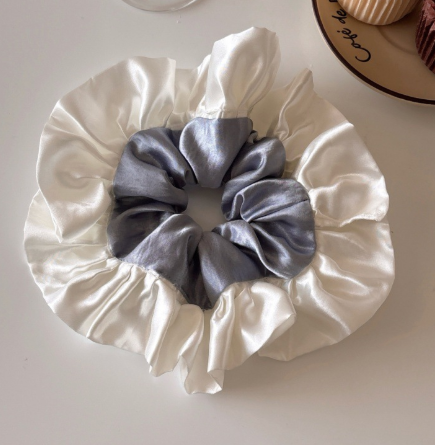
2.2 Oversized scrunchies that do not require complex fasteners
Oversized scrunchies are usually easier to grab than thin elastics because there is simply more material to hold. In a first-person Allure feature about styling with one arm, the author reported better success with scrunchies than regular hair bands because scrunchies were easier to grip and manipulate. That experience lines up with the core OT principle of increasing usable surface area to reduce precision demand.
2.3 Magnetic, spring-simplified, or low-step accessories
Accessories with fewer steps are often more important than accessories with “stronger hold.” If a product can be secured in one motion, or uses a simplified closure instead of a tiny clasp, it tends to be more accessible. In practice, that includes easy-open claw clips, oversized snap-free clips, soft wrap ties, and certain magnetic or flexible designs that do not require exact alignment.
2.4 Adaptive products built specifically for one-handed or reduced-function use
Some people need more than a “simpler” accessory. They need a product built for adaptive use. A clear example is the 1-Up One Handed Hair Tie, which is specifically designed for people with one hand or reduced hand function. The manufacturer states it is used by people with broken shoulders, arm or wrist injuries, paralysis, limb difference, and other upper-limb challenges, and even offers a double-loop version for users who struggle to grip tightly.
| Accessory type | Why it is accessible | Best for | Main limitation |
|---|---|---|---|
| Large claw clip | High hair-holding capacity in one motion; easier to grip | Twists, half-up styles, quick buns | May still require spring force |
| Oversized scrunchie | Soft, large, easy to hold | Ponytails, loose buns, low-tension styling | Can slip on very silky hair |
| Adaptive one-handed tie | Purpose-built for reduced function | One-handed ponytails and buns | Learning curve at first |
| Simple flexible clip | Fewer parts, fewer precision demands | Front sections, quick face-framing styles | Not enough hold for thick hair |
Source note: Market context from Grand View Research. Accessibility reasoning supported by Arthritis Foundation and NCBI daily-living-aids guidance. Practical user experience from Allure and Active Hands.
3. Features to Look For
3.1 Why large grip surfaces and easy-open mechanics matter
The Arthritis Foundation recommends built-up handles and grips because they are easier to grasp and put less stress on finger joints. NCBI’s public patient guidance on rheumatoid arthritis also highlights long-handled personal-hygiene tools and grip extensions as useful daily-living aids. Those same ergonomic principles apply to hair accessories: the easier a product is to hold in a stable, non-pinch grip, the more accessible it becomes.
3.2 Why non-slip design reduces repeated attempts
3.3 Why soft materials and lower weight are often more comfortable
A 2026 study on an adapted hairbrush found that an elongated, thickened handle reduced anterior deltoid muscle contraction by up to 11% and lowered perceived effort during hair brushing. That research was about a brush, not a clip, but the ergonomic lesson is highly relevant: when a grooming tool improves leverage and reduces strain, the task becomes more sustainable. For hair accessories, lightweight construction and lower opening force can have the same effect.
| Feature | Why it matters | What to look for |
|---|---|---|
| Large grip area | Reduces precision demand | Wide wings, thicker loops, larger bodies |
| Moderate resistance | Less pain and less hand fatigue | Easy-open claw or flexible closure |
| Non-slip finish | Fewer dropped or twisted attempts | Matte surface, texture, fabric cover |
| Low weight | More comfortable on hands and scalp | Acetate, smooth resin, soft fabric construction |
| Gentle hold | Lower traction and breakage risk | Soft scrunchies, smooth teeth, no sharp edges |
Source note: Design principles supported by Arthritis Foundation, NCBI Bookshelf, adaptive-grooming research, and AAD traction alopecia guidance.
4. Hair Accessories to Avoid
4.1 Tiny accessories that require precision pinching
Mini clips, narrow snap clips, and small decorative pins may look simple, but they often require the most precise finger control. They can be fine as secondary accessories if someone else is styling your hair. They are usually poor primary tools for independent daily use when dexterity is limited.
4.2 Complex clasps and high-resistance closures
4.3 Styles that pull, snag, or need repeated tightening
The AAD is clear that repeated pulling on the scalp can contribute to traction alopecia. It advises loosening hairstyles, avoiding frequent tight pulling, and treating pain, stinging, crusting, or “tenting” as warning signs. That is why narrow elastics, harsh metal edges, and accessories that only work when worn very tight are worth avoiding, especially for people with sensitive scalps, fragile edges, or textured hair that is already under tension from daily styling.
- Mini snap clips
- Very tight metal barrettes
- Thin high-tension elastics
- Accessories with hidden micro-closures
- Products that snag or catch strands
- Large claw clips with moderate spring tension
- Oversized scrunchies
- Flexible smooth-finish clips
- Adaptive one-handed ties
- Soft, low-friction fabric accessories
External link suggestion: Where you mention scalp pulling or breakage, link to the AAD page on traction alopecia and tight hairstyles for stronger medical credibility.
5. How to Make Hair Styling Easier
5.1 Choose low-step hairstyles instead of high-skill hairstyles
The best accessible hairstyle is often the one with the fewest mechanical demands. That usually means half-up styles, low twists, clipped French twists, loose low buns, side sections clipped away from the face, or a simple ponytail using an oversized scrunchie or adaptive tie. Complex braids, pin curls, tight slick-backs, and styles that require multiple hidden pins are usually not efficient starting points.
5.2 Reduce the need for fine two-hand movements
One of the smartest practical tips comes from lived-experience reporting: use the environment for leverage. In Allure’s one-arm styling piece, the author describes using a couch, wall, or table edge to help hold hair in place while positioning a claw clip or scrunchie. This is an excellent example of how accessible styling often depends as much on method as on product choice.
5.3 Build a lower-effort daily routine
Consistency beats complexity. If styling is difficult, create a small rotation of accessories that all work with the same few hairstyles. That reduces trial and error, decision fatigue, and hand strain. For many people, a practical starter set is enough:
- One large claw clip for quick twists and half-up styles.
- Two oversized scrunchies for ponytails or buns.
- One adaptive or one-handed tie if ponytails are important.
- One smooth, low-pressure front clip for face-framing sections.
| Low-effort style | Best accessory | Why it works |
|---|---|---|
| Half-up style | Medium or large claw clip | Needs less hair gathering and less force |
| Loose low bun | Oversized scrunchie | Lower tension and easier hold |
| Quick twist updo | Large claw clip | One-motion secure hold |
| Ponytail | Adaptive one-handed tie or oversized scrunchie | Less precision than narrow elastic looping |
Source note: Practical strategy informed by Allure’s one-arm styling methods and general OT design principles around reducing force, steps, and reach complexity.
6. Who These Accessories Work Best For
6.1 Which hair types are usually easiest to manage
Accessible accessories do not work the same way on all hair textures. Fine hair often needs lighter accessories with smoother closure and gentler tension; oversized scrunchies and medium clips can work well. Thick or dense hair often needs larger clips, double-loop adaptive ties, or two accessories used together so the force is spread across the style rather than concentrated in one small closure.
6.2 Short, medium, and long hair need different strategies
Short hair usually benefits from front or side clips that keep hair off the face with minimal reach. Medium-length hair tends to be the easiest to style accessibly because it can usually be clipped, twisted, or tied without extreme tension. Long hair can still be manageable, but it places more load on both the accessory and the user’s hands, especially during gathering and securing.
6.3 Gentle styling matters for sensitive scalps too
If someone has a sensitive scalp, breakage, fragile edges, or a history of tension-related discomfort, softness and lower traction are not “nice extras.” They are essential. The AAD recommends loosening hairstyles, stopping if styling is painful, and favoring gentler materials such as silk or satin under coverings. In accessory terms, that means choosing smooth teeth, lower-force hold, and fabrics that do not rub harshly or require aggressive tightening.
| User need | Best accessory starting point | Why |
|---|---|---|
| Fine hair | Soft scrunchie, medium smooth clip | Less slipping and less pull |
| Thick hair | Extra-large claw clip, adaptive tie | More capacity, stronger but simpler hold |
| Short hair | Front-section clip | Minimal reach and easier placement |
| Long hair | Large claw plus oversized scrunchie | Lets the user switch between hold types |
| Sensitive scalp | Soft scrunchie, lightweight smooth clip | Reduces tension and friction |
7. Case Study and Research Insights
7.1 Research case study: ergonomic adaptation reduces effort
A 2026 study published in Journal of Hand Therapy tested an adapted hairbrush with an elongated, thickened handle in 24 women with long hair. Compared with a standard brush, the adapted brush reduced anterior deltoid muscle contraction by up to 11%, improved shoulder comfort angles, and lowered perceived effort from a median of 5 to 3 on the Borg scale. That is important because it proves a broader principle: small ergonomic changes can meaningfully reduce the physical burden of grooming.
Applied to hair accessories, the lesson is straightforward. Products that improve leverage, surface area, and comfort can produce a measurable difference in real-world self-care.
7.2 Real-life adaptive styling: what users with limited hand function actually do
Research matters, but so does lived experience. In a New Mobility article, women with quadriplegia described adapting their hair routines around function, not beauty standards. Some chose shorter hair because it was easier to manage independently. Others developed personalized methods based on what their hands could realistically do. In Allure’s one-arm styling story, the author described hair claws as “the biggest help” before mastering one-handed elastic techniques and said scrunchies were easier to hold than regular hair bands.
7.3 Expert takeaway: combine OT logic with hair-health logic
Occupational-therapy logic says use larger grips, leverage, and fewer steps. Dermatology logic says reduce traction, pain, and repeated pulling. Put together, these principles point toward a clear shortlist: large easy-open clips, oversized soft ties, adaptive one-handed tools, and lower-tension, non-snag materials.
8. Pros and Cons of Popular Options
8.1 Large claw clips
Large claw clips are often the best all-around option because they support multiple hairstyles and can secure a lot of hair quickly. Their biggest weakness is spring resistance: some are still too stiff for painful or weak hands.
8.2 Oversized scrunchies and soft ties
These are among the gentlest and easiest accessories to grasp. They work especially well for people who prioritize scalp comfort and low tension. The tradeoff is hold: on very smooth or heavy hair, they may not stay put without a technique adjustment.
8.3 Adaptive ties and simplified tools
Purpose-built adaptive options can be excellent for independence, especially for one-handed styling, though they are less common in mainstream beauty retail.
| Accessory | Pros | Cons | Best use case |
|---|---|---|---|
| Large claw clip | Fast, versatile, easy to reposition | Some springs are too stiff | Daily quick styling |
| Oversized scrunchie | Easy to hold, gentle on scalp | Can slip on dense silky hair | Low-tension ponytails and buns |
| Adaptive one-handed tie | Purpose-built for reduced function | Smaller retail availability | Independence-focused styling |
| Simple front clip | Minimal reach, quick face-framing hold | Limited full-hair control | Short hair and sectioning |
- 1 easy-open large claw clip
- 2 oversized scrunchies
- 1 lightweight front clip
- 1 adaptive tie if one-handed styling is needed
- Add texture-specific options for thick or fine hair
- Swap stiff hardware for softer finishes
- Use multiple accessories to spread hold
- Keep one dedicated “bad hand day” option
Internal link suggestion: Near this comparison section, add a contextual link from “hair accessories supplier” or “custom claw clips and scrunchies” to Q&N Beauty.
9. Expert Summary, CTA, and Future Trends
9.1 The core answer
If you are looking for hair accessories for people with low hand mobility, the best choices are usually large, easy to grip, low-step, and gentle. For most people, that means starting with large claw clips, oversized scrunchies, and one-handed or adaptive ties. What matters most is not fashion category. It is whether the accessory reduces force, reduces precision demands, and reduces scalp stress.
9.2 What to buy first
Do not overbuild your collection. Start with one large easy-open clip, one or two oversized scrunchies, and one adaptive option if ponytails matter to your routine. Test those in real life for a week. Pay attention to how your hands feel, how many attempts each style takes, and whether your scalp feels sore afterward.
9.3 Future trends: inclusive design will matter more
The broader hair accessories market is already large. Grand View Research estimates it was worth USD 23.41 billion in 2024 and projects it will reach USD 46.64 billion by 2033. As the market grows, the next real opportunity is not just trend-led color or Y2K nostalgia. It is inclusive beauty design: accessories built for independence, easier grip, lower tension, and broader real-world usability.
Clear CTA: If your brand, retail line, or salon collection wants to serve a wider customer base, build accessibility into the product brief from the start: larger grip zones, smoother surfaces, lighter materials, and easier closures. For product development or custom manufacturing support, add an internal link here to Q&N Beauty.
FAQ
What hair accessories are easiest to use one-handed?
Large claw clips, oversized scrunchies, and purpose-built one-handed hair ties are usually the easiest starting points because they are easier to grip and require fewer precise finger movements.
Are claw clips good for low hand mobility?
Often yes. But choose them carefully. Large size helps, yet the spring also needs to be easy to open. A huge clip with a very stiff hinge may still be harder to use than a smaller, softer clip.
What size accessory is easiest to grip?
In general, larger accessories are easier to grip because they create more contact area for the hand and reduce the need for fingertip precision.
Are there gentle options for sensitive scalps too?
Yes. Soft scrunchies, smooth acetate clips, satin- or silk-covered accessories, and lower-tension designs are usually gentler than narrow elastics or accessories that only hold when worn tightly.
Can claw clips hold thick hair?
Yes, but the clip must be large enough and strong enough for the volume of hair. For thick hair, extra-large clips or adaptive ties often work better than small decorative clips.
When should I ask for professional help?
Ask an occupational therapist if styling has become painful, exhausting, or unsafe, or if you need adaptive technique training. Ask a dermatologist if an accessory causes persistent pain, breakage, scalp irritation, or signs of traction alopecia.
References and External Link Suggestions
- Grand View Research — Hair Accessories Market Size, Share & Trends
- CDC — Disability prevalence and self-care disability measure
- CDC — Osteoarthritis overview
- Arthritis Foundation — Osteoarthritis of the hands
- Arthritis Foundation — Self-help arthritis devices
- Arthritis Foundation — Hand exercises and function
- NCBI Bookshelf — Daily living aids for people with rheumatoid arthritis
- American Academy of Dermatology — Tight hairstyles and traction alopecia
- Journal of Hand Therapy — Effects of an adapted hair brush on physical load
- Allure — Styling hair with one arm
- New Mobility — Hair styling tips from women with limited hand function
- Active Hands — 1-Up One Handed Hair Tie