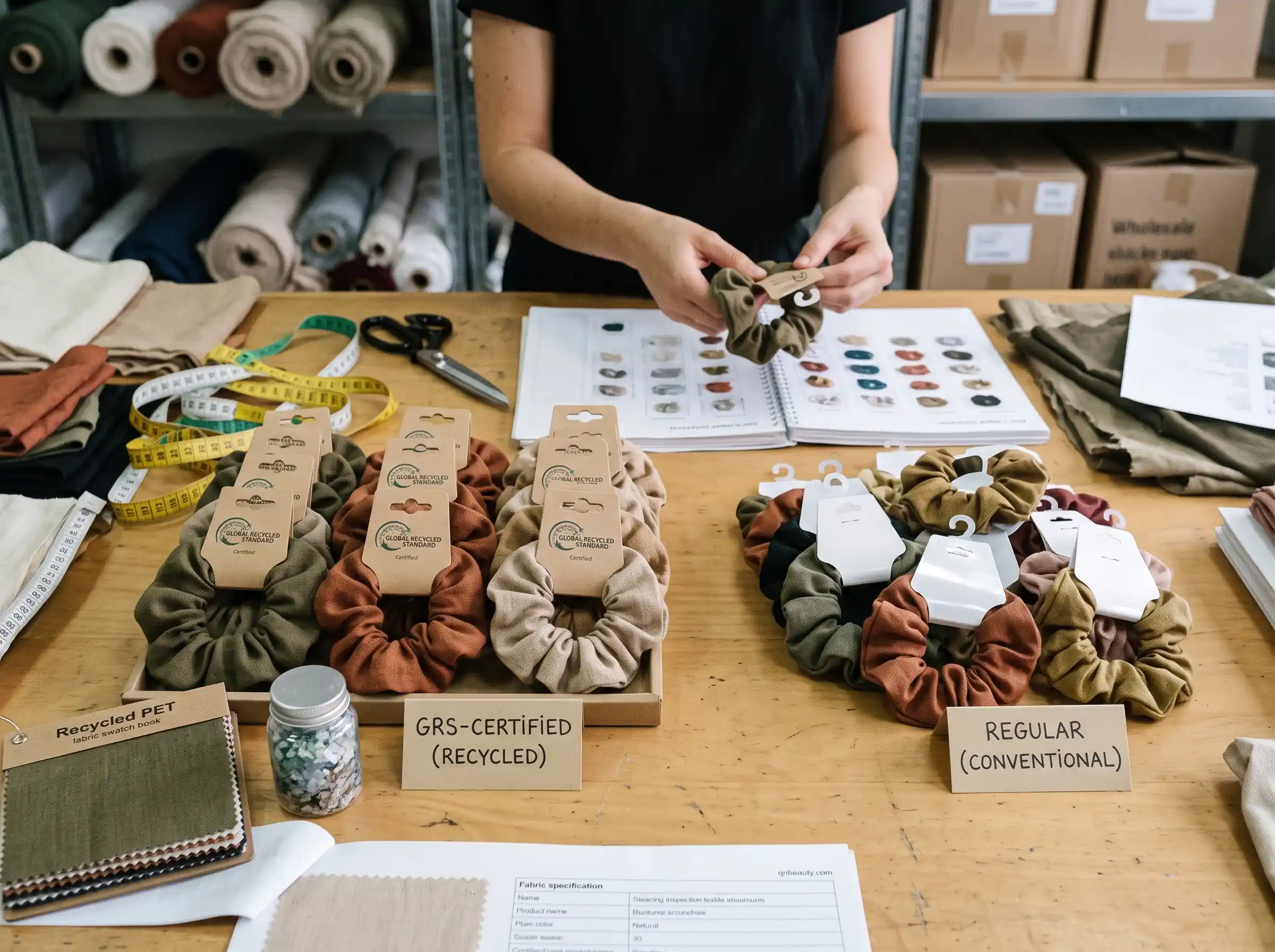
The search volume for “eco-friendly hair accessories” is experiencing unprecedented growth. For boutique owners, private label founders, and B2B procurement managers across Europe and North America, sustainability is no longer a niche marketing angle—it is a mandatory compliance standard. High-end retailers are actively auditing their supply chains, demanding transparency from their manufacturing partners.
However, when sourcing sustainable hair accessories, buyers face a critical pain point: the high risk of “greenwashing.” Many trading companies claim their scrunchies are made from “recycled materials,” but fail to provide verifiable documentation. If your brand is caught selling falsely advertised eco-products, the damage to your reputation and the potential legal liabilities can be devastating.
In this comprehensive guide, we will break down the crucial differences between GRS-certified fabrics and regular textiles. By understanding the factory-level manufacturing processes, material tracing, and quality control standards, you can confidently source premium, verifiable eco-friendly scrunchies that protect both the planet and your profit margins.
1. The Rise of Eco-Conscious Procurement in the Beauty Sector
1.1 B2B Market Shifts Toward Verifiable Sustainability
Modern consumers are willing to pay a premium for products that align with their environmental values. According to industry insights from the Global Fashion Agenda, brands that implement transparent, sustainable sourcing strategies see higher customer retention and faster growth rates.
For a B2B buyer, this means your sourcing strategy must shift from merely finding the cheapest unit price to securing the most reliable, certified supply chain. When you pitch your hair accessories to major retail buyers or feature them on your e-commerce site, having a certified eco-story is your strongest unique selling proposition (USP).
1.2 The “Greenwashing” Trap in Overseas Sourcing
Greenwashing occurs when a supplier vaguely labels a product as “eco-friendly” without third-party certification. In the realm of scrunchies and hair ties, a factory might mix 5% recycled yarn with 95% virgin polyester and market the entire batch as “recycled.”
This creates a massive liability for you as the importer. To avoid this trap, experienced procurement managers rely exclusively on internationally recognized standards, most notably the Global Recycled Standard (GRS).
2. Unpacking the Materials: GRS-Certified vs. Regular Fabrics
[Insert Image: A side-by-side microscopic or high-resolution comparison showing the smooth texture of premium GRS-certified rPET silk against standard virgin polyester, emphasizing quality equivalence.]
2.1 What is the Global Recycled Standard (GRS)?
The Global Recycled Standard (GRS), administered by Textile Exchange, is an international, voluntary, full-product standard. It tracks and verifies the content of recycled materials in a final product.
More importantly for high-end brands, GRS does not just track materials. It guarantees strict social and environmental processing requirements, ensuring that no harmful chemicals were used during production and that factory workers are treated ethically. When you buy a GRS-certified scrunchie, you are buying a guaranteed ethical supply chain.
2.2 rPET (Recycled Polyester) vs. Virgin Polyester
Standard scrunchies are typically manufactured using virgin polyester or cheap satin, which is derived directly from petroleum—a highly energy-intensive and polluting process.
In contrast, sustainable scrunchies utilize rPET (Recycled Polyethylene Terephthalate). Post-consumer plastic bottles are collected, sterilized, melted down, and extruded into fine, luxurious yarns. This process requires significantly less water and energy, while actively diverting plastic waste from oceans and landfills. The best part? High-grade rPET fabric feels identical to premium virgin silk or satin, ensuring your customers never compromise on luxury.
3. Manufacturing Expertise: Quality Control in Eco-Friendly Production
3.1 Solving the Dye Bleeding Issue with Eco-Friendly Reactive Dyes
A frequent complaint B2B buyers have when testing recycled fabrics is poor colorfastness. Cheaply processed recycled fabrics often bleed dye when exposed to sweat or hair products, ruining the customer experience.
Illustrative Manufacturing Scenario: To solve this, our factory utilizes advanced, eco-friendly reactive dyeing processes. We ensure that our dyeing facilities comply with OEKO-TEX® Standard 100, meaning the textiles are free from harmful Azo dyes and heavy metals. Our QC team conducts rigorous wash-and-rub colorfastness testing on every batch before cutting begins.
3.2 Inner Elastic Durability and Tension Testing
A scrunchie is only as good as its inner elastic. Sourcing a beautiful GRS-certified outer fabric is useless if the internal rubber band snaps after three uses.
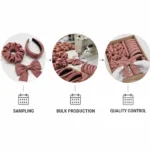
We source premium, high-resilience natural rubber or durable elastane cores. During our in-line production checking, random samples are subjected to a machine stretch test, pulling the scrunchie to its maximum diameter 2,000 times. If the elastic loses its rebound capability or snaps, the entire batch is flagged. This strict QC protocol guarantees a low return rate for your brand.
4. Overcoming Sourcing Pain Points for Sustainable Accessories
[Insert Image: A close-up of a branded, eco-friendly packaging solution, featuring a GRS-certified scrunchie packed inside a biodegradable, minimalist kraft paper envelope.]
4.1 Verifying Authentic Transaction Certificates (TC)
How do you prove to your customers that your scrunchies are truly recycled? The answer is the Transaction Certificate (TC). A TC is a document issued by a third-party certification body confirming that a specific shipment of goods meets GRS standards.
As a professional source factory with over 15 years of industry experience, we provide complete transparency. Upon request for bulk orders, we supply the relevant TCs, allowing you to legally and confidently market your products as certified sustainable.
4.2 The Challenge of High Minimum Order Quantities (MOQs)
The biggest barrier to entry for eco-friendly sourcing is the MOQ. Because certified recycled yarn is specially milled, most fabric suppliers require massive yardage, forcing hair accessory factories to demand MOQs of 3,000 to 5,000 pieces per color.
This ties up vital cash flow for boutique brands. By leveraging our deep supply chain relationships and maintaining strategic stocks of popular GRS-certified base fabrics, we support an incredibly flexible MOQ of just 500 pieces. This allows you to test the eco-friendly market with multiple colors without massive financial risk.
5. Partner with a Verified Source Factory for Your Entire Product Line
5.1 Beyond Scrunchies: Our Signature Pain-Free Padded Headbands
Our commitment to premium manufacturing extends far beyond scrunchies. We are globally recognized for engineering pain-free padded headbands. Using ergonomic Memory Polycarbonate (PC) cores and high-density EVA foam, we eliminate the “headband headache” that plagues the industry.
Whether you need custom GRS-certified scrunchies or want to apply our recycled fabrics to our signature custom padded headbands, our engineering team ensures top-tier structural integrity and comfort.
5.2 Sustainable Packaging to Lower Shipping Costs
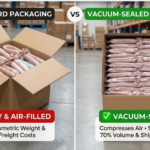
Sustainability should also apply to your logistics. Hair accessories are bulky, leading to high dimensional (DIM) weight shipping costs. We offer specialized vacuum-sealing packaging solutions that compress the volume of your shipment safely, saving your budget while reducing your brand’s carbon footprint during transit. Learn more about our comprehensive capabilities on our factory overview page.
5.3 Request Your GRS Fabric Swatches Today
Transitioning your brand to sustainable materials does not mean sacrificing quality, color vibrancy, or profit margins. It requires partnering with a transparent, experienced source factory that understands international compliance and B2B retail needs.
Are you ready to elevate your product line with certified eco-friendly materials? Contact our OEM/ODM experts today. We will provide a competitive B2B quotation, guide you through our low-MOQ custom options, and send you a physical sample box featuring our GRS-certified fabrics and signature pain-free headbands.