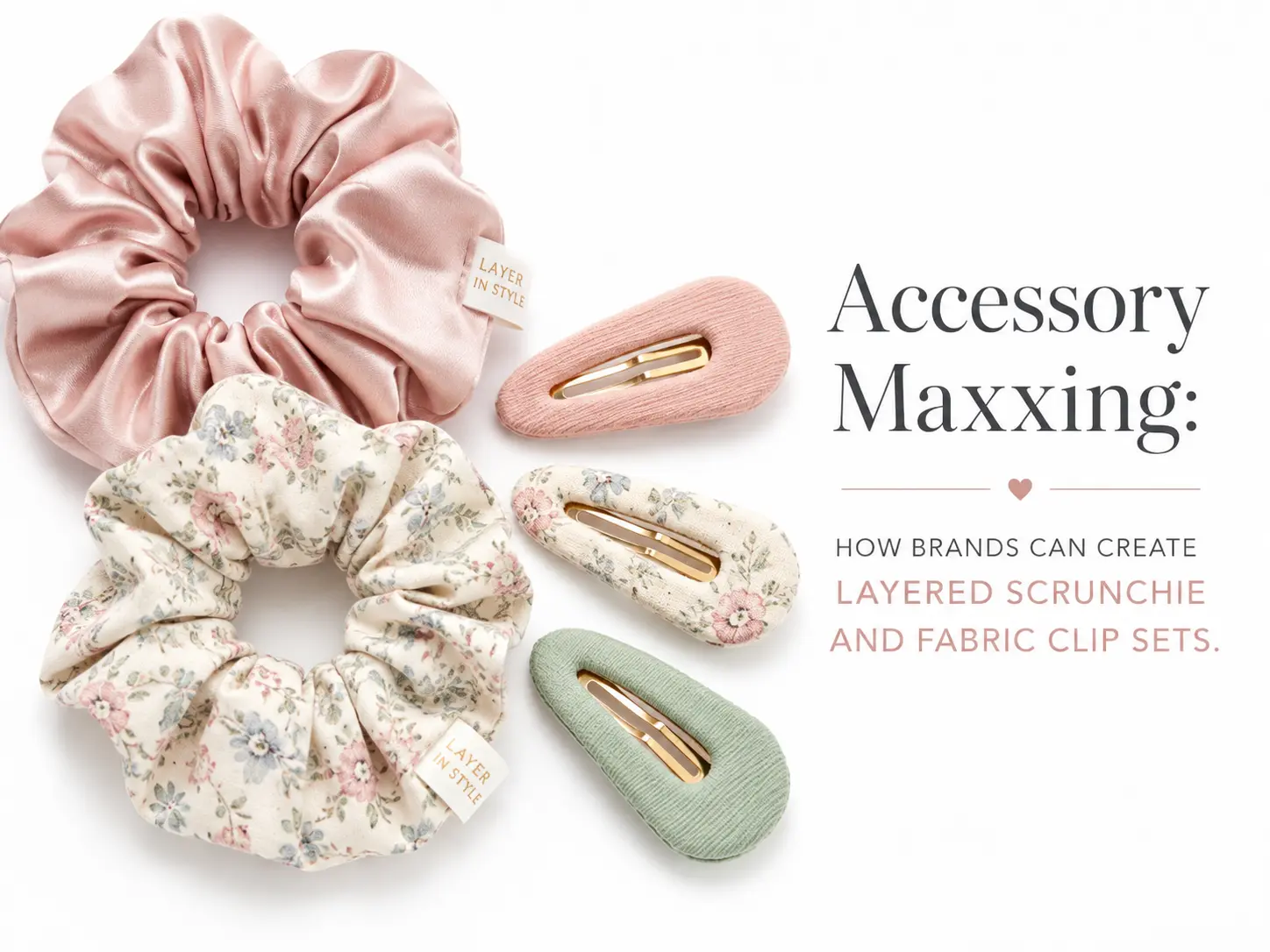
For brands and private-label buyers, the opportunity is larger than selling several accessories in one package. A well-designed set creates a complete styling story, improves giftability, and introduces consumers to multiple product formats.
Grand View Research estimated the global hair accessories market at USD 23.41 billion in 2024, projected USD 25.22 billion in 2025, and forecast 8.0% annual growth from 2025 to 2033. Its U.S. outlook identifies elastics and ties as the largest revenue-generating segment in 2025. Brands can therefore combine functional basics and fashion-led clips in one coordinated offer.
Table of Contents
What Accessory Maxxing Means for Scrunchie and Fabric Clip Sets
The Concept of Layering Multiple Hair Accessories
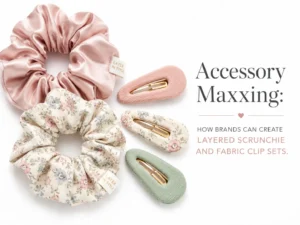
Accessory maxxing is the intentional use of several accessories to create a richer look. A consumer might secure a ponytail with a scrunchie, add fabric-covered snap clips near the part, or finish a half-up style with a bow barrette. The pieces need not be worn simultaneously; they need to belong to one visual system.
A random multipack is inventory grouped together. A layered set is a system with a shared palette, material story, hierarchy, and clear usage occasions.
Fashion-compatibility research using 49,740 outfits reinforces the importance of relationships between products. The principle transfers to hair accessories: the assortment should read as one composition while each item remains useful alone.
| Collection Type | Design Logic | Consumer Impression | Commercial Risk |
|---|---|---|---|
| Random multipack | Items grouped mainly by availability | More pieces, limited story | May feel low-value or clearance-led |
| Color-coordinated set | Shared colors with mixed formats | Easy to understand and style | Can look generic without texture contrast |
| Theme-led layered set | Shared palette, motif, texture, scale, and occasion | Complete collection with gift appeal | Requires tighter sampling and quality control |
| Limited-edition collaboration | Recognizable cultural or brand story | Collectible and time-sensitive | Higher development, approval, and licensing complexity |
Why Scrunchies and Fabric Clips Work Well Together
Scrunchies and fabric clips solve different styling needs. A scrunchie provides hold, volume, softness, and wrist-to-hair convenience. A fabric clip adds placement, direction, decoration, or control around the face. Together, they create functional variety without forcing the consumer to buy unrelated categories.
They also share a manufacturing advantage: one base fabric can often be adapted across formats. Printed cotton may become a scrunchie, bow clip, and covered snap clip. Yet construction must change; fabric that gathers well around elastic may need interfacing, padding, or different cutting when applied to a clip.
Expert manufacturing view: Do not approve a set by checking the scrunchie and clip separately. Mount the finished pieces on the intended display card or place them inside the final pouch. Scale problems and shade differences often become obvious only when the complete assortment is viewed together.
Why Scrunchie and Fabric Clip Sets Appeal to Consumers
Creating a Complete and Coordinated Look
Consumers often understand a coordinated set faster than separate SKUs. The colors already work together, the materials feel intentional, and the pieces can be mixed with less decision-making.
That convenience is commercially important. A 2024 peer-reviewed retail study on product bundles found that shoppers can perceive a bundle as a unified whole. This “Gestalt” effect increases the sense that the included items are complementary rather than merely placed beside one another. For hair accessories, the implication is clear: a scrunchie plus two fabric clips should be presented as a styling solution, not described only as “three pieces.”
Increasing Styling Options Within One Set
One set can support ponytails, buns, half-up styles, braids, or decorative placement. The goal is controlled variety: enough difference to create options without confusing the product story.
Research on retail assortment size is useful here. A meta-analysis covering 177 studies from 95 academic papers found that assortment size can influence perceptions, choice, sales, and store preference, but the result depends on how the assortment is structured. More options are not automatically better. For most retail hair accessory sets, three to six pieces are easier to explain, display, and use than a large pack with weak differentiation.
Improving Perceived Product Value
Perceived value comes from completeness, not quantity alone. A four-piece set feels more useful when it covers daily wear, braids, and polished styling. Packaging, tactile contrast, and a visible theme reinforce that value.
A useful cross-category benchmark comes from fashion capsule retailing. Vogue Business reported that M.M.LaFleur product pages for curated “Omakase” kits achieved a 92% higher conversion rate than other pages, while sales of individual products in the capsules increased 59% during the four weeks after relaunch. Hair accessories operate at a different price point, so the figures should not be treated as a direct forecast. They do, however, illustrate how a clearly assembled solution can improve both bundle interest and discovery of individual pieces.
| Benefits of Layered Sets | Potential Drawbacks | How Brands Can Reduce the Risk |
|---|---|---|
| Higher giftability | Packaging cost can rise | Use one card structure across seasonal colorways |
| More styling options | Too many pieces can create choice overload | Limit the set to a clear role for each item |
| Stronger visual storytelling | Cross-material color variation | Approve physical lab dips and full-set samples |
| Opportunity for higher retail price | Weak pieces can reduce total perceived value | Do not use the set to hide slow-moving or lower-quality items |
| Easy seasonal refreshes | Trend-led inventory may date quickly | Keep at least one core item commercially timeless |
How to Build Cohesive Scrunchie and Fabric Clip Sets
Selecting a Clear Collection Theme
Start with a consumer, occasion, and emotional direction—not a list of fabrics. “Romantic garden party for spring gifting” guides prints, finishes, shapes, packaging, and price; “pink accessories” does not.
Relevant themes for European and North American markets include quiet-luxury neutrals, romantic bows, coastal stripes, cottage florals, holiday velvet, bridal ivory, and festival metallics. Editorial coverage also points to oversized scrunchies, floral clips, lace, crochet, and jewelry-like barrettes. Trends should support—not replace—brand identity.
Coordinating Colors, Prints, and Textures
A cohesive collection rarely uses the same treatment on every piece. Repetition creates recognition; contrast adds interest. One workable formula is 60% core color, 30% supporting color or print, and 10% accent finish.
Color approval must be material-specific. Pantone explains that color appearance changes according to the material on which it is produced, and some colors cannot be achieved on certain substrates. A Pantone reference is therefore a starting point, not a guarantee that satin, velvet, cotton, organza, metal plating, and printed packaging will appear identical.
| Step | Buyer Decision | Factory Deliverable | Approval Standard |
|---|---|---|---|
| 1. Define the user | Age group, hair type, market, price tier | Product and construction recommendations | One written target-customer profile |
| 2. Set the theme | Occasion, mood, season, visual references | Mood board and initial assortment | One clear design direction |
| 3. Build the palette | Core, supporting, and accent colors | Fabric swatches, lab dips, print strike-offs | Physical approval under consistent lighting |
| 4. Assign product roles | Hero, everyday, styling, and gift pieces | Size and construction specifications | No two items performing the same role without reason |
| 5. Prototype the set | Fit, scale, grip, stretch, presentation | Complete assembled sample | Approved as a set, not as separate parts |
| 6. Validate packaging | Retail channel, display, barcode, protection | Packaged pre-production sample | Passes presentation and transit review |
| 7. Lock the golden sample | Final appearance and performance | Signed production reference | Bulk production compared against one controlled standard |
Balancing Statement Pieces and Everyday Basics
Every strong set needs hierarchy. The hero piece attracts attention, the basic piece makes the purchase practical, and supporting pieces connect them. A four-piece assortment might use one oversized bow clip, one classic scrunchie, and two mini snap clips. Reserve the most distinctive fabric or embellishment for the hero item.
Combining Different Sizes and Shapes
Scale should reflect visual rhythm and hair performance. Mini clips suit fringe and decorative placement; barrettes and duckbill clips support half-up styles; classic scrunchies suit daily use; jumbo scrunchies create visible volume.
Do not size products only from a product photograph. Test them on straight, wavy, curly, fine, and thick hair when relevant to the target market. Clip length, spring tension, tooth design, fabric thickness, bow width, elastic recovery, and the number of elastic wraps all change performance.
Popular Scrunchie and Fabric Clip Sets
Scrunchie and Bow Clip Sets
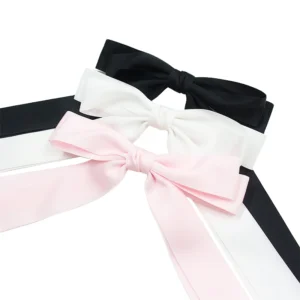
This format works well for gifting and romantic styling. Pair a classic or large scrunchie with a bow clip in the same print or a complementary solid. Use interfacing for crisp structure or light padding for a softer premium look.
Mini Scrunchie and Snap Clip Sets
Mini formats suit fine hair, braids, younger consumers, and multi-position styling. A five-piece set might contain two mini scrunchies and three covered snap clips. Ensure the backing card does not pull threads or distort fabric.
Jumbo Scrunchie and Barrette Sets
A jumbo organza or velvet scrunchie adds volume, while a coordinated barrette offers a polished alternative. The pairing suits holiday, bridal, occasion, and limited-edition collections.
Multi-Piece Festival and Party Sets
Festival sets may combine a metallic scrunchie, mini fabric clips, a decorative barrette, and reusable pouch packaging. Keep the pieces wearable after the event to avoid single-use novelty positioning.
| Set Format | Recommended Piece Count | Best Market Position | Key Development Risk |
|---|---|---|---|
| Classic scrunchie + bow clip | 2–3 pieces | Gift, boutique, romantic, seasonal | Bow structure and scale mismatch |
| Mini scrunchies + snap clips | 4–6 pieces | Value retail, kids, braids, everyday | Small-part security and backing-card damage |
| Jumbo scrunchie + barrette | 2 pieces | Premium fashion and occasion wear | Set may feel expensive if the barrette quality is weak |
| Festival mixed set | 4–7 pieces | Events, travel, social content, gifting | Too many colors or trend details |
| Core neutral capsule | 3–5 pieces | Beauty brands, workwear, travel | Insufficient contrast can make the set look generic |
Case Study: Turning a Theme Into a Collectible Set
Kitsch’s licensed To All the Boys collaboration demonstrates clear set architecture. Teen Vogue reported a three-piece gift set containing a baby-pink bow barrette, watercolor-style scrunchie, and star bobby pins. The film’s visual world—not identical materials—connected the products.
Allure documented a similar principle in the Emi Jay x Juicy Couture range: two scrunchies and six statement clips used repeated cherry, leopard, logo, sparkle, and color treatments. The transferable lesson is a recognizable theme, repeated motifs, different functions, and several price-entry points.
Strategic takeaway: A strong collection repeats a visual code while changing the product role. Consumers should recognize the family resemblance immediately, but still understand why they might want more than one item.
Material Options for Layered Hair Accessory Collections
Satin and Organza Combinations
Satin provides sheen and a beauty-led premium feel. Organza creates volume with less visual weight. Together, they suit bridal, spring, holiday, and occasion collections.
The challenge is color perception. Satin reflects directional light, while organza is translucent and changes appearance when layered. Two fabrics dyed to a similar target may look different in photography and retail lighting. Approve them side by side, over the actual padding or clip base, and on the final packaging background.
Velvet and Textured Fabric Combinations
Velvet, corduroy, boucle, and quilted textiles create seasonal depth but add bulk. A thick velvet may suit a scrunchie while making a small snap clip difficult to close or finish cleanly.
Use pile-direction markers during cutting, reinforce stress points, and test whether adhesive or stitching shows through. For velvet clips, the covering process must not reduce spring movement or leave uneven pressure marks.
Cotton, Linen, and Casual Fabric Combinations
Cotton and linen-look fabrics suit casual, resort, children’s, and natural collections. Prints coordinate easily across formats, but shrinkage, fraying, placement, and weave irregularity require control.
| Material | Visual Benefit | Best Uses | Main Production Watchout |
|---|---|---|---|
| Satin | Smooth shine and beauty appeal | Classic scrunchies, bows, premium sets | Snagging, seam puckering, shade shift under light |
| Organza | Sheer volume and lightness | Jumbo scrunchies, layered bows | Fraying, translucency, exposed construction |
| Velvet | Rich texture and seasonal depth | Holiday scrunchies, padded barrettes | Pile direction, bulk, pressure marks |
| Cotton | Natural hand feel and print clarity | Daily sets, kids, gingham and florals | Shrinkage, wrinkling, fraying |
| Linen or linen-look | Relaxed premium texture | Resort, neutral, eco-led capsules | Slubs, color variation, edge stability |
| Recycled polyester | Versatile surface options | Private label and sustainability-led ranges | Certification scope and batch consistency |
Expert sourcing advice: Choose material combinations by behavior as well as appearance. Ask how each fabric cuts, folds, gathers, bonds, sews, and recovers. The best mood-board pairing is not always the most stable bulk-production pairing.
Branding and Packaging Ideas for Accessory Sets
Branded Display Cards and Gift Boxes
Display cards are efficient for peg retail and e-commerce. They communicate piece count, styling ideas, care, barcode information, and identity. Card slots and ties must not crush bows, stretch elastic, or mark velvet.
Gift boxes increase perceived value and protect structured clips. They also increase material use, packing labor, volumetric shipping cost, and minimum-order complexity. A box should be reserved for a price point and channel that can support it.
Reusable Pouches and Travel Packaging
A reusable pouch becomes part of the product. Cotton drawstring bags, satin pouches, mesh travel bags, and clear cases can organize the set and support beauty, travel, festival, or gifting stories.
Link packaging to the accessory story: satin sets suit soft drawstring pouches, sporty sets suit mesh bags, and premium neutral capsules suit compact zip pouches with woven labels.
| Packaging Format | Pros | Cons | Best Fit |
|---|---|---|---|
| Printed display card | Cost-efficient, retail-ready, easy to merchandise | Limited protection; can distort soft items | Mass retail, boutiques, online orders |
| Folding carton | More branding area and protection | Higher unit and freight cost | Gift sets and mid-market launches |
| Rigid gift box | Premium unboxing and strong protection | High cost, space, and MOQ pressure | Luxury, PR, holiday, collaboration |
| Reusable drawstring pouch | Adds utility and perceived value | Requires separate sewing and size control | Beauty, travel, eco-led gifting |
| Clear travel pouch | Shows the full set and supports reuse | Surface scratches and material-compliance considerations | Festival, gym, travel, subscription boxes |
Creating Seasonal and Limited-Edition Sets
Seasonal sets work best when core construction remains proven and colors, prints, trims, or packaging change. A brand can keep one scrunchie and bow-clip body, then refresh them with florals, stripes, velvet, or metallic details.
Limited editions need a deadline and inventory plan. Use them to test one or two variables. Making the fabric, print, clip base, logo method, and box construction new at once creates unnecessary approval risk.
Brands developing custom scrunchies, fabric hair clips, or OEM/ODM hair accessory collections should request a complete packaged sample before bulk approval.
Key Manufacturing Considerations
Maintaining Consistent Colors Across Different Fabrics
Color consistency is a major challenge because fiber, weave, texture, transparency, dye method, lighting, and backing material all affect appearance.
Use physical Pantone textile references where possible. Approve lab dips or strike-offs for every material. View the set under daylight-equivalent lighting and the retailer’s likely lighting conditions. Set tolerances based on commercial appearance rather than expecting every substrate to produce an impossible optical match.
Matching Hardware and Elastic Quality
Evaluate clip hardware for opening force, spring recovery, smooth edges, corrosion resistance, plating, and attachment security. Check elastic width, elongation, recovery, joining strength, and repeated-use performance.
Comfort is also part of quality. A medical review on traction-alopecia prevention recommends replacing uncovered rubber bands with covered elastic ties or hair ties without metal. This does not mean every scrunchie is automatically gentle. Excessive tightness, rough seams, exposed joins, or poor elastic selection can still create discomfort and breakage.
Testing the Complete Set Before Production
Testing should reflect intended use. Perform opening-cycle tests on clips, stretch-and-recovery tests on scrunchies, pull tests on trims, print rub tests, seam and sharp-point checks, and packaging transit tests.
| Quality Check | What to Inspect | Common Failure | Recommended Control |
|---|---|---|---|
| Color | All fabrics, thread, hardware, labels, and packaging | Set looks mismatched in one display | Approve complete set under controlled lighting |
| Scrunchie recovery | Elastic stretch, join, wraps, and fabric seam | Loose hold after repeated use | Set a repeated-stretch test and retain approved samples |
| Clip grip | Spring tension, alignment, teeth, covering thickness | Slipping, snagging, or difficult opening | Test on relevant hair types and repeat cycles |
| Bow security | Stitching, adhesive, knot, trim attachment | Bow rotates or detaches | Pull test and attachment specification |
| Surface finish | Snags, glue marks, scratches, fraying, exposed edges | Premium set looks handmade in the wrong way | Define visual defect limits with photos |
| Packaging | Compression, movement, scuffing, barcode, count | Bow crushed or pieces missing | Packaged drop, vibration, and carton-count checks |
Buyer tip: The approved “golden sample” should include every accessory, the backing card or pouch, labels, barcode placement, and packing method. Production teams need one complete visual and technical reference.
A Buyer-Ready Development Workflow
- Define the retail objective. State whether the set is for gifting, daily styling, children, festival use, travel, PR, subscription boxes, or a seasonal launch.
- Confirm the target retail price. Work backward to material, piece count, embellishment, packaging, and quality.
- Share references and assets. Provide mood boards, logo files, Pantone targets, dimensions, market, and compliance requirements.
- Choose one hero product. Build the remaining pieces around it rather than giving every item equal visual weight.
- Request material swatches. Compare actual satin, organza, velvet, cotton, recycled fabric, threads, and hardware finishes before sampling.
- Prototype the complete set. Review scale, color, usability, comfort, and package fit together.
- Run performance checks. Test elastic recovery, clip cycles, pull strength, print rub resistance, attachment security, and transit protection.
- Approve a pre-production sample. Lock construction, measurements, materials, packaging, labeling, and defect standards before bulk production.
- Inspect bulk consistency. Check the set as one unit. A perfect scrunchie does not compensate for a weak clip or damaged card.
- Plan reorders. Retain approved standards for colors, patterns, hardware, and packaging.
For buyers sourcing wholesale hair accessories and private-label collections, a structured brief usually produces a more accurate quotation and fewer sampling rounds than a request based only on a reference image.
Frequently Asked Questions
What should be included in a scrunchie and hair clip set?
A balanced set includes one main holding accessory plus placement accessories such as bow clips, snap clips, or barrettes. Each piece needs a distinct role. Three to five pieces suit many retail programs.
How do you match scrunchies with fabric hair clips?
Use a shared design code rather than forcing an exact match. Coordinate color, motif, texture, trim, or hardware while allowing shapes to differ. Approve physical pieces together under the same lighting.
Which fabrics are best for scrunchies and bow clips?
Satin, cotton, velvet, organza, chiffon, linen-look fabric, and recycled polyester are common. Choose according to drape, bow structure, color, price, season, and durability. Clip applications may require interfacing or backing.
How many pieces should a hair accessory gift set contain?
Two-piece sets suit premium hero products. Three to five pieces balance variety, packaging efficiency, and clarity. Larger festival, children’s, or value sets still need a clear role for every item.
Should every item use the same fabric?
No. One fabric creates unity, but mixed textures can look more premium. Repeat the palette or motif while varying texture—for example, a printed cotton bow, solid satin scrunchie, and velvet clip in one accent color.
How can brands avoid color differences across a set?
Specify physical color standards, request lab dips or print strike-offs for each substrate, approve the pieces side by side, and evaluate them under controlled lighting. Do not rely only on phone images, monitor colors, or one paper Pantone reference.
What information does a manufacturer need to quote a custom set?
Provide product types, piece count, dimensions, fabrics, colors, logo method, packaging, quantity, market, testing, destination, and timeline. Reference photos and vector logo files improve accuracy.
Conclusion: Building Sets That Feel Complete
The strongest Scrunchie and Fabric Clip Sets are not designed by adding more pieces. They are built by assigning each item a role, controlling color and texture relationships, balancing statement and everyday products, and validating the complete packaged assortment before production.
Expect layered hair accessories to become more modular through mix-and-match capsules, travel pouches, personalized combinations, reusable packaging, hair-type-specific grip, recycled materials, and limited collaborations.
For brands, the commercial opportunity lies between trend and discipline. Use trends to attract attention, but use tested construction, clear assortment logic, physical color approval, and retail-ready packaging to earn repeat purchases.
Ready to develop a custom collection? Explore Q&N Beauty’s hair accessory manufacturing services or send your theme, reference images, target quantity, materials, colors, logo, and packaging requirements to begin a tailored quotation and sampling plan.