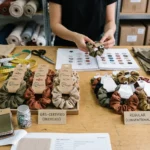
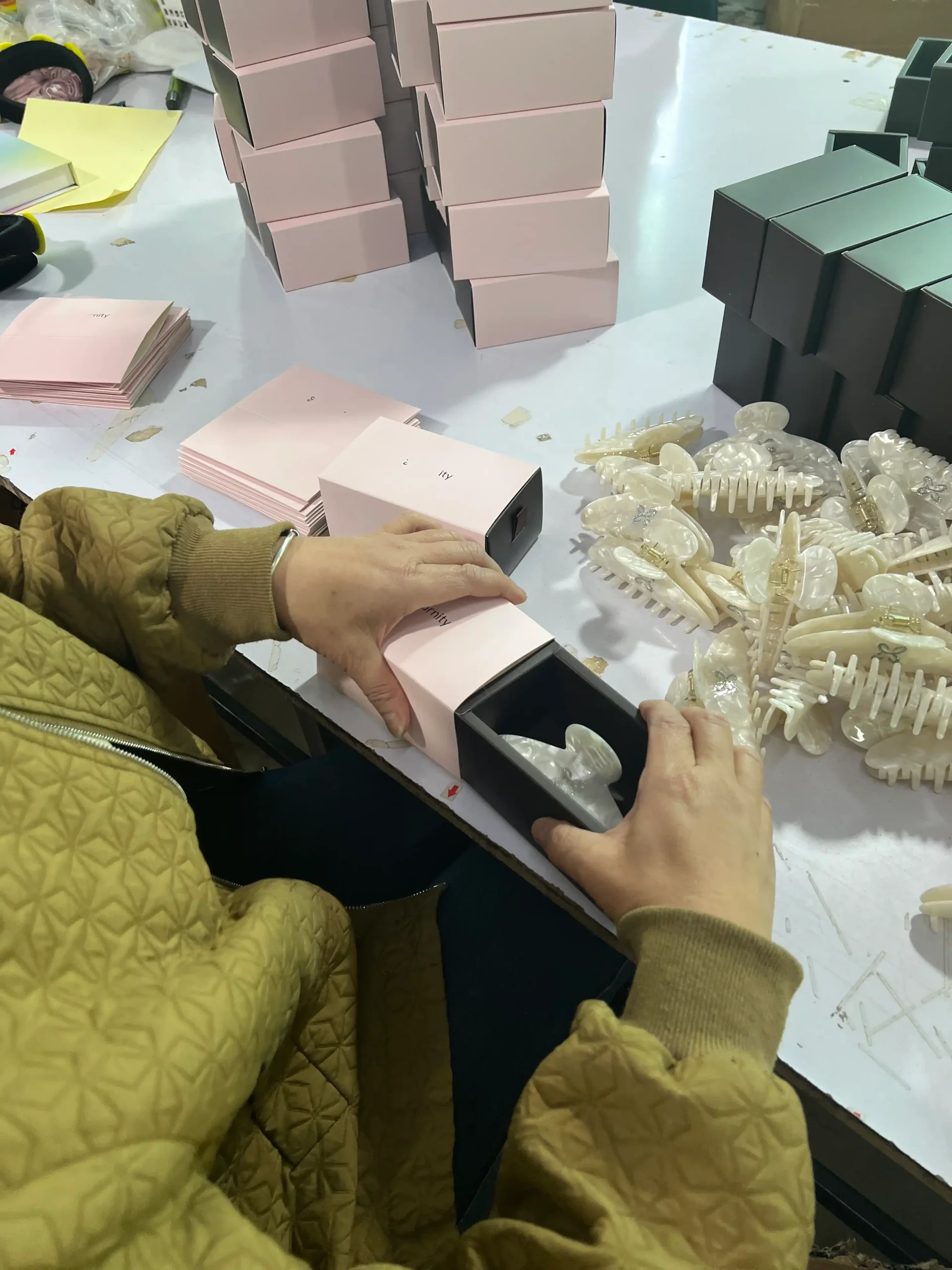
Scrunchies may look simple, but they are one of the most detail-sensitive hair accessories. A small difference in fabric weight can change the whole product feel. Weak elastic can reduce repeat purchase. Poor stitching can make the product look cheap. Wrong packaging can make retail display difficult. For European and American buyers, these details directly affect brand image, customer reviews, return rates, and wholesale buyer confidence.
The wider hair accessories market is growing steadily. External market research from Grand View Research reports that the global hair accessories market was estimated at USD 23.41 billion in 2024 and is projected to reach USD 46.64 billion by 2033. Fortune Business Insights also projects strong growth from 2026 to 2034, supported by fashion styling, social media influence, and demand for functional accessories with decorative value. This makes custom scrunchies a practical product category for brands that want low-risk development, fast seasonal updates, and strong visual presentation.
This guide explains what custom scrunchies are, why they are popular for brand customization, which materials to choose, how to add logos, how MOQ works, which packaging options are suitable for retail, and how to develop custom scrunchies step by step with a reliable hair accessories factory.
Table of Contents
- What Are Custom Scrunchies?
- Why Scrunchies Are Popular for Brand Customization
- Popular Materials for Custom Scrunchies
- Logo Options for Custom Scrunchies
- MOQ for Custom Scrunchies
- Packaging Options for Scrunchies
- How to Develop Custom Scrunchies Step by Step
- Case Study: Custom Scrunchies for a Beauty Gift Set
- Pros and Cons of Custom Scrunchies
- FAQ
- Conclusion
What Are Custom Scrunchies?
Custom scrunchies are fabric-covered elastic hair ties developed according to a brand’s material, color, size, logo, and packaging requirements. They can be produced as simple daily hair ties, premium satin accessories, oversized fashion scrunchies, organza styles, velvet holiday items, printed seasonal collections, or multi-piece retail sets.
For brands and retailers, custom scrunchies are more than functional hair accessories. They can become part of a fashion collection, a beauty gift set, a promotional campaign, a spa kit, a PR package, or a private label product line. This is why working with a professional Hair Accessories Manufacturer is important. The factory needs to understand both product construction and brand presentation.
Q&N Beauty’s Hair Scrunchie category shows how scrunchies can be developed in different materials, sizes, patterns, and custom packaging directions. The category includes styles such as ruffle satin scrunchies, scarf scrunchies, organza scrunchies, gingham scrunchies, padded scrunchies, and printed designs.
Basic Structure of Custom Scrunchies
A standard scrunchie has three basic parts: outer fabric, inner elastic, and stitching. However, each part has multiple choices. The fabric affects the visual style and hand feel. The elastic affects comfort and holding strength. The stitching affects durability and appearance. For premium orders, brands may also add woven labels, embroidery, hang tags, paper cards, or gift packaging.
| Scrunchie Part | Common Options | Why It Matters |
|---|---|---|
| Outer Fabric | Satin, velvet, cotton, organza, chiffon, RPET, printed polyester | Controls the look, touch, seasonality, and brand positioning. |
| Inner Elastic | Standard elastic, soft elastic, stronger elastic, thicker elastic | Affects stretch recovery, comfort, and daily usability. |
| Stitching | Hidden seam, visible seam, reinforced seam, ruffle seam | Influences durability and product finish. |
| Branding | Woven label, printed logo, embroidery, hang tag, paper card | Turns a basic accessory into a branded product. |
| Packaging | OPP bag, paper card, gift box, set packaging, barcode label | Supports retail display, gifting, ecommerce, and warehouse handling. |
Expert insight: When buyers compare scrunchie quotations, they should not only compare diameter and fabric name. Ask about fabric weight, elastic quality, stitching method, logo method, packing details, and inspection standard. These details explain why two scrunchies that look similar in photos can have very different final prices.
Common Uses for Brands and Retailers
Custom scrunchies are popular because they fit many sales channels. A fashion boutique can sell them as impulse-buy accessories near checkout. A beauty brand can include them in skincare or makeup gift sets. A hair care brand can pair satin scrunchies with shampoo, conditioner, or hair masks. A promotional company can use logo scrunchies for events, campus campaigns, wellness kits, or seasonal gifting.
| Buyer Type | Best Scrunchie Style | Recommended Packaging |
|---|---|---|
| Beauty Brand | Satin, spa-style, soft premium scrunchies | Gift pouch, paper card, beauty set packaging |
| Fashion Retailer | Printed, oversized, velvet, organza, seasonal colors | Hang card, barcode label, retail display box |
| Private Label Startup | Core satin colors, simple logo label, 3-piece sets | Paper card, OPP bag, custom sticker |
| Gift Company | Holiday velvet, bow details, mixed sets | Gift box, ribbon packaging, custom insert card |
| Hair Care Brand | Silk-like satin, soft elastic, anti-crease positioning | Premium card or matching pouch |
Why Scrunchies Are Popular for Brand Customization
Scrunchies remain popular because they combine low development risk, strong styling value, and high customization flexibility. For brands, they are easier to launch than complex hard goods, but they still offer many ways to express color, fabric, logo, packaging, and seasonal identity. A reliable Hair Accessories Manufacturer can help brands turn a small accessory into a retail-ready product.
Market research shows that hair elastics and ties are a major product segment in the hair accessories category. Grand View Research notes that hair elastics and ties accounted for a significant share of the hair accessories market in 2024, supported by the variety of materials, shapes, and designs available. This is important for scrunchies because they sit directly within the elastic and tie segment.
Low Cost and High Style Flexibility
Compared with many fashion accessories, scrunchies are cost-efficient to develop. They do not usually require expensive molds. They can be made in different sizes and fabrics. They can follow seasonal trends quickly. Brands can use the same base structure and create multiple color stories, prints, or packaging concepts.
For example, one satin scrunchie shape can become a Valentine’s Day collection with pink and red colors, a summer resort collection with tropical prints, a holiday collection with velvet fabric, or a clean beauty collection with neutral tones and recycled packaging.
Suitable for Fashion Beauty and Gift Sets
Scrunchies work well across fashion and beauty because they are both useful and giftable. Consumers use them for daily styling, workouts, travel, sleep routines, skincare routines, and casual outfits. For beauty brands, scrunchies can support a lifestyle image. For fashion retailers, they can increase average order value. For gift companies, they are easy to combine with pouches, headbands, clips, mirrors, or beauty tools.
| Use Scenario | Scrunchie Recommendation | Brand Benefit |
|---|---|---|
| Skincare Routine | Soft satin or terry scrunchie | Adds lifestyle value to beauty sets. |
| Fashion Retail | Printed, velvet, oversized, or organza scrunchie | Creates visual shelf appeal and seasonal freshness. |
| Gift Set | 3-piece color set or matching fabric set | Increases perceived value without heavy product development. |
| Hair Care | Silk-like satin scrunchie with soft elastic | Supports anti-breakage and gentle styling positioning. |
| Promotional Event | Logo label scrunchie with card packaging | Easy to distribute and practical for daily use. |
Easy to Customize with Brand Elements
Scrunchies are highly brandable. A buyer can add a woven label, printed card, hang tag, custom color, brand pattern, barcode label, care label, or retail box. This makes them suitable for both private label and OEM development.
For brand owners, the best approach is to start with a clear product role. Is the scrunchie a retail product, a gift-with-purchase item, a PR package item, a spa accessory, or a fashion collection piece? The answer will decide the material, logo method, MOQ, packaging, and target price.
Popular Materials for Custom Scrunchies from a Hair Accessories Manufacturer
Material selection is the heart of custom scrunchie development. The fabric determines not only appearance but also touch, weight, drape, durability, perceived value, and seasonality. A professional Hair Accessories Manufacturer should explain material differences clearly and recommend options based on brand positioning and budget.
Satin Scrunchies
Satin scrunchies are one of the most popular choices for beauty, hair care, and fashion brands. Satin has a smooth surface and soft shine, making it suitable for premium-looking daily accessories. It can also support a gentle-hair positioning because the surface is smoother than many rougher fabrics.
Q&N Beauty has a dedicated Satin Scrunchies category, which is useful for internal linking when building a scrunchie-focused SEO cluster.
Velvet Scrunchies
Velvet scrunchies are suitable for autumn, winter, holiday collections, gift sets, and boutique retail. Velvet creates a warmer, richer feeling than satin. It also photographs well in seasonal colors such as burgundy, forest green, navy, chocolate, champagne, and black.
For retail brands, velvet works well in multi-packs and holiday gift boxes. For cost control, buyers should confirm velvet thickness, pile direction, color shading, and whether the fabric sheds easily.
Cotton Scrunchies
Cotton scrunchies feel natural, casual, and approachable. They are suitable for lifestyle brands, kids’ brands, eco-inspired collections, and everyday fashion. Cotton also works well for gingham, floral, stripe, and custom printed designs.
The main point to check is shrinkage and fabric thickness. Very thin cotton may look flat after production, while very thick cotton may make the scrunchie bulky. A sample is necessary before bulk approval.
Organza Scrunchies
Organza scrunchies are lightweight, sheer, and feminine. They are popular for younger fashion consumers, party styling, coquette-inspired collections, and spring-summer product lines. Q&N Beauty’s Organza Scrunchies category can be used as an internal link for buyers looking for sheer and decorative styles.
Organza looks beautiful, but the edge finishing must be clean. Poor cutting or stitching can make the product look rough. Buyers should check seam finish, transparency, stiffness, and whether the fabric scratches the skin.
Printed Fabric Scrunchies
Printed fabric scrunchies are strong for seasonal storytelling. Popular print directions include gingham, floral, polka dots, fruit prints, stripes, animal prints, holiday motifs, and brand custom patterns. For retailers, printed scrunchies help create variety without changing the product structure too much.
When developing printed scrunchies, confirm print method, color fastness, pattern scale, repeat direction, and cutting loss. A small pattern may look different after being gathered into a scrunchie shape.
RPET Fabric Scrunchies
RPET fabric scrunchies are made with recycled polyester materials and are suitable for brands that care about sustainability messaging. For European buyers especially, eco-friendly materials and recyclable packaging can support brand values and retail positioning.
However, buyers should avoid using sustainability claims without documentation. If the product requires recycled material proof, ask the factory whether certificates, material declarations, or supplier documents are available.
| Material | Best For | Advantages | Watch Out For |
|---|---|---|---|
| Satin | Beauty, hair care, premium daily use | Smooth, shiny, elegant, soft look | Check fabric weight and seam finish |
| Velvet | Holiday, boutique, winter collections | Rich texture, premium feel, strong color depth | Check shedding and pile direction |
| Cotton | Lifestyle, kids, casual fashion | Natural feel, printable, comfortable | Check shrinkage and thickness |
| Organza | Coquette, party, spring-summer styles | Lightweight, sheer, decorative | Check edge finishing and stiffness |
| Printed Polyester | Seasonal collections, retail variety | Flexible patterns, cost-efficient | Check print scale and color accuracy |
| RPET | Sustainable collections | Supports recycled material story | Check documentation and claim wording |
Logo Options for Custom Scrunchies
Logo choice affects both cost and brand perception. For custom scrunchies, the logo does not always need to be placed directly on the fabric. Many brands choose woven labels, hang tags, retail cards, or packaging logos because these methods are clean, cost-effective, and suitable for small accessories.
Woven Label
A woven label is one of the most common branding methods for custom scrunchies. It can be sewn into the seam or attached as a small folded label. It works well for private label scrunchies, satin scrunchies, velvet scrunchies, and cotton scrunchies.
The benefit is that the label looks professional and does not disturb the main fabric too much. The limitation is that very small text may not be readable. Keep the logo simple.
Printed Logo
A printed logo can be used on the scrunchie fabric, hang tag, paper card, OPP sticker, or gift box. Direct fabric printing is better for simple designs and larger surface areas. For scrunchies, packaging print is often more visible than direct fabric print because the fabric is gathered.
Embroidery Logo
Embroidery gives a premium and textured look. It is suitable for thicker fabric scrunchies, gift sets, boutique collections, and brands that want a handmade feeling. The factory should test embroidery size, thread color, density, and whether the fabric pulls during stitching.
Hang Tag and Packaging Logo
Hang tags and packaging logos are practical for retail. A paper card can show the brand name, product name, barcode, material, care instructions, website, and social media handle. For scrunchie sets, packaging often delivers stronger brand value than a small product label.
| Logo Method | Best Use | Pros | Cons |
|---|---|---|---|
| Woven Label | Private label scrunchies | Clean, professional, durable | Limited space for complex logos |
| Printed Logo | Packaging, cards, simple fabric logos | Cost-effective and clear | Direct fabric print may be hidden by gathers |
| Embroidery | Premium fabric scrunchies | Textured and high-value look | Higher cost and needs testing |
| Hang Tag | Retail and ecommerce | Easy to show brand story and barcode | Can be removed after purchase |
| Packaging Logo | Gift sets and wholesale programs | Strong display effect | Requires packaging artwork and printing time |
MOQ for Custom Scrunchies
MOQ means minimum order quantity. It is one of the most common questions buyers ask a Hair Accessories Manufacturer. For custom scrunchies, MOQ is affected by fabric availability, color, size, logo method, packaging type, order complexity, and production efficiency.
Factors That Affect MOQ
If a brand uses available fabric colors and simple packaging, MOQ can usually be more flexible. If the order requires custom-dyed fabric, exclusive print, special elastic, custom gift box, or multiple SKU combinations, MOQ will increase. The same applies when the buyer wants many colors but very small quantities per color.
For accurate quotation, the buyer should confirm whether MOQ is calculated per style, per color, per size, or per total order. This avoids confusion before sampling.
| MOQ Factor | Lower MOQ Situation | Higher MOQ Situation |
|---|---|---|
| Fabric | Available market fabric | Custom-dyed or custom-woven fabric |
| Color | Stock colors | Pantone matching or exclusive colors |
| Logo | Simple woven label or hang tag | Embroidery, metal charm, complex custom label |
| Packaging | OPP bag or simple card | Rigid box, display box, multi-piece retail set |
| SKU Count | Few colors, one size | Many colors, sizes, and packaging versions |
| Lead Time | Normal schedule | Rush order with special material sourcing |
How to Choose the Right Order Quantity
Startups often want the lowest possible MOQ. Larger retailers usually want the best price tier. Both approaches can work, but the decision should match sales channel and launch plan.
If you are testing a new market, start with fewer styles and stronger color selection. If you are selling through retail stores, choose a quantity that supports shelf display, replenishment, and warehouse handling. If you are building a private label collection, consider 3-piece or 5-piece sets to increase perceived value.
Expert recommendation: Do not split the first order into too many small colors. It increases production complexity and makes quality control harder. A stronger approach is to choose three to five high-confidence colors and build better packaging around them.
Packaging Options for Scrunchies
Packaging is not an afterthought. For European and American buyers, packaging affects retail display, perceived value, barcode scanning, giftability, warehouse receiving, and ecommerce presentation. A reliable Hair Accessories Manufacturer should help match packaging to the sales channel.
OPP Bag Packaging
OPP bag packaging is the most basic and cost-effective option. It protects the product from dust and keeps the scrunchie clean during shipping. It is suitable for wholesale orders, promotional programs, and products that will be repacked by the buyer.
Paper Card Packaging
Paper card packaging is common for retail. It can include the logo, barcode, product name, material, care instructions, and brand story. It is suitable for boutiques, chain stores, online sellers, and gift-ready products.
Gift Box Packaging
Gift boxes increase product value and work well for holiday sets, beauty gift sets, PR kits, and premium private label collections. They also create better unboxing content for social media. The cost is higher, so brands should use gift boxes when the retail price supports it.
Retail Display Packaging
Retail display packaging includes hang cards, display boxes, countertop boxes, and barcode-ready packaging. It is important for wholesalers and retailers that need easy store presentation. If products are going into retail warehouses, confirm barcode size, carton marks, inner packing, and labeling requirements early.
| Packaging Type | Best For | Cost Level | Brand Impact |
|---|---|---|---|
| OPP Bag | Wholesale, simple packing, repacking | Low | Basic protection |
| Paper Card | Retail, boutiques, ecommerce | Medium | Strong brand visibility |
| Gift Box | Holiday, beauty sets, premium private label | High | High perceived value |
| Display Box | Store counters and wholesale retail | Medium to high | Good shelf presentation |
| Custom Pouch | Gift sets and beauty collections | Medium | Reusable and giftable |
How to Develop Custom Scrunchies Step by Step
Custom scrunchie development becomes much easier when the buyer and factory follow a clear process. Q&N Beauty’s Custom Service page describes an end-to-end manufacturing workflow from raw material sourcing to final packing and global shipment. This is the kind of structured process buyers should look for.
Confirm Style and Material
Start with the product direction. Decide whether the scrunchie should look premium, playful, natural, giftable, sustainable, or promotional. Then choose the material. Satin, velvet, cotton, organza, printed polyester, and RPET all communicate different brand messages.
Confirm Color Size and Elastic
Color should match the brand palette and season. Size should match the target consumer and styling use. Elastic should be tested for stretch, recovery, and comfort. For thicker hair markets, stronger elastic may be needed. For delicate hair care positioning, softer elastic may be better.
Confirm Logo and Packaging
Choose a logo method that fits both budget and product size. For scrunchies, woven labels, hang tags, paper cards, and packaging logos are often more practical than large direct fabric logos. Packaging should be confirmed before sampling if it affects product presentation.
Make Samples Before Bulk Production
Never skip samples for custom scrunchies. A physical sample allows the buyer to check fabric hand feel, color, size, elasticity, seam quality, logo placement, and packaging. After sample approval, the factory should keep an approved sample as the bulk production standard.
| Step | Buyer Should Provide | Factory Should Confirm |
|---|---|---|
| 1. Style Direction | Reference photos, target market, price range | Suitable structure and material options |
| 2. Material | Preferred fabric and color | Availability, MOQ, cost, and lead time |
| 3. Logo | AI, PDF, or high-resolution logo file | Best logo method and placement |
| 4. Packaging | Retail or wholesale packing needs | Card size, box type, barcode, carton marks |
| 5. Sampling | Sample approval comments | Revision details and final standard |
| 6. Bulk Production | PO, quantity, delivery date | Production schedule and QC checkpoints |
Case Study: Custom Scrunchies for a Beauty Gift Set
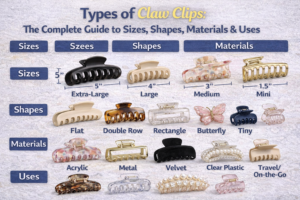
Project background: A beauty brand planned to launch a skincare gift set for seasonal retail. The brand wanted to add a soft hair accessory that could be used during cleansing, makeup application, and daily styling. The product needed to feel premium, match the brand color palette, and fit inside a gift box with other beauty items.
Initial request: The buyer first requested a satin scrunchie with a small logo. After reviewing the product use, the factory suggested a silk-like satin fabric, soft elastic, and a woven label instead of large fabric printing. The reason was practical: a woven label would stay cleaner visually because the satin fabric naturally gathers after sewing.
Main challenge: The brand wanted several colors, but the launch quantity was limited. Producing too many custom-dyed colors would increase MOQ and lead time. The factory recommended using two available satin colors close to the brand palette and one custom packaging card to strengthen brand identity.
Solution: The final set used a soft satin scrunchie, a small woven label, and a printed paper card. The packaging card carried the logo, product name, care instructions, and barcode. This kept the product premium but controlled cost.
Result: The scrunchie became a practical add-on item in the beauty gift set. The brand avoided unnecessary custom dyeing cost, shortened development time, and still achieved a clear branded look. The key lesson is that the best custom solution is not always the most expensive one. It is the one that fits the product purpose, retail channel, and target price.
| Decision Area | Original Idea | Final Solution | Reason |
|---|---|---|---|
| Fabric | Custom satin color | Available silk-like satin color | Reduced MOQ and faster sampling |
| Logo | Direct fabric print | Small woven label | Cleaner look on gathered fabric |
| Packaging | Simple OPP bag | Printed paper card | Better retail and gift presentation |
| Product Role | Basic accessory | Beauty gift set add-on | Increased perceived value |
Pros and Cons of Custom Scrunchies
Custom scrunchies are a strong product category, but buyers should understand both advantages and limitations before development.
| Pros | Cons |
|---|---|
| Easy to customize with fabric, color, logo, and packaging | Too many color SKUs can increase MOQ and complexity |
| Suitable for fashion, beauty, gift, and promotional markets | Small quality differences can affect product feel |
| Good for seasonal launches and private label collections | Direct fabric logos may not always be visible |
| Works well in sets and retail packaging | Premium packaging increases total cost |
| Lower development risk than molded accessories | Fabric availability can affect lead time |
Expert summary: Custom scrunchies are best for brands that want flexible design, quick seasonal updates, and strong visual branding. They are less suitable when the buyer wants extremely low quantities across many colors with fully custom materials and packaging.
FAQ About Custom Scrunchies Manufacturer Projects
1. What is a custom scrunchies manufacturer?
A custom scrunchies manufacturer is a hair accessories factory that produces scrunchies based on a buyer’s material, color, size, elastic, logo, and packaging requirements. A professional manufacturer can support OEM, ODM, private label, sampling, bulk production, quality control, and export packing.
2. What is the best material for custom scrunchies?
The best material depends on the brand and sales channel. Satin is suitable for beauty and hair care brands. Velvet works well for holiday and boutique collections. Cotton is good for casual and lifestyle brands. Organza is suitable for feminine and trend-driven styles. RPET is useful for sustainability-focused product lines.
3. What is the MOQ for custom scrunchies?
MOQ depends on fabric availability, custom color, logo method, packaging type, and order complexity. Stock fabric and simple packaging usually allow more flexible quantities. Custom-dyed fabric, exclusive prints, and gift boxes usually require higher MOQ.
4. Can I add my logo to scrunchies?
Yes. Common logo options include woven labels, printed logos, embroidery, hang tags, paper cards, stickers, and custom boxes. For most scrunchies, woven labels and packaging logos are the most practical branding methods.
5. How long does custom scrunchie production take?
Sampling usually takes several days to two weeks depending on material, logo, and packaging complexity. Bulk production time depends on order quantity, fabric availability, packaging printing, and factory schedule. Always confirm lead time before placing the order.
6. Are custom scrunchies suitable for beauty brands?
Yes. Scrunchies are suitable for skincare routines, makeup preparation, hair care sets, PR packages, spa kits, and gift-with-purchase programs. Satin and soft elastic styles are especially suitable for beauty and hair care positioning.
7. How can I reduce the cost of custom scrunchies?
Use available fabrics, limit the number of colors, choose simple logo methods, select paper card packaging instead of rigid boxes, and increase quantity per style. A reliable factory can suggest cost-saving options without making the product look low quality.
Conclusion: Choose a Hair Accessories Manufacturer That Understands Scrunchies
A reliable Hair Accessories Manufacturer should not only produce scrunchies. It should help your brand choose the right fabric, test elastic strength, control stitching quality, recommend suitable logo methods, plan MOQ, design packaging, and manage bulk production with clear quality standards.
Custom scrunchies are a strong product opportunity for beauty brands, fashion retailers, wholesalers, private label startups, and gift companies. They are flexible, brandable, easy to style, and suitable for seasonal collections. As the hair accessories market continues to grow, future scrunchie trends will likely focus on premium textures, soft satin finishes, velvet holiday colors, organza and coquette-inspired designs, recycled materials, better retail packaging, and matching accessory sets.
If you are planning a custom scrunchies project, start with a clear product purpose. Decide whether the scrunchie is for retail sale, gift set, beauty routine, promotional event, or private label collection. Then confirm material, size, color, logo, packaging, MOQ, sampling, and delivery schedule with your supplier.
Explore Q&N Beauty’s Hair Scrunchie collection, Satin Scrunchies, Organza Scrunchies, Velvet Scrunchies, and Scrunchie Sets for product ideas. To develop your own custom style, visit the Custom Service page or contact the Q&N Beauty team for material, logo, MOQ, packaging, and bulk production support.
External Link Suggestions
- Market data reference: Grand View Research Hair Accessories Market Report
- Market data reference: Fortune Business Insights Hair Accessories Market Report
- Broader accessories market reference: Statista Accessories Market Forecast
- SEO quality reference: Google Search Central People-First Content Guide