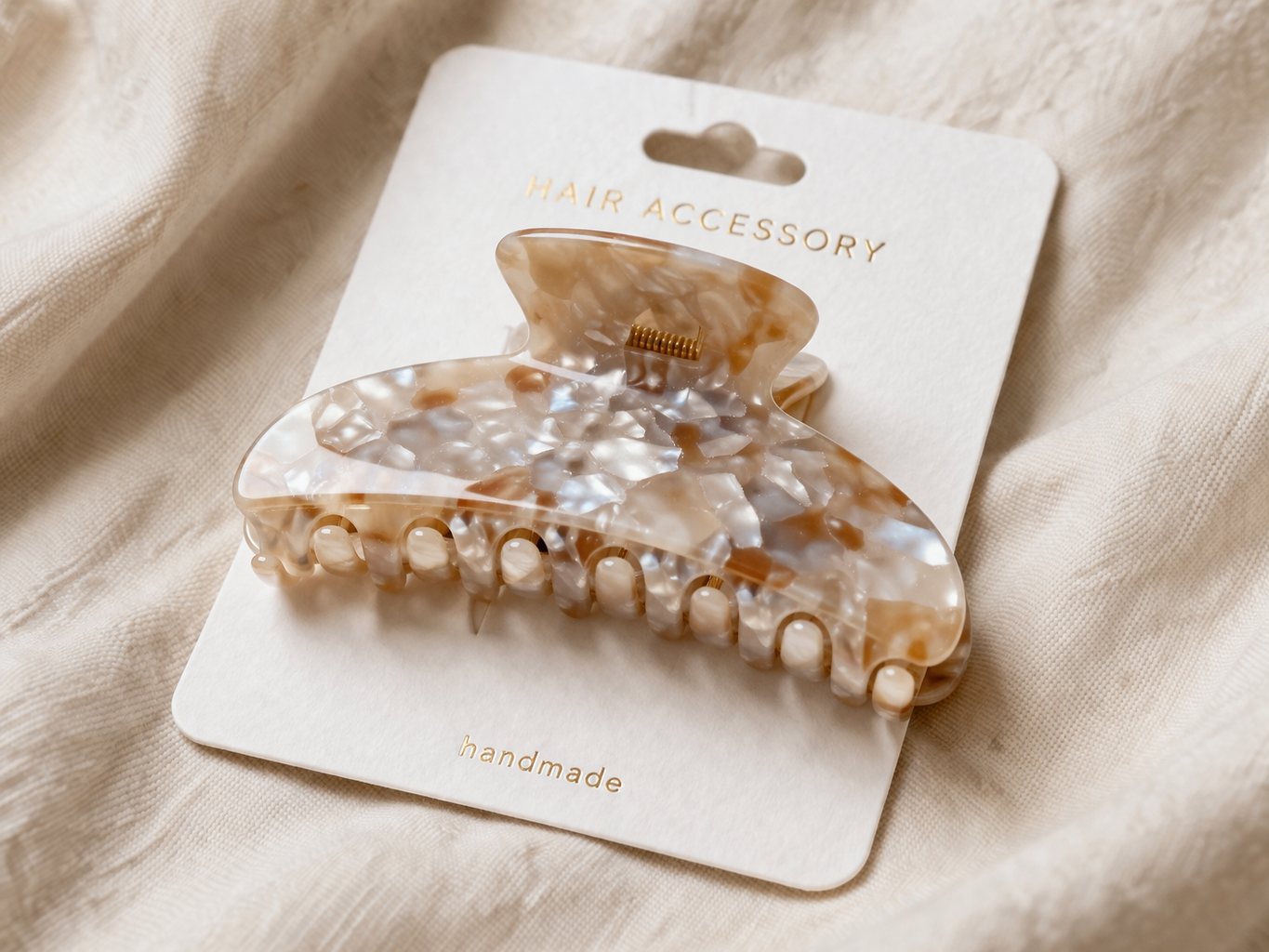
Acetate hair accessories look simple from the outside, but the making process is not simple at all.
A good acetate claw clip or barrette needs the right material, the right thickness, clean cutting,
careful shaping, smooth polishing, and stable hardware assembly.
That is why acetate pieces usually feel more premium than many cheap plastic hair accessories.
The shine looks deeper, the pattern looks richer, and the finished product often feels more polished in hand.
At QN Beauty, hair accessories are developed for
brands, wholesalers, and retailers across different styles and materials. If you also want to compare other hair accessory
types, you can browse our custom service page
and related articles about claw clips,
French hair pins,
and butterfly hair clips.
Introduction
In the hair accessory market, acetate is one of the most popular materials for fashion clips, barrettes,
headbands, combs, and decorative hair pieces. Buyers like it because it looks better than many ordinary plastics.
Consumers like it because it feels smoother, lighter, and more refined.
But many people only see the finished product. They do not see the work behind it.
Acetate hair accessory manufacturing includes material selection, pattern planning, precision cutting,
heat shaping, edge processing, polishing, hardware fitting, logo work, and final quality checking.
This article explains the full acetate hair accessory production process in a practical way.
We will also compare acetate with normal plastic, look at the main techniques used in production,
and explain why cellulose acetate hair accessories are often chosen for mid-range and premium collections.
In one sentence: acetate hair accessories are popular because they combine fashion value, visual depth, and a more premium finish than many standard plastic pieces.
What Is Acetate in Hair Accessories?
In hair accessories, “acetate” usually refers to cellulose acetate, a plant-based material commonly made from natural cellulose sources
such as wood pulp or cotton linters, then processed into sheets for fashion products.
In the accessory industry, these sheets are valued for their rich color effect, glossy finish, layered patterns, and comfortable hand feel.
Instead of looking flat or overly shiny in a cheap way, acetate often has more depth.
Tortoiseshell effects, marble effects, translucent tones, pearly swirls, and custom layered color combinations are easier to create with acetate sheets.
This makes acetate a strong choice for trend-led and boutique-style hair accessories.
Acetate is widely used for claw clips, snap clips, side clips, barrettes, combs, decorative hair picks, and fashion headbands.
It works especially well when the product needs a polished surface and stronger shelf appeal.
Explain the Difference Between Acetate and Ordinary Plastic
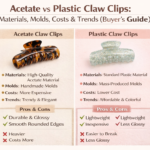
Many buyers compare acetate with ordinary plastic because both can be used for hair clips and other fashion accessories.
But they do not give the same result.
Ordinary plastic is often chosen for low-cost mass production. It can be practical, but the visual effect is usually simpler.
In many cases, the color looks flatter, the surface looks less refined, and the overall product can feel more basic.
Acetate is different. It is usually selected when appearance matters more.
The material allows better pattern expression, better color variation, and a smoother polished edge.
For fashion-focused collections, acetate often gives a more elevated result.
| Point of Comparison | Acetate | Ordinary Plastic |
|---|---|---|
| Visual effect | Richer color depth, layered patterns, glossy and premium-looking finish | Usually flatter color, more basic surface look |
| Touch and feel | Smooth, refined, often feels more upscale | Can feel lighter or more basic, depending on resin grade |
| Fashion value | Often used for boutique, gift, trend, and premium collections | Often used for cost-focused or promotional products |
| Pattern options | Excellent for tortoise, marble, pearl, translucent, layered color effects | Usually simpler color and pattern presentation |
| Processing | Needs careful cutting, shaping, edge finishing, and polishing | Often easier for low-cost molded production |
| Price level | Normally higher | Normally lower |
This does not mean ordinary plastic is bad. It simply serves a different purpose.
If the target is low price and fast volume production, plastic may be enough.
If the target is better style, stronger display value, and a more premium brand image, acetate is often the better choice.
Simple takeaway: plastic is often chosen for cost, while acetate is often chosen for appearance, feel, and retail presentation.
Why Acetate Is Popular for Hair Accessories
Premium Appearance
The first reason is easy to understand: acetate looks good.
It can look glossy without looking cheap.
It can show texture, color blending, transparency, and pattern movement in a way that feels more fashionable.
This is important in stores and online product photos. A good acetate clip usually catches attention faster.
It often looks more giftable and more “designed” than a simple molded plastic clip.
Comfortable and Lightweight
Acetate is also popular because it feels comfortable for daily use.
A well-made acetate accessory can feel smooth on the hair and scalp.
It is usually light enough for all-day wear, especially in clips, barrettes, and headbands.
Comfort matters more than many people think.
A beautiful accessory that feels heavy or rough will not get repeat use.
A smooth and wearable piece is more likely to become a daily favorite.
Stronger Visual Value
In retail, visual value matters.
Two accessories may have a similar shape, but the one made in acetate often looks more expensive.
The shine, pattern depth, and polished edges make a difference.
This is one reason why acetate is common in collections that want a better price point or a more premium story.
It supports the brand image better.
Summary: acetate is popular because it gives fashion brands more room to sell style, detail, and perceived value, not just function.
Common Types of Acetate Hair Accessories
Acetate Claw Clips
Acetate claw clips are one of the most common formats.
They are practical, easy to style, and very suitable for pattern-focused material.
Large claw clips, medium everyday clips, flat claw clips, and decorative mini claw clips can all be made with acetate parts.
If you want to explore how claw clips work for different hair types, you can also read
our claw clip guide.
Acetate Hair Clips
This category includes side clips, snap clips, alligator-style decorative clips, and smaller fashion clips.
Acetate adds a more elevated surface effect, so even a simple shape can look special.
Acetate Barrettes
Barrettes made with acetate tops are popular because they combine a decorative top plate with metal hardware.
They can be minimal and clean, or more statement-driven with bold patterns and shapes.
Acetate Headbands
Some headbands use acetate as the main visible body or as decorative side elements.
This material works well when the design needs a glossy finish and a clean fashion look.
Acetate Combs and Decorative Pieces
Acetate is also used for combs, hair sticks, decorative inserts, and special ornament pieces.
These styles often depend on smooth edge finishing, because the product touches hair directly.
| Accessory Type | Why Acetate Works Well | Common Selling Point |
|---|---|---|
| Claw clips | Shows color and pattern clearly; good structure when well designed | Fashion + function |
| Hair clips | Upgrades simple shapes with better surface effect | Everyday elegance |
| Barrettes | Works well with metal fitting and decorative top plates | Classic retail item |
| Headbands | Smooth and glossy finish gives cleaner fashion appeal | Polished styling |
| Combs and decorative pieces | Needs good edge quality and refined finishing | Detail-driven look |
Raw Materials Used in Acetate Hair Accessories
The final quality of an acetate hair accessory starts with the raw materials.
If the material is poor, the finished product will not look premium, no matter how good the shape is.
- Cellulose acetate sheets: the main body material, available in different colors, thicknesses, patterns, and transparency levels.
- Color pigments and pattern layers: used to create marble effects, tortoise effects, pearly looks, solid colors, or custom layered designs.
- Metal springs, pins, or fasteners: needed for claw clips, barrettes, and other functional structures.
- Polishing materials and protective finishing supplies: used to smooth edges, improve surface quality, and protect the finished look.
Material thickness is also important.
A clip that is too thin may look nice but break easily.
A piece that is too thick may feel bulky or heavy.
The right balance depends on the product design and the target market.
Summary: better acetate accessories usually start with better sheets, better pattern planning, and hardware that matches the product size and function.
How Acetate Hair Accessories Are Made
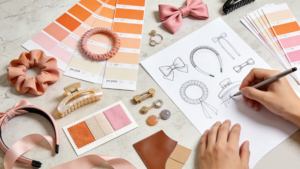
Step 1 – Designing the Shape and Pattern
Every product starts with design.
The team confirms the shape, size, thickness, color style, and target function.
For example, a large claw clip for thick hair needs a different body structure than a slim side clip.
At this stage, it is also important to think about the acetate pattern.
A marble pattern may look beautiful on a wide surface but too busy on a very small clip.
A translucent sheet may look elegant on simple shapes, while layered tortoise effects may work better on statement pieces.
Step 2 – Producing or Selecting Acetate Sheets
Once the design direction is clear, the correct acetate sheet is selected or developed.
This includes color tone, pattern style, thickness, transparency, and surface effect.
For custom collections, brands may request exclusive patterns or color combinations.
This is one area where acetate is stronger than many basic plastic options.
It gives more visual flexibility.
Step 3 – Cutting the Basic Shape
The next step is cutting.
The main body shape is cut from the acetate sheet according to the approved design.
The accuracy here matters a lot.
If the cutting is not clean, the edge finishing later becomes harder and the final product quality can drop.
Precision cutting is especially important for matching pairs, layered components, and structured items like claw clip arms.
Step 4 – Forming and Shaping
After cutting, some acetate parts need heat forming or bending.
This changes the flat piece into the shape needed for the final accessory.
For example, curved surfaces, shaped side angles, or head-fitting forms need controlled heat and shaping.
Too much heat can damage the look. Too little heat can make the shape unstable.
Step 5 – Drilling, Slotting, or Edge Processing
Once the main shape is formed, the product may need drilling, slotting, trimming, or edge correction.
These are small steps, but they affect assembly accuracy and wearing comfort.
For claw clips and barrettes, holes or slots must match the hardware position correctly.
For combs and decorative pieces, edge smoothness is especially important.
Step 6 – Polishing and Surface Finishing
This is one of the most important steps in acetate hair accessory production.
Good polishing gives the product its smooth hand feel and premium finish.
Poor polishing can make even a nice design look unfinished.
The goal is a clean surface, rounded and smooth edges, and a better shine.
Hand polishing is still important in many cases because it helps control detail more carefully.
Step 7 – Assembly
After the body parts are finished, the hardware is assembled.
This may include metal springs, pins, barrette bases, teeth structures, or connecting parts.
A beautiful acetate body is not enough by itself.
If the spring tension is wrong or the hardware fit is weak, the product will not perform well.
That is why appearance and function must be checked together.
Step 8 – Logo Application and Decoration
If the project needs branding, the logo can be added after the main body and assembly are ready.
Depending on the design, this may involve foil logo work, printed logo details, metal logo pieces, or other decorative applications.
Decoration should support the product, not overload it.
Acetate already has visual character, so simple branding often works best.
Step 9 – Quality Inspection
Quality inspection normally checks appearance, structure, hardware function, polishing quality, color consistency, and logo placement.
Sharp edges, unstable joints, misaligned parts, and weak spring action should be removed before packing.
For retail collections, inspection is especially important because surface defects are easy to see on glossy products.
Step 10 – Packaging
The final step is packaging.
This may be simple protective packing for wholesale orders or branded retail packaging for store-ready collections.
Packaging should protect the polished surface and help reduce scratches during transport.
| Production Step | Main Purpose | Why It Matters |
|---|---|---|
| Designing | Define shape, thickness, and pattern direction | Sets the whole product foundation |
| Sheet selection | Choose or develop the right acetate material | Directly affects visual result |
| Cutting | Create the base parts | Controls dimensional accuracy |
| Forming | Build curves and structure | Shapes comfort and appearance |
| Drilling / slotting | Prepare for fitting and detail finishing | Supports assembly precision |
| Polishing | Smooth and refine the surface | Creates premium hand feel |
| Assembly | Attach hardware and make product functional | Determines actual usability |
| Logo / decoration | Add brand and extra detail | Improves brand identity |
| Inspection | Check defects and function | Protects final quality |
| Packaging | Protect product for shipment or retail | Reduces damage risk |
Summary: making acetate hair accessories is not only about shape. It is a full process that combines design, material control, precision processing, hand finishing, and reliable assembly.
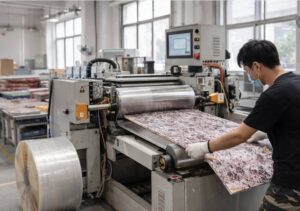
Key Techniques Used in Acetate Hair Accessory Manufacturing
Sheet Layering and Color Blending
One major reason acetate stands out is the way sheets can show layered color effects.
Tortoise looks, marble looks, pearly mixes, transparent color blends, and custom visual textures all come from smart sheet design.
This technique gives more originality to the final accessory.
It also helps brands create a stronger product identity.
Precision Cutting
Good cutting keeps the shape consistent and reduces later correction work.
This is especially important for detailed outlines, paired components, and products that need a stable fit after assembly.
Heat Forming
Heat forming gives acetate its final curves and body shape.
Without correct heat control, the product may lose consistency or comfort.
Skilled shaping is one of the reasons why well-made acetate accessories feel cleaner and more finished.
Hand Polishing
Hand polishing is still a very valuable step in acetate accessory finishing.
It improves the surface feel, helps soften the edges, and supports the premium look buyers expect from this material.
This step is often what makes the difference between a product that looks acceptable and a product that looks refined.
Hardware Assembly
Good hardware assembly is essential for performance.
A claw clip must open and close smoothly.
A barrette must hold firmly.
A decorative clip must stay aligned.
In other words, style alone is not enough.
Fashion accessories still need to work well in daily use.
| Technique | Direct Effect on Product | What Buyers Usually Notice |
|---|---|---|
| Color layering | Creates richer visual patterns | “This looks more premium” |
| Precision cutting | Improves consistency and cleaner shape | “The shape looks neat” |
| Heat forming | Builds correct curvature and fit | “The product feels well made” |
| Hand polishing | Smooths edges and improves shine | “The finish feels smooth” |
| Hardware assembly | Ensures practical use and durability | “It opens, closes, and holds well” |
Why the Manufacturing Process Matters to Buyers and Brands
For buyers, understanding the production process helps with product development decisions.
It helps explain why some acetate hair accessories are more expensive than others.
It also helps buyers ask better questions about thickness, finish, hardware, logo method, and quality control.
For brands, this knowledge is useful when building collections.
If the product needs a premium image, a polished acetate finish can support that goal.
If the range needs visual variety, layered acetate patterns can create more design options.
And for retailers, it matters because better-made products usually photograph better, display better, and create a stronger first impression.
Final Thoughts
Acetate hair accessories are popular for a reason.
They do not just hold hair.
They also add style, color depth, and a more premium look to the collection.
Compared with ordinary plastic hair accessories, acetate pieces usually offer better visual richness, smoother finishing, and stronger retail value.
But that result depends on the production process.
Good acetate accessories come from careful material selection, accurate cutting, proper shaping, thorough polishing, and stable hardware assembly.
If you are developing a collection of claw clips, barrettes, fashion clips, or decorative hair accessories, understanding these process details can help you make better sourcing decisions.
At Beauty, we focus on custom hair accessories for brands and wholesale clients,
from trend-driven concepts to retail-ready production. You can also explore our
custom hair accessory service
and browse more inspiration across our hair accessory content on
the Beauty website.
Need custom acetate hair accessories for your brand?
If you are planning a new claw clip, hair clip, barrette, headband, or decorative accessory collection,
QN Beauty can support product development, material selection, style direction, and production planning.
Visit Custom Service or explore more at
Beauty.
Suggested internal links used in this article: Home, About Us, Custom Service, claw clip guide, French hair pins guide, and butterfly hair clips guide.